Institutional Buyers Step Up as Gold Dips Below $4,000 on Rate and Oil Jitters
Published on 07/17/2026 at 13:06 | Redaktion boerse-global.de
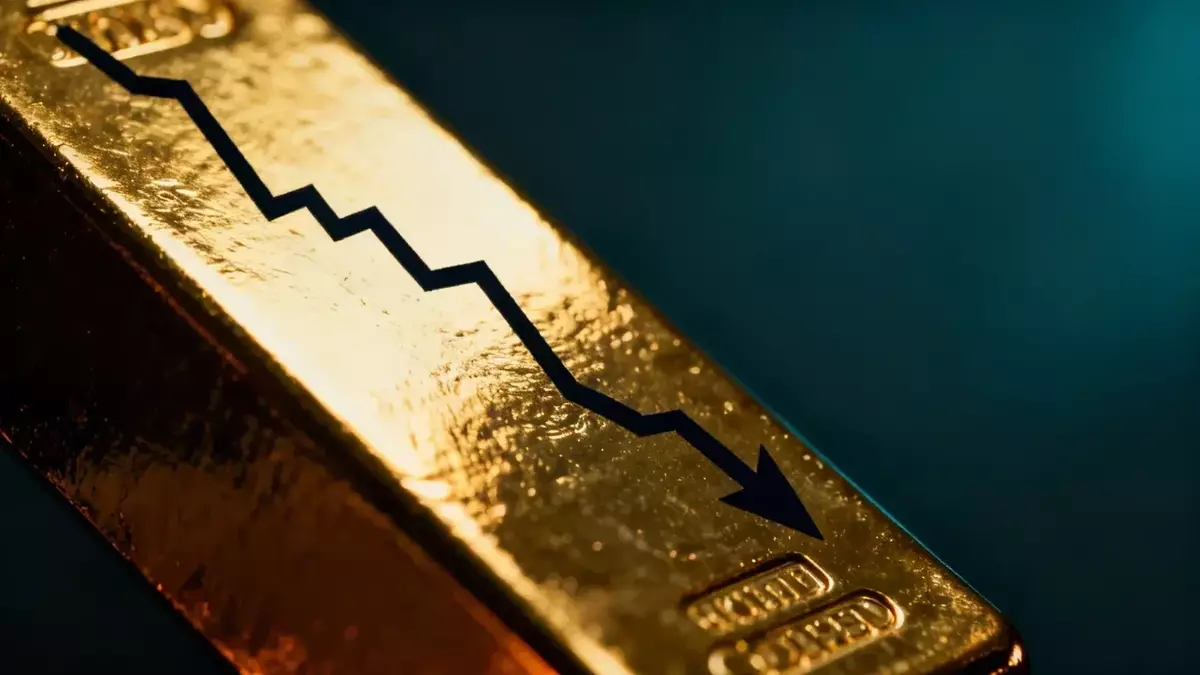
Gold briefly slipped below the psychologically important $4,000 mark on Thursday for the first time since November 2025, before staging a modest recovery to trade at $3,999.20 on Friday — up 0.47% on the session but still down 3.11% for the week. The price action reflects a tug-of-war between strengthening US economic data, renewed inflation fears from a spike in oil prices, and a surprising willingness among institutional investors to keep buying the metal near current levels.
The Philadelphia Fed Manufacturing Index jumped to 41.4 in July from 10.3 in June, a reading that caught markets off guard and reignited speculation that the Federal Reserve could raise interest rates as soon as September 2026. The US dollar and bond yields rose in response, pressuring gold since the metal offers no yield. Just weeks earlier, softer inflation data — the June consumer price index fell 0.4% month-on-month, with the annual rate dropping to 3.5% — had fueled hopes that the tightening cycle was over. That reprieve proved short-lived.
A simultaneous escalation in US-Iran tensions has added another layer of complexity. The US reinstated a naval blockade of Iranian ports, and attacks on shipping in the Strait of Hormuz pushed oil prices roughly 12% higher this week. Costlier energy imports revive inflation concerns, reinforcing the narrative that the Fed will need to keep rates elevated for longer. For gold, that means headwinds from both a stronger dollar and rising real yields.
Yet beneath the surface, the market is splitting along investor type. The SPDR Gold Shares (GLD), the world’s largest gold ETF, saw net inflows of $290.91 million in the week to July 15, even as its physical holdings edged down by 0.63 tonnes to 1,001.88 tonnes. That reversal follows a much sharper outflow of $373.93 million and a 2.85-tonne drop the previous week. The capital flows suggest that large institutional investors are treating the dip as an opportunity.
Should investors sell immediately? Or is it worth buying Gold?
Data from the World Gold Council confirms the trend. While global gold ETFs suffered outflows of $8.9 billion in June, the first half of 2026 still ended in positive territory with net inflows of $8 billion. More tellingly, net long positions on COMEX surged 16% month-on-month in June to 538 tonnes, the highest month-end reading since January. The WGC notes that this increase was driven entirely by large fund managers and other reportable traders, who have been adding to longs since early June even as the price declined. Non-reportable traders — largely retail investors — trimmed their net long exposure over the same period.
Regionally, the picture is starkly divided. North American gold ETFs bled $7.7 billion in the first half of 2026, the weakest first semester since 2013, as higher rate expectations weighed on sentiment. Asia, by contrast, recorded $12 billion in inflows over the same period — its strongest ever — although the region posted a record monthly outflow of $2.3 billion in June as Chinese investors rotated into equities and Japanese buyers stepped back. European funds remained near flat but stayed positive for the half-year at $3.2 billion.
Central banks continue to provide a structural floor. China’s central bank added 14.93 tonnes to its reserves in June, the 20th consecutive monthly increase. The World Gold Council’s most recent central bank survey found that 89% of respondents expect to increase their gold reserves over the next twelve months.
Gold at a turning point? This analysis reveals what investors need to know now.
Technically, gold is now trading about 7% below its 50-day moving average of $4,303.72 and 28.93% below the 52-week high of $5,626.80 set in January. The relative strength index sits at 38.7, signaling oversold conditions without having entered deeply oversold territory. The next major catalyst comes with the Federal Reserve’s FOMC meeting at the end of July, which will offer fresh clarity on the interest rate path.
In the meantime, the divergence between retail selling and institutional accumulation suggests that large market participants see the current correction as a buying opportunity rather than a structural shift. As one WGC analyst put it, the combination of geopolitical uncertainty, growth worries, and lingering inflation risks means gold’s role as a portfolio diversifier remains intact, even if near-term price action is dominated by rate expectations.
Ad
Gold Stock: New Analysis - 17 July
Fresh Gold information released. What's the impact for investors? Our latest independent report examines recent figures and market trends.
Disclaimer regarding our articles: No investment advice, no buy or sell recommendation. Information on prices, companies, and markets is provided without guarantee; changes are possible at any time. Stock market transactions can lead to substantial losses. Our articles are created and reviewed in whole or in part automatically with the support of AI.