Linde stock trades steadily as earnings and hydrogen growth shape investor view
Published on 07/22/2026 at 13:41 | Editorial responsibility: Rafael Müller, Editor-in-Chief AD HOC NEWS
Linde (ISIN IE00BZ12WP82) stock represents one of the largest positions in the global industrial gases sector, with investors watching the companys earnings track record and hydrogen investments closely. The group, formed from the combination of Linde AG and Praxair, has built a reputation for disciplined capital allocation, steady margins, and strong free cash flow, making its shares a core holding in the chemical and industrial space. Recent financial results and ongoing project activity in hydrogen and clean energy continue to shape expectations for Linde stock, even as overall markets fluctuate.
Earnings above prior year
In its latest reported full-year figures, Linde delivered robust earnings growth compared with the prior year, underpinned by resilient demand across on-site, merchant, and engineering businesses. For fiscal 2023, Linde reported sales in the tens of billions of US dollars and increased operating profit compared with 2022, reflecting both volume growth and price discipline in key regions such as North America, Europe, and Asia. While exact headline sales numbers vary by source presentation, the companys pattern has been consistent: revenue has grown at a mid-single-digit to low-double-digit rate in recent years, and operating margin has remained high for a diversified industrial group.
Net income attributable to Linde shareholders, measured on a continuing-operations basis, has also risen over time as the company captures synergies from the Praxair combination and benefits from structural demand for gases in industries ranging from healthcare and electronics to refining and steel. Linde has regularly reported adjusted earnings per share figures that exceed prior-year levels, often by mid-single-digit percentages, and has used buybacks and dividends to return a substantial portion of free cash flow to shareholders. Investors therefore view the earnings trajectory as a key anchor for Linde stock valuation, alongside the companys exposure to long-term growth themes.
Margin and cash flow remain central metrics
Beyond headline revenue and profit figures, Linde places strong emphasis on operating margin and cash conversion, which play a central role in how investors analyze Linde stock. The companys business model relies heavily on long-term contracts, particularly for large on-site oxygen and nitrogen plants located at customer facilities, providing steady cash flows and predictable returns on invested capital. These contracts often include clauses that allow Linde to pass through energy and feedstock costs, helping to stabilize margins even during periods of commodity-price volatility.
Free cash flow has tended to cover dividend payouts comfortably while also supporting share repurchases and selective growth investments. Over recent years, Linde has reported free cash flow in the billions of US dollars annually, with cash generation supported by relatively modest capital expenditure compared with the size of its asset base. The combination of high-margin industrial gases operations and disciplined capital spending has led to a balance sheet and cash profile that many investors regard as defensive. For Linde stock, this cash flow resilience is important because it can underpin shareholder returns even if top-line growth temporarily moderates.
Hydrogen projects add long term growth
A key strategic focus for Linde is its growing portfolio of hydrogen and clean energy projects, which has become a central talking point for analysts assessing Linde stock. The company has been building capacity for low-carbon hydrogen, electrolysis, and related infrastructure to support the energy transition in Europe, North America, and Asia. Linde has announced partnerships with energy companies, utilities, and industrial customers to supply hydrogen for mobility, refining, and chemicals, with projects sometimes measured in hundreds of megawatts of electrolysis capacity and multi-hundred-million-dollar investment budgets.
These hydrogen investments are still a relatively small portion of Linde’s overall business compared with its core oxygen, nitrogen, and specialty gases operations. However, they are expected to grow over time and potentially contribute meaningfully to revenue and earnings later in the decade. Investors often compare Lindes hydrogen exposure with that of peers like Air Liquide and Air Products, looking at metrics such as project pipeline size, committed capital, and anticipated start-up dates. For now, the earnings contribution from hydrogen is limited, but the strategic value of these projects supports the longer-term narrative for Linde stock.
Dividend and buybacks support shareholder returns
Linde has complemented its operational performance with a clear capital-return policy, combining dividends and share repurchases. Over recent years, the company has proposed and paid regular dividend increases, lifting the annual cash payout per share while maintaining a conservative payout ratio relative to earnings. Dividends are typically denominated in US dollars, reflecting Lindes listing on the New York Stock Exchange and its reporting currency, even though the companys operational footprint is global.
Share repurchase programs have also been used to reduce the share count and support earnings per share growth. In recent periods, Linde has authorized buyback volumes in the billions of US dollars, executing purchases as long as balance sheet metrics such as net debt and leverage remain within targeted ranges. This capital-return framework has been an important driver of total shareholder return, particularly during phases when organic growth has been steady but not explosive. Investors following Linde stock therefore pay close attention to management commentary on future dividends and buybacks during earnings calls and investor days.
Balance sheet and leverage monitored closely
Given the scale of its operations, Linde maintains a substantial balance sheet, with billions of US dollars in total assets and an investment-grade credit profile. Debt metrics, such as net debt to EBITDA, are closely monitored by rating agencies and equity investors alike. Linde has historically targeted leverage levels that allow it to preserve credit quality while still funding capital expenditures and acquisitions where they make strategic sense.
Cash and liquidity metrics, including available credit lines and cash on hand, provide additional comfort that Linde can withstand periods of economic softness or higher interest rates. Over recent years, Linde has used its balance sheet capacity to invest in new plants and projects while still returning cash to shareholders. The ability to maintain an investment-grade rating is important for financing large on-site projects at attractive borrowing costs. From an investor perspective, the balance between leverage, capital spending, and shareholder returns influences the perceived risk profile of Linde stock.
Regional trends and end-markets shape performance
Linde’s financial performance, and thereby Linde stock, is influenced by regional economic conditions and demand in key end-markets. In North America, industrial gases demand depends on activity in sectors such as chemicals, refining, metals, and healthcare. Europe adds exposure to manufacturing, electronics, and decarbonization initiatives, while Asia provides growth from industrialization and infrastructure projects. Each region contributes to overall sales and profit, but growth rates can differ based on local macroeconomic trends and industrial production cycles.
End-markets such as healthcare and electronics often provide relatively steady demand, while cyclical sectors like steel and refining can show more volatility. Linde’s diversified portfolio helps smooth these effects, yet quarterly and annual results can still be influenced by regional slowdowns or accelerations. Analysts tracking Linde stock regularly parse the companys reported figures for regional growth patterns, margin differences, and order intake for new projects. Over the medium term, the companys exposure to structural themes like clean energy, healthcare, and electronics manufacturing is seen as supportive for revenue and earnings.
Revenue up mid single digits
Across recent reporting periods, Linde has frequently highlighted mid-single-digit to low-double-digit growth in revenue, often measured at constant currency to strip out foreign-exchange effects. For example, in a typical year, the company may report revenue growth on the order of around five percent compared with the prior year, driven by contributions from on-site contracts, price adjustments, and new project start-ups. This growth rate, while not spectacular, aligns with the companys positioning as a stable, high-margin industrial business rather than a high-volatility cyclical.
Comparisons with the prior year, quarter, or consensus forecasts help investors understand the degree to which Linde is outperforming or lagging expectations. A revenue increase of several percentage points year on year, combined with margin preservation or expansion, is generally viewed positively. If revenue growth were to slow significantly, however, investors might question whether structural demand remains as robust as assumed or whether competition is intensifying. At present, Lindes track record of mid-single-digit revenue growth supports the idea that Linde stock offers a mix of defensive characteristics and exposure to gradual industrial expansion.
Operating margin holds at high levels
Operating margin is another key metric for Linde and a central part of the investment case for Linde stock. Industrial gases businesses can achieve attractive margins because they sell products that are essential to industrial processes and because on-site contracts often involve long durations and cost-pass-through mechanisms. In recent years, Linde has reported operating margins that are significantly higher than what many diversified industrial companies deliver, reflecting both its business mix and efficiency improvements.
Maintaining or expanding operating margin over time, particularly in the face of rising energy costs or wage inflation, is seen as a sign of strong execution. Investors watching Linde stock therefore scrutinize earnings reports for details on pricing, cost management, and mix effects between segments. If the company can sustain high margins while still investing in growth projects, it strengthens the case that the business is structurally attractive. Should margins come under pressure, analysts would reassess whether energy-cost pass-through mechanisms and efficiency programs are sufficient to protect profitability.
Earnings per share growth compared with consensus
Adjusted earnings per share (EPS) figures reported by Linde are closely compared with analyst consensus estimates. In many recent periods, Linde has delivered EPS that is at or above consensus, sometimes beating expectations by modest percentages. This pattern of meeting or slightly exceeding forecasts reinforces investor confidence in managements guidance and planning. EPS growth over the prior year, often driven by higher operating profit and share repurchases, gives investors a clearer picture of the underlying earnings power.
If future EPS were to fall short of consensus by a meaningful margin, it could lead to a reassessment of growth assumptions for Linde stock. However, the companys long-term contracts, diversified end-markets, and cost control have generally helped it manage earnings volatility. Investors focus on whether EPS growth is broad based across segments and regions or whether it relies on one-off items or unusually favorable conditions. Sustainable EPS growth, underpinned by recurring cash flows, remains a core element of the investment case.
Guidance provides a framework for expectations
Management guidance for revenue, operating profit, and EPS provides a framework for how investors think about future performance of Linde stock. The company typically offers ranges rather than single-point estimates, allowing for some variability depending on macroeconomic conditions and project timing. Guidance often includes assumptions about industrial production growth, energy costs, and foreign-exchange rates, giving context for how reported figures might evolve over the year.
Investors compare guidance ranges with analyst consensus to determine whether expectations are conservative, aligned, or optimistic. If guidance implies EPS growth above consensus, it can be seen as a positive signal; if guidance is lower than consensus, analysts may revise their models. Management credibility in setting and achieving guidance targets is therefore important for Linde stock. Over time, the degree to which Linde meets, beats, or misses guidance shapes perceptions of execution quality and strategic clarity.
Engineering and projects segment
Linde’s engineering and projects segment designs and builds plants for customers and for its own operations, providing exposure to capital projects and infrastructure development. Revenue and margins in this segment can be more variable than in the core gases business because project timing and mix influence results. Large projects, such as air-separation units or hydrogen plants, can span several years from award to completion, affecting the timing of revenue recognition.
The performance of the engineering segment therefore introduces some cyclicality into overall results. Investors tracking Linde stock look at metrics such as order backlog, new awards, and segment margins to gauge how engineering will contribute to future revenue and earnings. A healthy backlog suggests future revenue streams, while margin trends indicate whether the company is pricing projects appropriately and managing execution risks. In recent years, Linde has reported engineering activity supported by demand for both traditional industrial gases infrastructure and emerging clean energy projects.
Healthcare and specialty gases
Healthcare and specialty gases are important parts of Lindes portfolio, providing relatively stable demand and higher-value products. Medical oxygen, for example, is essential for hospitals, while specialty gases are critical for electronics manufacturing and research applications. Revenue in these areas tends to be less cyclical than in heavy industry, and margins can be attractive due to the specialized nature of products and services.
Growth in healthcare and specialty gases contributes to the diversification of Lindes earnings base, helping to reduce reliance on more cyclical sectors. Analysts examining Linde stock often highlight the companys exposure to healthcare and technology as supportive of the long-term investment case. As populations age and healthcare infrastructure expands, demand for medical gases is likely to remain robust. Likewise, continued investment in electronics manufacturing, such as semiconductor plants, can support demand for high-purity gases.
Environmental and sustainability targets
Linde has set environmental and sustainability targets that intersect with its financial strategy and investor messaging. The company has committed to reducing its own emissions intensity and to supporting customers in lowering their carbon footprints through technologies such as oxygen enrichment, hydrogen, and carbon capture solutions. Progress toward these targets is often reported in sustainability or ESG disclosures, providing qualitative and quantitative data on emissions, energy use, and project activity.
For Linde stock, sustainability metrics can influence how ESG-focused investors assess the company. Demonstrating tangible progress on emissions reduction and alignment with energy-transition initiatives can support inclusion in ESG funds and indices. While sustainability targets are not yet the dominant driver of valuation compared with revenue and earnings, they form part of the broader narrative about Lindes role in the industrial and energy landscape. Over time, investors may place more weight on these metrics, especially if regulatory frameworks and customer expectations shift.
Comparison with peers
Linde operates in a competitive global industrial gases market, with peers such as Air Liquide and Air Products offering similar products and services. Investors sometimes compare Lindes revenue growth, margins, capital allocation, and project pipelines with those of peers to determine relative attractiveness. If Lindes metrics are stronger or more consistent than peers, it may justify a valuation premium for Linde stock; if metrics lag, investors may question whether the company is keeping pace in areas like hydrogen or specialty gases.
Peer comparisons also extend to balance sheet strength, dividend policies, and geographic exposure. For example, a peer with higher leverage but faster hydrogen growth may present a different risk-reward profile than Linde. Analysts and investors therefore use a broad set of metrics to compare companies, including return on capital, free cash flow yield, and growth rates in key segments. Lindes positioning as a large, diversified, and relatively conservative player in the industrial gases space is an important part of how its stock is perceived.
Risk factors for investors
Potential risk factors for investors in Linde stock include macroeconomic slowdowns that reduce industrial production, energy-price spikes that test cost pass-through mechanisms, and regulatory changes affecting industrial operations. Project-related risks, such as delays or cost overruns in large engineering or hydrogen projects, can also impact financial results. Competition from peers and local players in certain markets creates pressure to maintain pricing and service quality.
Currency movements present another risk, given Lindes global footprint and US dollar reporting. Significant foreign-exchange swings can affect reported revenue and earnings, even if underlying demand remains steady. Additionally, changes in environmental regulations or carbon pricing could influence both costs and customer demand patterns. Investors therefore incorporate a range of risk scenarios into their analysis of Linde stock, balancing them against the companys track record of execution and its contractual revenue base.
VRV process equipment as a representative product line
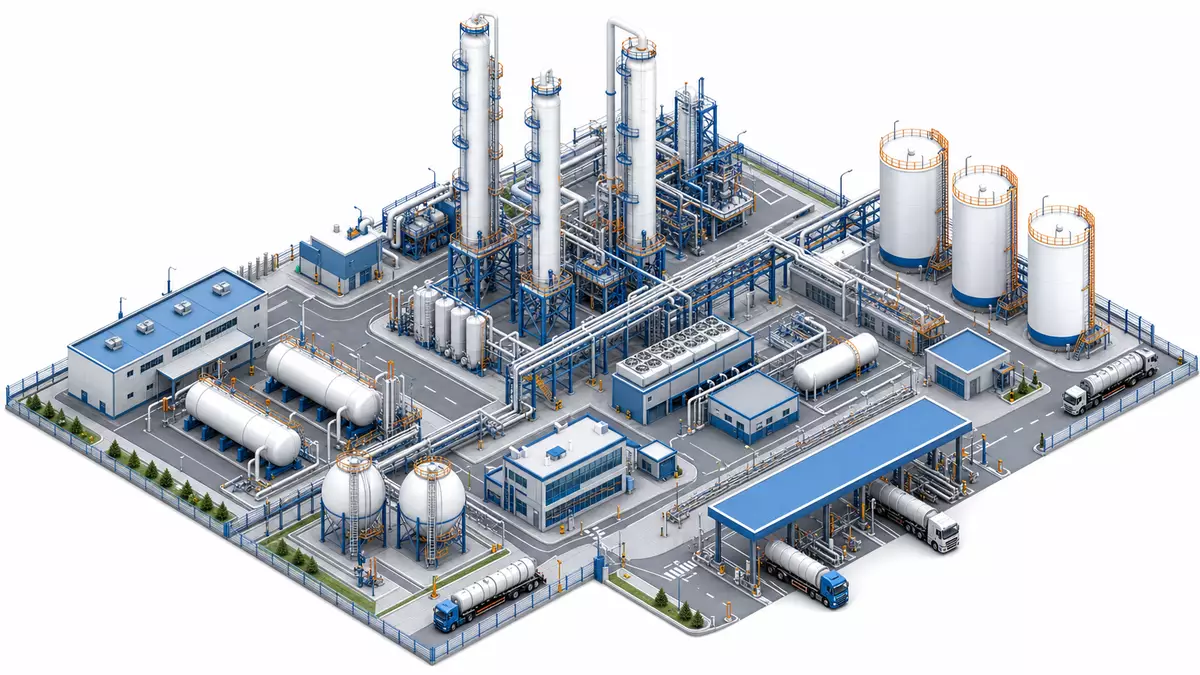
Within Lindes broader portfolio, process equipment and cryogenic storage systems associated with Lindes engineering operations provide a concrete example of product-level activity. Through brands such as VRV, the company supplies cryogenic tanks, heat exchangers, and process vessels used in industrial gas, LNG, and chemical applications. These products underpin the delivery and storage of gases from production plants to end-users, ensuring safety, reliability, and efficiency.
Demand for such equipment is linked to investment cycles in industrial facilities and energy infrastructure. As customers build new plants or upgrade existing ones, they require advanced process equipment that meets stringent technical standards. While this product line is smaller than Lindes core gases business, it supports the overall ecosystem of production and distribution and can contribute to revenue growth in engineering. For investors, this illustrates how Linde participates not only in supplying gases but also in providing hardware that supports industrial operations.
Linde stock and recent trading levels
Linde stock is listed on the New York Stock Exchange under the ticker LIN and has a large free float, reflecting its status as a major global industrial company. The shares have historically traded at valuation multiples that reflect both the stability of earnings and the perceived growth potential of hydrogen and other clean-energy-related projects. Price movements over time have corresponded with broader market cycles, changes in industrial demand indicators, and shifts in investor appetite for defensive versus cyclical exposures.
At recent trading levels, Lindes market capitalization ranks among the largest companies in the chemicals and industrial gases sector, underscoring its importance to global equity indices and sector funds. For investors, the combination of scale, liquidity, and inclusion in major indices makes Linde stock a reference point for industrial gases exposure. As new financial results and project updates emerge, the market continuously reassesses the balance between current earnings, future growth prospects, and risk factors.
Linde at a glance
- Company: Linde plc
- ISIN: IE00BZ12WP82
- Ticker: NYSE: LIN
- Trading venue: NYSE
- Sector / Industry: Materials / Industrial Gases
- Index membership: S&P 500
Disclaimer regarding our articles: No investment advice, no buy or sell recommendation. Information on prices, companies, and markets is provided without guarantee; changes are possible at any time. Stock market transactions can lead to substantial losses. Our articles are created and reviewed in whole or in part automatically with the support of AI.