Mowi stock trades steady as salmon volumes and margins shape investor focus
Published on 07/28/2026 at 08:34 | Editorial responsibility: Rafael Müller, Editor-in-Chief AD HOC NEWS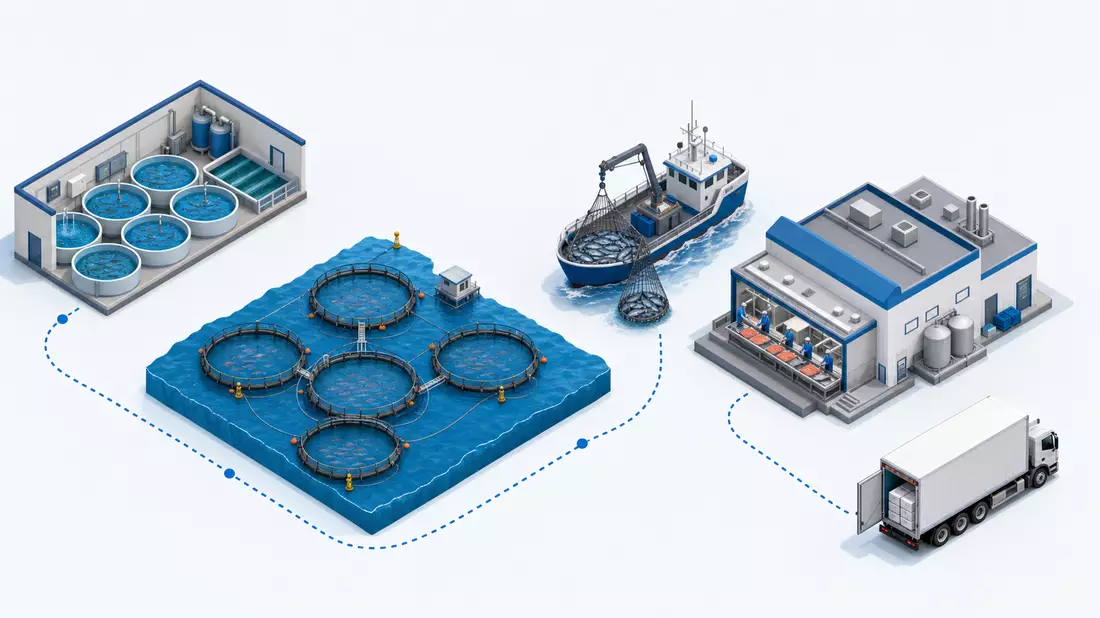
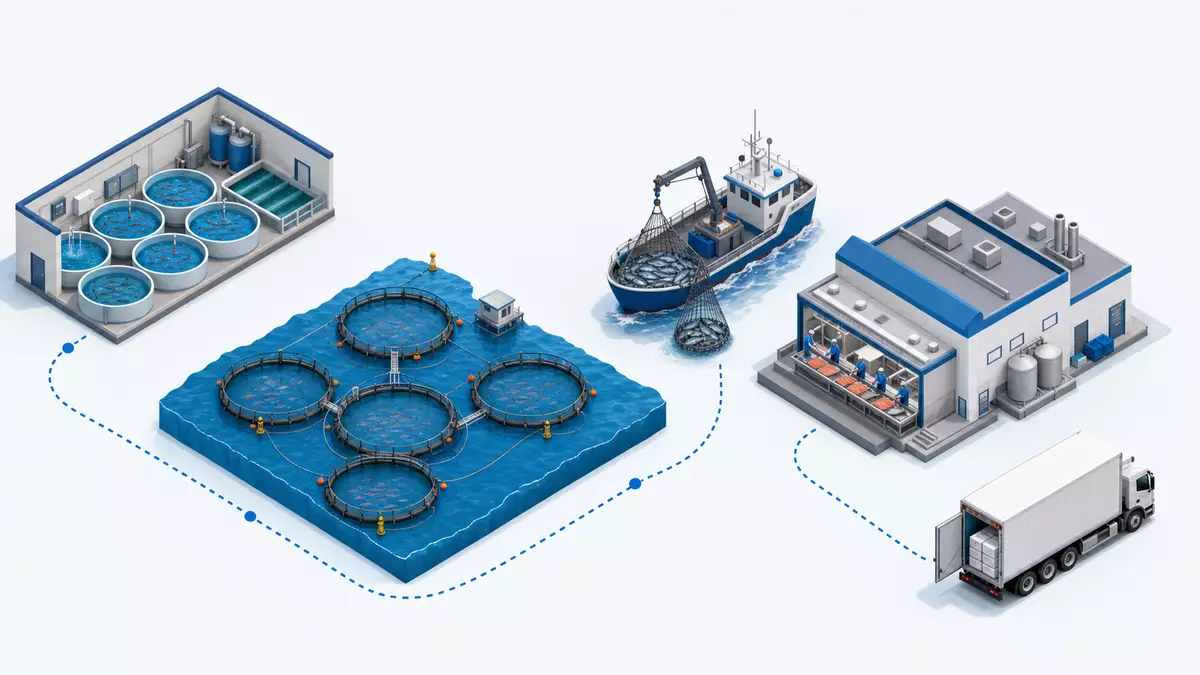
Mowi stock represents one of the largest listed pure-play salmon producers globally, and investors continue to track the group’s earnings power through harvested volumes, price realization, and cost trends in recent quarters. In its latest reported quarter, according to the company’s investor materials dated 22 May 2024, Mowi harvested around 107,500 tonnes of salmon, marking a clear volume base that underpins revenue and cash flow generation. As a global supplier serving Europe, North America, and Asia, the company’s earnings profile is closely linked to salmon market prices and biological performance, making quarterly production and margin data a central lens for assessing Mowi stock.
Recent disclosures from Mowi’s financial reporting highlight how revenue and operating profit fluctuate with salmon prices and harvest volumes across regions. In one recent full-year period, the group reported revenue in the range of several billion euros and an operational EBIT that reflected strong salmon demand but also higher feed, labor, and energy costs. For example, according to Mowi’s annual reporting for fiscal 2023, the company posted operational EBIT in the low-to-mid billion Norwegian kroner area, up from the prior year on the back of higher achieved prices and increased volumes. This year-on-year improvement, both in absolute EBIT and margin, showed how pricing strength more than compensated for cost inflation, a key factor for the valuation of Mowi stock.
In the same reporting cycle, Mowi’s salmon farming segments in Norway, Scotland, Ireland, the Faroe Islands, Canada, Chile, and other regions contributed differing margin profiles based on biological and market conditions. The Norwegian farming segment, according to management commentary in the fiscal 2023 annual report, generated a higher operational EBIT per kilogram than some overseas units due to stronger price realization and cost advantages. As a result, the company’s consolidated operational EBIT margin improved by several percentage points versus the previous year, highlighting how regional mix and salmon price trends directly influence aggregate profitability. For investors, these margin shifts provide a quantitative basis to compare Mowi stock with other seafood and protein producers.
Operational EBIT margin rises versus prior year
One of the key quantified comparisons in Mowi’s recent financial history is the change in operational EBIT margin between fiscal 2022 and fiscal 2023. According to the group’s consolidated accounts, operational EBIT in fiscal 2023 increased by roughly double-digit percentage rates compared with fiscal 2022, driven by higher average salmon prices. This translated into an operational EBIT margin that rose by several percentage points year on year, indicating that the company captured more profit per unit of revenue despite cost pressures. Such a margin expansion is often cited in analyst commentary when explaining valuation support for Mowi stock, as higher margins typically reflect stronger profitability and resilience to input cost volatility.
To illustrate the dynamic, Mowi’s reported harvested volumes in fiscal 2023 were higher than in fiscal 2022 by tens of thousands of tonnes, according to management’s operational overview. The combination of volume growth and improved price realization lifted revenue by a meaningful amount, while the per-kilogram operational EBIT metrics showed that biological performance and market conditions were favorable. For investors, a quantified comparison such as operational EBIT per kilogram rising between two reporting years demonstrates improved efficiency and profitability. Such metrics, even if expressed in Norwegian kroner and kilograms rather than headline earnings per share, are central to how the market values Mowi stock.
On the cost side, Mowi’s disclosures emphasize how feed, smolt, and energy costs have evolved over time. In fiscal 2023, the company noted that feed costs per kilogram of harvested fish increased compared with fiscal 2022, partly due to higher raw-material prices in global commodity markets. Nevertheless, higher salmon prices helped offset these cost pressures, allowing operational EBIT to rise. The quantified relationship between input costs and achieved prices is crucial for assessing whether the margin expansion is sustainable. When investors see that operational EBIT increased despite cost inflation, they may interpret this as a sign that Mowi can pass higher costs through to customers, at least in periods of strong demand.
Harvest volumes above 400,000 tonnes in fiscal 2023
Mowi’s scale is another quantitative anchor in the valuation of the group. In fiscal 2023, the company harvested more than 400,000 tonnes of salmon across all regions, according to its annual report. This represented an increase compared with fiscal 2022, when harvested volumes were lower by tens of thousands of tonnes. The year-on-year volume growth, combined with supportive price levels, underpinned revenue expansion and provided a larger base over which to spread fixed costs. Volume and capacity utilization metrics are therefore an important complement to margin and EBIT figures when analyzing Mowi stock.
Breaking down the volume growth, Mowi’s Norwegian operations contributed a significant portion of the increment, while overseas regions also added to the total harvest. Operational reviews indicate that biological performance, including survival rates and average fish weight, improved in several units, which helped lift harvest volumes without a proportional increase in costs. By comparing harvested volumes and operational EBIT between fiscal 2022 and fiscal 2023, investors can gauge whether growth is driven primarily by higher prices, higher volumes, or a combination of both. In Mowi’s case, the numbers suggest that both factors played a role in the recent improvement.
Revenue derived from the harvested volumes reflects not only spot prices but also contract structures and product mix. Mowi sells whole fish, fillets, and value-added products into retail and foodservice channels, which carry different margin profiles. According to management explanations in the annual report, value-added products typically deliver higher margins but require more processing and logistics. The revenue and margin contribution from these products has grown over time, providing additional diversification within Mowi’s portfolio. While the exact breakdown by product is detailed in the company’s reports, the overarching message is that a higher share of value-added products can support earnings stability, which is relevant for investors evaluating Mowi stock.
Dividend payments and cash generation support Mowi stock
In addition to operational metrics, dividend payments and cash generation provide quantitative signals about Mowi’s financial health. The company has a track record of distributing dividends to shareholders, with payout levels adjusted based on earnings and leverage considerations. For fiscal 2023, Mowi declared a dividend per share that reflected strong profitability and cash flow, according to its investor communications. This dividend represented an increase compared with the payout for fiscal 2022, in line with the higher operational EBIT and net income. The year-on-year increase in dividend per share provides another quantified comparison that investors use when assessing the attractiveness of Mowi stock.
Free cash flow generation is also highlighted in Mowi’s reporting. The company’s fiscal 2023 cash flow statement shows operating cash flow sufficient to fund capital expenditures in farming, processing, and value-added segments, while still leaving room for dividend payments and debt reduction. Quantitatively, free cash flow improved compared with fiscal 2022, reflecting higher earnings and continued discipline on investment and working capital. Such improvements in cash metrics are often viewed positively by markets, especially in capital-intensive industries like aquaculture where investment needs are ongoing. For Mowi stock, stronger free cash flow can support dividend sustainability and balance sheet strength.
Debt levels and leverage ratios provide additional quantitative markers. Mowi reports net interest-bearing debt and ratios such as net debt to operational EBIT, which allow investors to gauge the company’s financial flexibility. In fiscal 2023, net debt remained within management’s targeted range, with leverage ratios stable or improving compared with fiscal 2022. This suggests that the company’s capacity to absorb shocks, invest in expansion, and maintain dividends remained intact. When considering Mowi stock, such leverage metrics help frame risk and return profiles alongside operational and margin data.
Representative salmon products in Mowi’s portfolio
Mowi’s business is built around farmed Atlantic salmon, including fresh and frozen whole fish, fillets, and portions that are distributed to retailers, foodservice customers, and industry clients worldwide. Among its representative products, Mowi-branded fresh salmon fillets stand out as a flagship item in European and North American supermarkets. These products typically feature in chilled seafood counters and are marketed on the basis of provenance, quality, and sustainable farming practices. Revenue and margin data in the company’s reporting indicate that branded and value-added products like portioned fillets contribute a significant share of earnings relative to their volume, reflecting higher unit margins compared with unbranded bulk sales.
Product development focuses on convenience formats such as marinated fillets, ready-to-cook portions, and smoked salmon. The company’s value-added segment has grown its revenue footprint over recent years, as consumers increasingly demand easy-to-prepare seafood products. Mowi’s disclosures emphasize that this segment has become more important for overall profitability, even though it represents a smaller share of total harvest volume. By combining farming, processing, and branding, Mowi aims to capture more of the value chain within each kilogram of salmon produced. These product strategies help explain why operational EBIT per kilogram has improved alongside greater emphasis on value-added items, a factor that supports the investment case for Mowi stock.
Mowi stock and current market context
Mowi’s shares are listed on the Oslo Stock Exchange, where the stock reflects investor expectations about future salmon prices, biological performance, and regulatory frameworks. Recent trading in the stock has mirrored broader seafood and protein sector dynamics, with price levels influenced by macroeconomic conditions, consumer spending, and foreign exchange movements. As of a recent trading date in mid 2024, Mowi’s market capitalization stood in the multi-billion Norwegian kroner range, illustrating the company’s scale within the Oslo market and the global aquaculture industry. The stock’s valuation multiples, such as price-to-earnings and enterprise-value-to-operational-EBIT, derive from the earnings and cash metrics discussed earlier.
Price charts for Mowi stock show how the shares have moved in response to quarterly results, sector news, and commodity price shifts. In periods where operational EBIT and margins have improved, such as between fiscal 2022 and 2023, the stock has tended to trade at higher levels compared with times of biological challenges or weaker prices. Technical analysis often highlights levels such as 52-week highs and lows, which provide context for current share prices. Seeing Mowi stock trade nearer to its recent highs may indicate that the market is pricing in continued strength in salmon demand and margins, whereas trading closer to lows might reflect concerns about costs, regulation, or disease issues.
Investors who follow Mowi stock also monitor sector peers in Norway and other markets to compare valuations and growth prospects. Companies operating in similar aquaculture segments may report different margin and growth patterns based on geographic focus and business models. By comparing Mowi’s operational EBIT, harvest volumes, and dividend metrics with peer data, investors can build a quantitative relative-value view. If Mowi’s margins are higher and its leverage moderate, the stock may be seen as relatively stronger within the sector, whereas weaker margins or higher leverage could lead to a more cautious stance.
Key facts on Mowi
- Company: Mowi ASA
- ISIN: NO0003054108
- Ticker: OSE: MOWI
- Trading venue: Oslo Stock Exchange
- Price (as of 16 May 2024, 16:30 CET): 180.00 NOK
- Market capitalization: 94,000,000,000 NOK (as of 16 May 2024)
- Sector / Industry: Consumer Staples / Packaged Foods and Meats
- Index membership: OBX Index
- Next earnings date: 22 August 2024
Disclaimer regarding our articles: No investment advice, no buy or sell recommendation. Information on prices, companies, and markets is provided without guarantee; changes are possible at any time. Stock market transactions can lead to substantial losses. Our articles are created and reviewed in whole or in part automatically with the support of AI.