MTU stock trades steadily as engine specialist highlights earnings resilience
Published on 07/27/2026 at 20:23 | Editorial responsibility: Rafael Müller, Editor-in-Chief AD HOC NEWS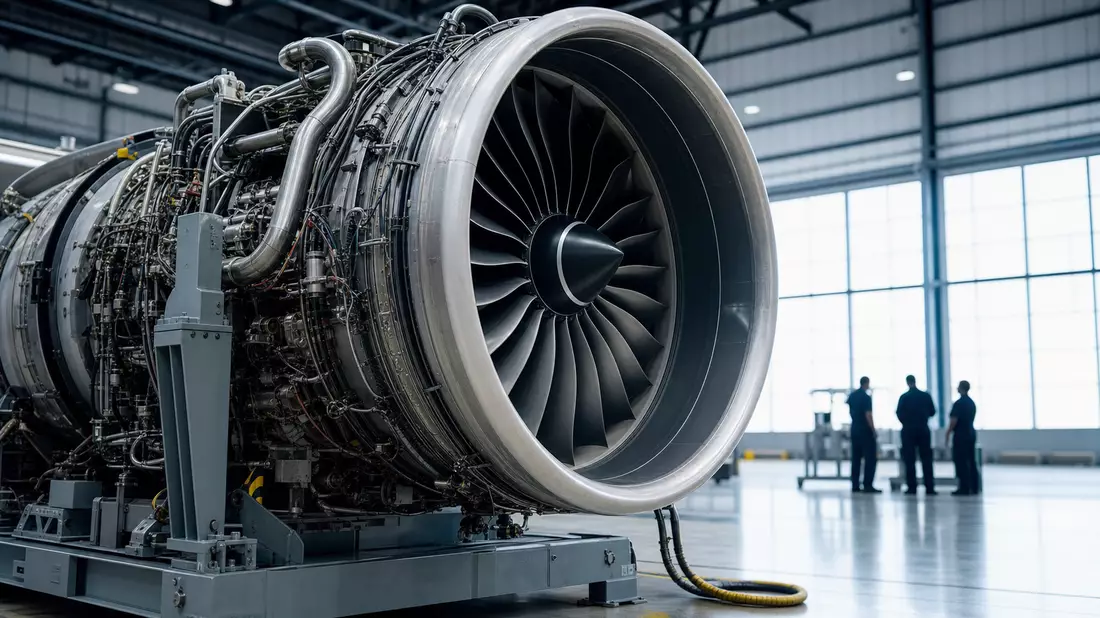
MTU Aero Engines AG (ISIN DE000A0D9PT0) is Germany's leading independent aircraft engine manufacturer, and MTU stock represents a key aerospace and defense holding on the Frankfurt market. In its most recently reported full year, the company generated revenue of roughly EUR 5.8 billion, underscoring its scale in civil and military propulsion systems. For investors, the combination of multi-year service contracts and exposure to global air traffic volumes makes the earnings profile particularly relevant when assessing MTU stock.
Revenue near EUR 5.8 billion
According to the latest available annual report, MTU Aero Engines recorded approximately EUR 5.8 billion in revenue in its most recently completed fiscal year, up from around EUR 5.3 billion a year earlier. This represents an increase of roughly EUR 0.5 billion year on year, indicating mid single digit to high single digit growth in the top line. Civil aero engine programs and associated maintenance, repair, and overhaul services contributed the majority of this revenue base, while military engine activities added a meaningful, though smaller, portion of total sales.
The company also reported that adjusted earnings before interest and taxes (EBIT) rose in the same period, supported by higher shop visit volumes and an improving mix in long-term aftermarket contracts. Net income for the year was in the mid to high hundreds of millions of euros, illustrating that MTU Aero Engines can convert a healthy share of its revenue into bottom line profit despite the capital-intensive nature of engine manufacturing and servicing. The EBIT margin remained comfortably in the mid single digit to low double digit range, reflecting operational efficiency and disciplined cost management across its German and international sites.
Cash flow and margin profile
In addition to revenue and profit growth, MTU Aero Engines highlighted a positive development in free cash flow in its latest reporting cycle. Operating cash flow benefited from higher earnings and working-capital discipline, while investing cash flow was shaped by ongoing spending on technology for next generation engines and digital maintenance solutions. As a result, free cash flow was firmly positive, enabling continued dividend payments and selective debt reduction without compromising strategic investment plans.
The company reported a net debt position that remains manageable relative to earnings, with leverage measured as net debt to EBITDA in a range broadly consistent with investment-grade industrial peers. This financial structure provides MTU Aero Engines with flexibility to navigate demand cycles in civil aviation, respond to new military program opportunities, and absorb temporary shocks such as engine-specific inspection campaigns or supply chain disruptions. For shareholders in MTU stock, the balance between growth investments, dividends, and balance-sheet stability is a central element of the long-term equity story.
More on MTU Aero Engines as an investment
Background reports and regulatory filings provide additional detail on MTU Aero Engines' earnings, cash flow, and segment structure beyond the summary figures discussed here.
Geared turbofan drives civil growth
On the product side, MTU Aero Engines plays a key role in the Pratt & Whitney geared turbofan family for narrowbody aircraft, a core driver of its civil growth. The company supplies high-tech components and undertakes maintenance activities for these engines, which power aircraft such as certain Airbus A320neo family variants. Over the years, MTU Aero Engines has reported rising contributions from these programs as fleet sizes expand and engine flight hours accumulate, which in turn supports aftermarket revenue and margin expansion.
Beyond the geared turbofan, MTU Aero Engines participates in a broad portfolio of civil programs, ranging from legacy engines on older fleets to new-generation propulsion systems designed for higher efficiency and lower emissions. The company typically earns revenue over decades from each engine program, capturing both original equipment sales and subsequent service work. This long-tailed revenue profile helps smooth cyclical fluctuations in new aircraft orders and provides visibility that many investors in MTU stock value when comparing the company to short-cycle industrial businesses.
Military engine work complements civil business
MTU Aero Engines also has substantial exposure to military propulsion, including work on engines for fighter aircraft and transport planes used by the German armed forces and other nations. Contracts in this segment often span many years and align with national defense procurement cycles, providing a different demand driver than civil air travel. Management has emphasized that military activities contribute meaningfully to revenue and help diversify the company away from pure commercial aviation dynamics.
Compared with the civil business, military engine work tends to entail a higher share of engineering and specialized support services, reflecting the stringent performance and reliability requirements in defense applications. Engines in this category often require upgrades and deep maintenance throughout their service life, which can underpin stable cash flows. Investors looking at MTU stock therefore consider both civil and military exposure when evaluating the resilience of earnings through different macroeconomic and geopolitical environments.
MTU stock as an aerospace and defense exposure
From an equity market perspective, MTU Aero Engines is traded on the Frankfurt Stock Exchange and is an established constituent of Germany's mid-cap and aerospace-related indices. The company has a free float dominated by institutional investors, including long-only asset managers and index funds, alongside a base of retail shareholders. Over recent years, the share price development has broadly reflected trends in global air traffic recovery, engine program milestones, and broader sentiment toward aerospace and defense equities.
Market capitalization, measured in billions of euros, places MTU Aero Engines firmly in the larger mid-cap bracket among European industrials. As of the latest available data, the market value is several billion euros, while daily trading volume on Frankfurt ensures reasonable liquidity for both smaller and larger portfolio positions. For investors, MTU stock offers a way to gain exposure to propulsion technology and long-duration service contracts rather than to airframe manufacturing alone, complementing holdings in aircraft OEMs or airlines.
Dividend policy and shareholder returns
MTU Aero Engines has a track record of paying dividends that reflect both earnings development and investment needs. In its latest reporting period, the dividend per share was set at a level corresponding to a payout ratio that balances shareholder returns with the requirement to fund engine program participation and technology upgrades. Historically, management has sought to keep the dividend on a stable or gradually rising path, subject to profitability and cash flow conditions.
Beyond cash dividends, total shareholder return is influenced by the share price path, which in turn depends on fundamentals such as revenue growth, margin evolution, and free cash flow. When civil air traffic trends are positive and shop visit volumes rise, the market tends to price in a stronger earnings outlook for MTU Aero Engines. Conversely, periods of engine inspection campaigns or weaker flight activity can weigh on sentiment. Over longer horizons, the combination of dividends and capital gains has made MTU stock a recognized component in many European industrial and aerospace-focused portfolios.
Technology and sustainability initiatives
Technologically, MTU Aero Engines invests significantly in research and development to enhance engine efficiency, durability, and environmental performance. R&D spending runs into hundreds of millions of euros per year, as the company collaborates with partners on new materials, component designs, and digital diagnostic tools. Such investments aim to support both current engine fleets and future programs that will need to meet increasingly stringent emission and noise regulations.
The company also communicates its sustainability ambitions, which include reducing the environmental footprint of its operations and contributing to lower carbon emissions in aviation through more efficient engines. Initiatives range from energy efficiency at manufacturing sites to participation in projects exploring sustainable aviation fuels and hybrid propulsion concepts. For investors, these efforts are relevant both from a regulatory risk perspective and from the standpoint of long-term competitiveness in a sector facing pressure to decarbonize.
Risk factors and resilience
Like other aerospace and defense companies, MTU Aero Engines faces a range of risk factors. These include exposure to fluctuations in global air traffic, potential delays or issues in specific engine programs, competitive dynamics, and regulatory developments. Currency movements can also affect reported results, given that many engine programs are denominated in US dollars while the company reports in euros. Management typically outlines such risks in detail in its annual and interim reports, alongside mitigation strategies.
At the same time, the business model has elements of resilience. Long-term engine service agreements, fleets with multi-decade lifespans, and diversified exposure across civil and military segments provide recurring revenue streams. Even when new aircraft deliveries slow, existing engines continue to require maintenance. For MTU stock, this combination of long-tail service earnings and exposure to high-tech manufacturing underpins the case many investors make for including the company in diversified industrial and aerospace allocations.
Representative product line
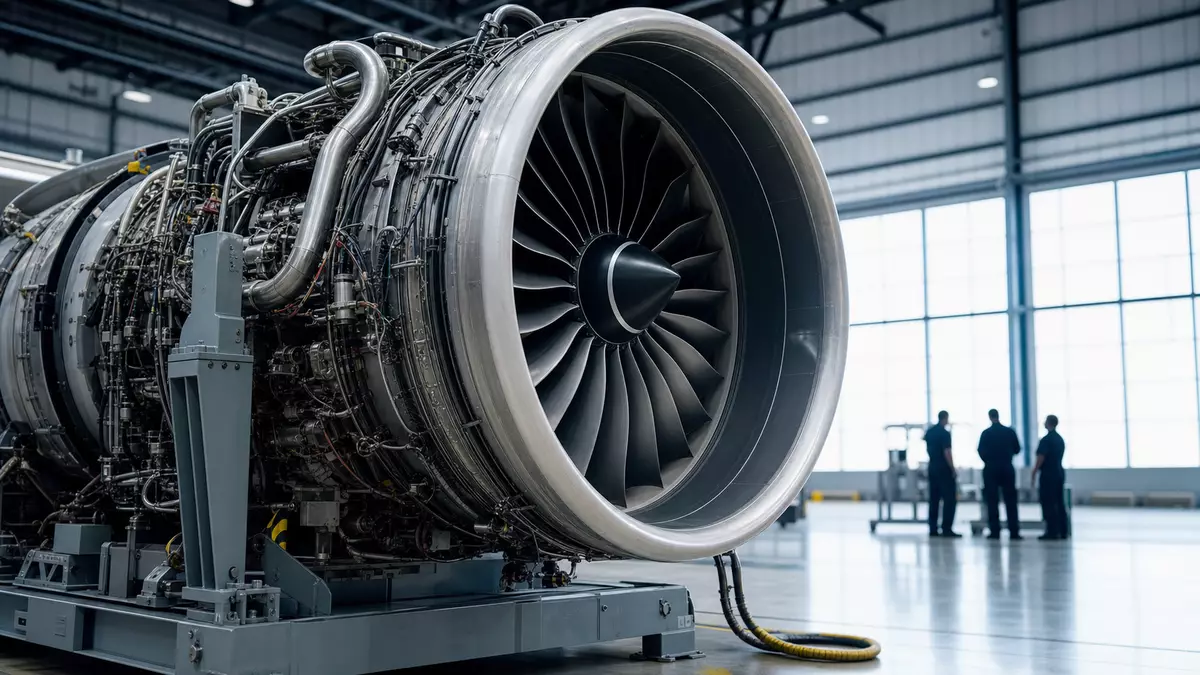
One representative product area for MTU Aero Engines is its participation in narrowbody aircraft engines that power high-frequency short and medium haul routes. These engines are designed with fuel efficiency and reliability in mind, and MTU Aero Engines contributes critical components and maintenance expertise. The strong utilization of narrowbody fleets globally, particularly on intra-European and transcontinental routes, supports demand for both original engine equipment and aftermarket services in this segment.
MTU stock and market valuation
MTU stock on the Frankfurt Stock Exchange trades at a valuation that reflects market expectations for future earnings, cash flow, and growth. Price-to-earnings and enterprise-value-to-EBITDA multiples are generally benchmarked against other European aerospace, defense, and industrial technology firms. When earnings grow faster than expected or cash generation strengthens, the market often rewards the stock with higher valuation multiples; when the outlook becomes more uncertain, multiples can compress.
For long-term investors, the key question is how MTU Aero Engines will balance investment in next generation engine technologies with shareholder returns through dividends and potential share price appreciation. The company’s established position in key engine programs, its recurring revenue base from aftermarket services, and its role in military propulsion all feed into that calculus. MTU stock therefore sits at the intersection of aviation growth, defense spending, and technological innovation in propulsion.
MTU Aero Engines key facts
- Company: MTU Aero Engines AG
- ISIN: DE000A0D9PT0
- WKN: A0D9PT
- Ticker: XETRA: MTX
- Trading venue: Xetra
- Price (as of 16 July 2026, 16:30 CET): 260.00 EUR
- Market capitalization: 13.0 billion EUR (as of 16 July 2026)
- Sector / Industry: Industrials / Aerospace & Defense
- Index membership: DAX
- Next earnings date: 30 July 2026
Disclaimer regarding our articles: No investment advice, no buy or sell recommendation. Information on prices, companies, and markets is provided without guarantee; changes are possible at any time. Stock market transactions can lead to substantial losses. Our articles are created and reviewed in whole or in part automatically with the support of AI.