Nvidia Begins Mass Production of Vera-Rubin as $25 Billion Bond Strengthens Financial Foundation
Published on 06/22/2026 at 12:16 | Redaktion boerse-global.de
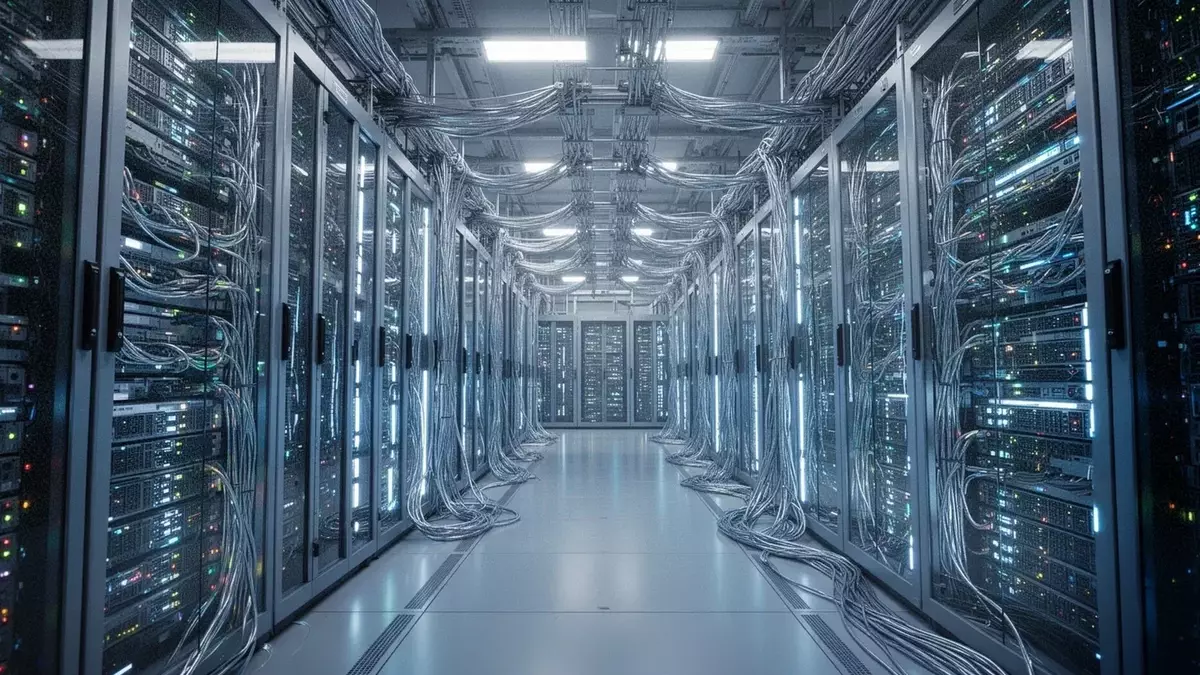
Nvidia has quietly fired the starting gun on its next-generation chip platform, Vera-Rubin, with R200 graphics processors now rolling off production lines in more than 350 factories worldwide. The move comes just days before the company’s annual shareholder meeting on Wednesday, 24 June, and alongside a massive capital raise that underscores management’s conviction in the AI spending cycle.
The $25 billion bond issued in mid-June was met with staggering demand — investors bid for roughly $85 billion of the debt, reflecting institutional confidence in Nvidia’s ability to monetise the infrastructure buildout. Proceeds will flow into production capacity and a previously announced $80 billion share buyback programme. Chief Financial Officer Colette Kress has committed to returning at least half of free cash flow to shareholders, a signal that the chipmaker sees its cash generation as sustainable.
The capital injection supports a product cycle that is already delivering record numbers. In the first quarter of fiscal 2026, Nvidia posted revenue of $81.6 billion, up 85% year on year. The data centre segment alone brought in $75.2 billion, powered by the ramp of Blackwell-300 products and strong networking demand. Critically, hyperscalers now account for only about half of that data centre revenue; the rest comes from AI?cloud providers, industrial customers, enterprises and government buyers — a diversification that reduces dependence on a handful of mega-cap clients.
That structural shift aligns with CEO Jensen Huang’s view that AI capital expenditure could reach $3 to $4 trillion. The five largest hyperscalers are on track to invest around $725 billion in 2026, roughly 64% more than last year. Goldman Sachs projects the US data centre capacity deficit will swell from over 11 gigawatts today to 45 gigawatts by 2028. If those estimates prove even broadly correct, Nvidia’s chip demand looks less like a one-off spike and more like a multiyear supercycle.
Should investors sell immediately? Or is it worth buying Nvidia?
Yet the sustainability of that cycle hinges on a single inflection point: when does AI training translate into revenue-generating inference? The market has priced in the capital expenditure wave but has not fully discounted the transition to paying customers for AI outputs. That uncertainty, combined with a geopolitical overhang, explains why the stock has lagged behind the revenue surge.
China remains the deepest exposure. In the most recent quarter, Nvidia shipped no Hopper data centre products to the country — a sharp contrast to the $4.6 billion it generated from China a year earlier. The company’s CFO estimated that H20 orders alone would have totalled roughly $8 billion without export restrictions. The Chinese AI accelerator market could grow to nearly $50 billion, and Nvidia’s own assessment is that ceding that market would be a materially negative outcome that benefits foreign rivals. Although the US Commerce Department eased export rules in January 2026 by shifting to case?by?case reviews, the channel remains largely blocked, giving Chinese alternatives time to develop their own controlled AI infrastructure.
On the technical side, the stock trades at €182.82, just above its 50?day moving average of €180.50, while the 200-day average sits comfortably at €163.20. The relative strength index is neutral at 51.5. The year?to?date gain of 13.48% is respectable but modest for a company growing revenue at 85%. The analyst consensus price target of €260.63 implies upside of more than 42% from current levels.
Meanwhile, Nvidia is deepening its industrial footprint. During a visit to the company’s headquarters, senior executives from South Korea’s LG Group discussed a broad collaboration on artificial intelligence and robotics. Nvidia will supply its Jetson?Thor platform to automate LG’s complex manufacturing lines, a deal that sent LG Electronics’ shares up 12% when initial talks became public.
Nvidia at a turning point? This analysis reveals what investors need to know now.
The Vera?Rubin architecture itself targets autonomous AI agents and processes data ten times faster than its predecessor, Grace Blackwell. With first deliveries scheduled for autumn 2026, the chip is designed to accelerate the inference?driven applications that investors so desperately want to see emerge.
Wednesday’s shareholder meeting will follow a routine agenda — director elections, an advisory vote on executive compensation, ratification of the auditor — but the real conversation will focus on Blackwell’s scaling trajectory, the timing of meaningful inference revenue, and how management plans to navigate the China impasse. The Vera?Rubin ramp and the bond sale have put the company on a strong financial footing, but the market is waiting for clarity on the demand side of the equation. Huang’s language in the Q&A may matter as much as the numbers themselves.
Ad
Nvidia Stock: New Analysis - 22 June
Fresh Nvidia information released. What's the impact for investors? Our latest independent report examines recent figures and market trends.
Disclaimer regarding our articles: No investment advice, no buy or sell recommendation. Information on prices, companies, and markets is provided without guarantee; changes are possible at any time. Stock market transactions can lead to substantial losses. Our articles are created and reviewed in whole or in part automatically with the support of AI.