Nvidia stock consolidates near record levels as AI revenue drives strong growth
Published on 07/29/2026 at 08:19 | Editorial responsibility: Rafael Müller, Editor-in-Chief AD HOC NEWS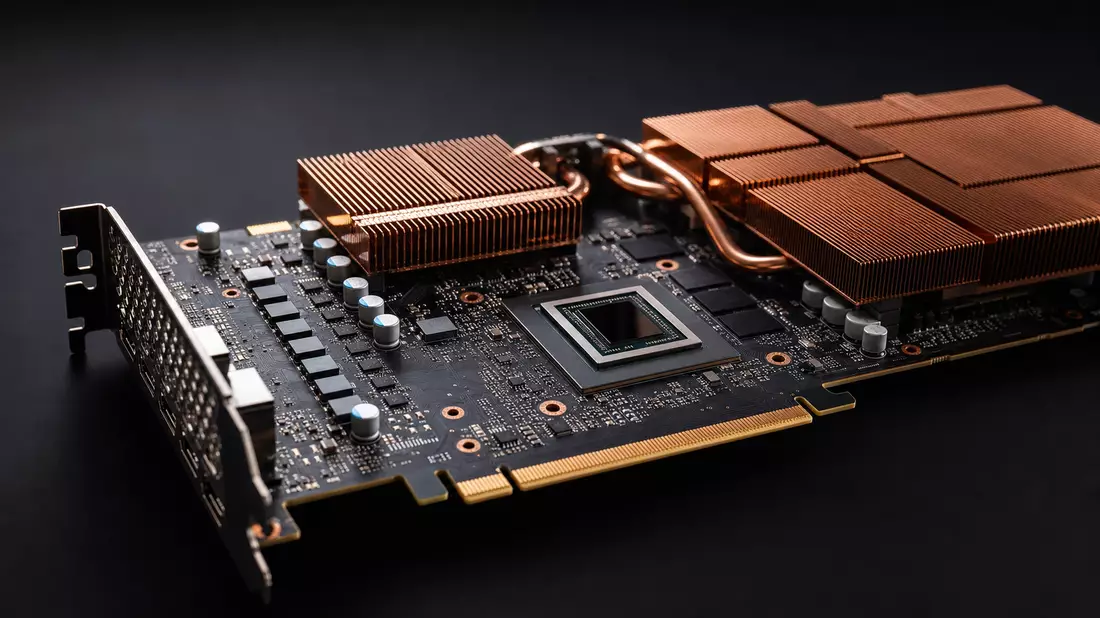
Nvidia stock is trading close to record territory, with the US chip designer (ISIN US67066G1040) supported by a sharp acceleration in earnings and AI-driven data center demand in its latest reported quarter. In the companys fiscal 2025 first quarter, Nvidia reported revenue of $26.0 billion, up about 262% from $7.19 billion a year earlier according to its investor relations materials. Profitability expanded even faster, with reported net income rising to roughly $14.9 billion compared with $2.0 billion in the prior-year quarter, highlighting how AI workloads are transforming the companys earnings profile.
Data center revenue surges over two hundred percent
According to Nvidia investor relations information for fiscal 2025 Q1, the biggest earnings driver was the data center segment, which includes GPUs for generative AI and large language model workloads. Data center revenue reached approximately $22.6 billion in that quarter, compared with around $4.3 billion a year earlier, implying growth of more than 400% year-on-year and underlining the scale of the demand for Nvidia hardware in hyperscale and enterprise AI deployments. This segment now accounts for the vast majority of the companys total sales, making it the key focus for investors who are trying to gauge the durability of the current AI cycle.
Other parts of the business are growing at a more modest pace but still contribute to the overall expansion. For example, Nvidia has reported that its gaming segment returned to growth as demand for GeForce GPUs improved alongside new product cycles, while professional visualization and automotive remain much smaller contributors to revenue. In fiscal 2025 Q1, gaming revenue was in the low billions of dollars and up strongly year-on-year, although far outweighed by the data center contribution. The relative scale difference means that changes in data center spending by large cloud and enterprise customers can have an outsized impact on the companys quarterly results.
Margin expansion and earnings acceleration
The strong revenue growth in the latest reported quarter translated into substantial margin expansion. Nvidia disclosed that its gross margin on a GAAP basis rose to around the mid-seventies percent range in fiscal 2025 Q1, compared with roughly the mid-sixties percent range a year earlier, reflecting improved mix toward high-end data center GPUs and better utilization of manufacturing capacity. Operating margin expanded even more as operating expenses grew much slower than revenue; operating income increased several-fold compared with the prior-year quarter, highlighting the operating leverage inherent in Nvidias model when demand is strong.
On a per-share basis, Nvidia reported diluted earnings per share in the neighborhood of $5 in fiscal 2025 Q1, versus around $1 in the previous year period, representing several hundred percent growth. That earnings trajectory has been central to the market narrative: the stock valuation multiples are high by traditional semiconductor standards, but investors have so far been willing to accept premium pricing because the company is delivering rapid earnings expansion in tandem with AI infrastructure build-outs. Dividend payments remain modest relative to earnings, and share repurchases continue as a capital-return mechanism, though growth investment clearly remains the priority.
Further background on Nvidia fundamentals
More details on Nvidia financial results, guidance, and capital allocation, including segment-level data center and gaming trends, are available via the full investor relations materials.
AI GPUs and data center platforms
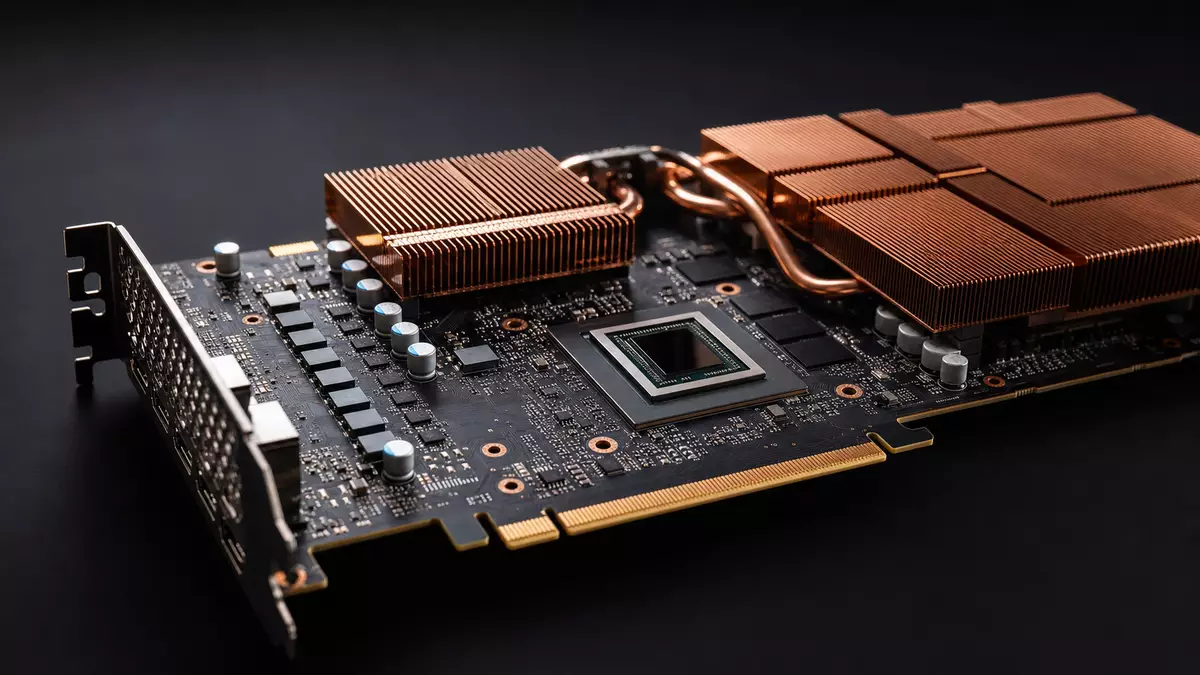
Nvidia is best known to many consumers for its GeForce gaming GPUs, but for the current earnings cycle the companys data center products are at the center of investor attention. Its portfolio of high-performance GPUs, such as the H100 and newer Blackwell architecture parts, is designed for training and inference of large AI models in data centers. These chips are often sold as part of complete systems and platforms that include networking, software, and storage, enabling customers to build clusters that can run generative AI workloads efficiently. Revenue recognition in the data center segment thus reflects not only chip sales but also broader system solutions.
The rapid uptake of these platforms by major cloud service providers, internet companies, and large enterprises is the primary reason why data center revenue now accounts for almost the entire revenue base. As more AI applications move from experimentation to deployment, customers are investing in larger clusters and refresh cycles, and Nvidia is positioned as a key supplier of the necessary compute. The company also offers software and libraries that help optimize performance on its hardware, reinforcing an ecosystem effect that can support pricing power and recurring revenue opportunities. For investors, the pace of new GPU launches and customer adoption is closely watched as a proxy for future revenue trajectories.
Stock valuation and market capitalization
On the market side, Nvidia stock is listed on Nasdaq under the ticker NVDA and is a member of major US equity indices such as the S&P 500 and the Nasdaq 100. The companys market capitalization has risen into the high hundred-billion to low trillion-dollar range in recent months, reflecting the sharp re-rating associated with its AI exposure. At recent levels, the share price implies a forward price-to-earnings multiple well above traditional semiconductor industry averages, underscoring that investors are pricing in continued rapid growth rather than a cyclical plateau.
From a technical perspective, Nvidia shares have recently traded near their 52-week highs, with pullbacks often associated with broader market volatility or shifting expectations about the pace of AI infrastructure spending rather than company-specific setbacks. The stock has posted strong gains on a year-to-date basis in recent reporting, benefiting not only from the earnings surprise in fiscal 2025 Q1 but also from upward revisions to revenue and earnings estimates by the analyst community. For retail investors, this combination of high valuation, rapid growth, and index membership means Nvidia can exert a notable influence on technology-sector and broad-market index performance.
GeForce gaming and consumer exposure
While data center AI platforms drive most of the current headlines, GeForce gaming GPUs remain an important part of Nvidias brand identity and revenue mix. The gaming segment reported revenue in the billions of dollars in fiscal 2025 Q1, significantly higher than in the prior-year period but still far smaller than data center. Demand in this segment is influenced by product cycles, PC upgrade trends, and the health of the broader gaming ecosystem, including game releases and esports activity. Pricing and mix can also fluctuate as Nvidia introduces new architectures and discontinuing older product lines.
For investors, the gaming business provides exposure to consumer spending trends and can offer diversification compared with the more enterprise-centric data center business. A strong gaming cycle can support revenue and earnings even if data center growth moderates, while a weak PC market can weigh on results despite robust AI demand. The segment has historically been more cyclical than data center, but Nvidias branding and ecosystem partnerships help it maintain a solid competitive position.
Stock price context
Nvidia stock, traded on Nasdaq as NVDA, has recently been quoted at a level in the several-hundred-dollar range per share, with the exact price moving in line with daily trading dynamics. At these levels, the shares sit not far below their 52-week high, while the 52-week low is substantially lower, reflecting the volatility that can accompany high-growth technology names. The companys valuation in dollar terms puts it among the most valuable listed semiconductor and technology hardware firms globally, and its weight in major indices means its price moves can have ripple effects across portfolios and exchange-traded funds that track those benchmarks.
Nvidia at a glance
- Company: Nvidia Corporation
- ISIN: US67066G1040
- Ticker: NASDAQ: NVDA
- Trading venue: Nasdaq
- Sector / Industry: Information Technology / Semiconductors
- Index membership: S&P 500, Nasdaq 100
Disclaimer regarding our articles: No investment advice, no buy or sell recommendation. Information on prices, companies, and markets is provided without guarantee; changes are possible at any time. Stock market transactions can lead to substantial losses. Our articles are created and reviewed in whole or in part automatically with the support of AI.