Nvidia stock trades near record levels as AI demand drives revenue and profit growth
Published on 07/19/2026 at 07:59 | Editorial responsibility: Rafael Müller, Editor-in-Chief AD HOC NEWS
Nvidia Corporation (ISIN US67066G1040) stock has been trading near record levels in recent months, reflecting intense investor interest in the companys role as a leading supplier of graphics processing units and AI accelerators. In its latest reported quarter for fiscal 2025, according to Nvidia investor relations data as of 22 May 2025, the company generated around $26.0 billion in quarterly revenue, a dramatic increase from roughly $7.2 billion in the same quarter of the prior year, underscoring how rapidly demand for its data center products has expanded. The sharp year on year growth in both revenue and earnings has helped keep Nvidia included in major US equity benchmarks, and the valuation attached to Nvidia stock on Nasdaq remains a focal point for investors tracking the broader semiconductor and AI segments.
Revenue up more than threefold
Revenue growth has become the central narrative for Nvidia in its recent financial reporting periods. In the fiscal quarter referenced above, Nvidia reported approximately $26.0 billion in revenue, compared with about $7.2 billion in the same quarter a year earlier, implying year on year growth of more than 260 percent. That jump in top line was largely driven by the data center segment, which benefited from cloud service providers, enterprise customers, and AI developers increasing their purchases of high performance GPUs and systems for training and inference workloads. For context, in an earlier fiscal 2024 quarter, Nvidia had already reported revenue of around $13.5 billion, showing that the company has been scaling rapidly quarter by quarter as AI infrastructure spending accelerates.
Even when looking back further, the multi year trajectory is striking. In fiscal 2023, Nvidia annual revenue stood near $27.0 billion, whereas by fiscal 2024 total revenue had climbed toward the $60.0 billion mark as strong demand from data center customers offset earlier volatility in gaming revenue. That means the company effectively more than doubled its annual revenue within roughly one year. For investors assessing Nvidia stock, such compounded growth rates in revenue are central to debates about whether current valuation multiples adequately capture or even over anticipate the pace of future expansion.
Profitability scales with AI demand
The growth story is not limited to revenue. Nvidia has also reported significant improvement in profitability metrics. In the same fiscal 2025 quarter cited earlier, the company recorded net income of roughly $15.0 billion, compared with around $2.0 billion in net income in the comparable prior year quarter. This equates to an increase of more than seven times, reflecting both the higher shipment volumes of data center products and the companys ability to maintain pricing and margins on its flagship AI accelerators. Operating margin and gross margin have been supported by product mix shifting toward high end chips and systems, which carry premium pricing relative to consumer oriented GPUs.
Looking at an earlier fiscal 2024 period, Nvidia had already reported quarterly net income in the range of $9.2 billion on revenue of around $22.0 billion, indicating strong profitability even before the latest jump in demand. That earlier quarter showed net income more than four times higher than in the prior year, highlighting how the companys earnings have been scaling faster than many traditional semiconductor peers. For Nvidia stock, these steep increases in net income and margins form the quantitative backbone of the investment case for those betting on continued AI adoption in data centers and enterprises.
Data center and AI chips dominate segment mix
Segment data reported over recent quarters underscore that Nvidia is increasingly a data center and AI centric business rather than a pure gaming hardware supplier. In a recent fiscal quarter, Nvidia indicated that data center revenue had reached around $22.6 billion, compared with approximately $4.3 billion in the same quarter of the prior year. That represents year on year growth of more than 400 percent in the data center segment alone, and means data center products accounted for the majority of the companys total quarterly revenue. Gaming segment revenue, by contrast, was reported at roughly $2.9 billion in that same quarter, up from around $2.2 billion a year earlier, a more modest increase that nonetheless illustrates continued resilience in the companys core consumer graphics market.
This shift in segment composition has implications for risk and opportunity assessments around Nvidia stock. The data center business tends to be more cyclical with hyperscale cloud providers and large enterprises adjusting capex in response to macroeconomic conditions and technology transitions, yet it also offers far larger addressable markets. As AI workloads move from experimental pilots to production deployment, the need for accelerators, network infrastructure, and related software grows. Nvidia has leveraged this trend through its platform approach, combining GPUs, networking gear, and software frameworks, which helps to sustain revenue per customer and recurring software related revenues.
Valuation and market capitalization context
The scale of revenue and earnings growth has translated into a very large equity market capitalization for Nvidia. During 2025, Nvidia market capitalization has at times exceeded $2.0 trillion, making it one of the most valuable publicly listed companies globally and a major constituent of the S&P 500 and Nasdaq 100 indices. For example, as of 31 May 2025, several market data providers showed Nvidia market cap hovering near $2.3 trillion, reflecting investor confidence in the durability of AI infrastructure spending. That level of market value positions Nvidia among a small group of mega cap US technology and semiconductor firms whose share price moves can significantly influence broad index performance.
On a valuation basis, metrics such as the price to earnings ratio and price to sales ratio have remained elevated relative to historical averages for the semiconductor industry. At various points in 2025, trailing twelve month price to earnings ratios for Nvidia have been quoted above 50 times, while price to sales multiples have often been in the low to mid teens. These ratios signal that investors are pricing in years of continued high growth in revenue and profit. However, they also imply that Nvidia stock could be sensitive to any slowdown in AI demand growth or increased competition in accelerator hardware and software ecosystems.
Share price trends and volatility
Nvidia share price movements over the past year illustrate both the enthusiasm and volatility surrounding AI exposed equities. As of early June 2025, market quote data indicated Nvidia shares traded around $1,150 on Nasdaq after the company completed a stock split adjustment, up significantly from approximately $400 one year earlier based on split adjusted figures. That means the share price has nearly tripled within twelve months, a performance that outpaced many other large technology names. Over the same period, 52 week low values were cited near $350, while 52 week highs brushed levels around $1,200, showing that the stock has spent much of the time in the upper half of its range.
Daily volatility has also been notable, with swings of several percentage points often occurring around quarterly earnings releases or major AI related announcements in the broader market. For example, after the fiscal quarter numbers released around 22 May 2025, Nvidia stock gained in the following sessions as investors digested the revenue and net income beats relative to consensus expectations. Such reactions underline the importance of earnings dates and guidance updates for short term share price behavior, even as longer term valuations continue to be driven by expectations about multi year AI infrastructure deployment.
Guidance and consensus expectations
In its forward looking statements accompanying recent quarterly results, Nvidia has provided guidance ranges that imply continued growth in the near term. For a coming fiscal quarter in 2025, Nvidia guidance has pointed to revenue around $28.0 billion, above the $26.0 billion recently reported and significantly higher than the roughly $11.0 billion in revenue recorded in the corresponding quarter of the prior year. This indicates that management anticipates AI infrastructure demand will remain strong, with further contribution from new product launches and increased adoption among enterprise customers.
Analyst consensus figures gathered by financial data providers have generally aligned with the companys guidance, with many forecasts projecting full year fiscal 2025 revenue above $100.0 billion and earnings per share rising accordingly. This compares with full year fiscal 2024 revenue in the region of $60.0 billion and EPS numbers that already showed substantial year on year increases. The quantified gap between past reported results and future guidance therefore remains wide, supporting the perception of Nvidia as a hyper growth large cap name. Nonetheless, consensus expectations can shift quickly if indicators suggest a deceleration in cloud or AI spending, or if regulatory developments alter the outlook for advanced chip exports in key regions.
Capital expenditure and supply capacity
To support these growth ambitions, Nvidia and its manufacturing partners have been increasing capital expenditure and capacity commitments. While Nvidia itself relies heavily on foundry partners to fabricate its chips, publicly available data indicates that the company has been coordinating supply to ensure sufficient volumes of leading edge nodes for upcoming product generations. For instance, supplier reporting and industry estimates suggest that production allocations for Nvidia AI GPUs in 2025 have been scaled up by tens of billions of dollars worth of wafer capacity compared with prior years.
This expansion aims to mitigate the supply constraints that characterized parts of 2023, when demand for AI accelerators outstripped available production capacity and lead times extended. Increasing supply should help Nvidia maintain revenue growth and reduce the risk of customers delaying projects due to hardware shortages. However, it also introduces the possibility that, over time, capacity could overshoot demand, which would have implications for pricing and margins. Investors watching Nvidia stock therefore pay attention to signals about manufacturing capacity, product transition timing, and the balance between supply and demand in the AI hardware market.
Competitive landscape and pricing dynamics
The competitive environment around AI accelerators and data center GPUs has been intensifying. Major chip makers and cloud providers have been developing alternative solutions, including custom accelerators and CPUs optimized for certain AI workloads. This competition is relevant for Nvidia because it can influence pricing power and gross margins on its flagship products. Despite these emerging alternatives, recent revenue and margin numbers show that Nvidia has continued to command high average selling prices for its AI hardware, supported by performance leadership claims and ecosystem lock in via its software stack.
Over the last several fiscal quarters, Nvidia gross margins have been reported above 70 percent, compared with levels in the 60 percent range in earlier years when gaming and consumer GPUs represented a larger share of its revenue. The step up in margins reflects the shift toward high value, data center oriented products and software offerings. For Nvidia stock, this margin profile is crucial, because any erosion in pricing or increased cost pressures as competition scales could alter earnings trajectories. Market participants therefore monitor customer feedback, benchmark results, and adoption of alternative accelerators as leading indicators of possible changes in Nvidia pricing dynamics.
Balance sheet strength and cash flows
Strong profitability has also led to robust cash generation. In its fiscal 2024 and early fiscal 2025 reporting, Nvidia highlighted free cash flow figures in the tens of billions of dollars annually. For example, in fiscal 2024, the company indicated that it generated around $28.0 billion in free cash flow, compared with approximately $5.0 billion two years earlier. This rise in free cash flow mirrors the surge in net income and operating cash flow, and gives Nvidia substantial flexibility in funding research and development, shareholder returns, and strategic investments.
The balance sheet has reflected this, with cash and equivalents rising and net debt remaining relatively modest compared with the overall scale of the business. Such financial strength is an important factor for investors considering Nvidia stock, as it provides a buffer against potential downturns and the resources to invest heavily in next generation technologies. It also supports the possibility of continued share repurchases or dividend adjustments over time, though any capital return decisions depend on management priorities and broader market conditions.
Dividend and capital return policies
Nvidia has historically paid a modest cash dividend relative to its market capitalization, reflecting its status as a growth oriented technology company. As of fiscal 2024, the annual dividend per share stood at a relatively small fraction of earnings, and the company has favored reinvesting cash flows in the business and returning capital through share repurchases when deemed appropriate. Given the rapid revenue and earnings expansion, some observers have discussed whether Nvidia might eventually raise its dividend significantly, but no major adjustments have been reflected in reported figures to date.
For investors, these capital return policies matter in assessing total return potential from Nvidia stock, combining share price appreciation with any dividend income. However, in a company undergoing such rapid growth, decisions about capital allocation toward research, development, and capacity expansion may take precedence over higher dividends, particularly as management seeks to sustain technology leadership in AI hardware and related software ecosystems.
Regulatory and export control considerations
Another dimension influencing Nvidia outlook and, by extension, sentiment around Nvidia stock, is regulatory and export control policy in key markets. Over the past two years, authorities in the United States have introduced and adjusted export restrictions on advanced semiconductor technologies to certain countries, including high performance GPUs. Nvidia has responded by developing product variants that comply with new rules while still targeting demand in restricted regions. Nonetheless, changes in export regimes can affect revenue opportunities and require strategic adjustments.
In some quarters, Nvidia reported that revenue growth in certain regions had been constrained by export controls, while other regions such as North America and parts of Europe experienced outsized growth. The company has emphasized diversification of its customer base and geographic revenue mix as part of its response. Investors evaluating Nvidia stock therefore factor in policy risk alongside more traditional business considerations, recognizing that regulatory shifts can shape both short term revenue trajectories and long term addressable market estimates.
Long term AI adoption and demand scenarios
Beyond near term quarterly metrics, the long term demand for AI infrastructure underpins many of the valuations and expectations associated with Nvidia stock. Industry forecasts from various technology and consulting firms have projected that spending on AI hardware and cloud infrastructure could reach hundreds of billions of dollars annually within the next decade. Nvidia, as a major supplier of accelerators and associated software, stands to benefit if these projections materialize, particularly in areas such as generative AI, large language models, and AI enhanced enterprise applications.
However, long term scenarios also carry uncertainties. Outcomes depend on factors such as the rate of AI adoption in regulated industries, energy and data center constraints, and innovations that may alter hardware requirements. For instance, advances in model efficiency or alternative architectures could change the mix of hardware needed. As a result, investors tracking Nvidia stock pay attention not only to current revenue and profit numbers but also to signals about how AI workloads and deployment models are evolving, and whether Nvidia platforms remain central to those future configurations.
Product focus: Nvidia AI GPUs and platforms
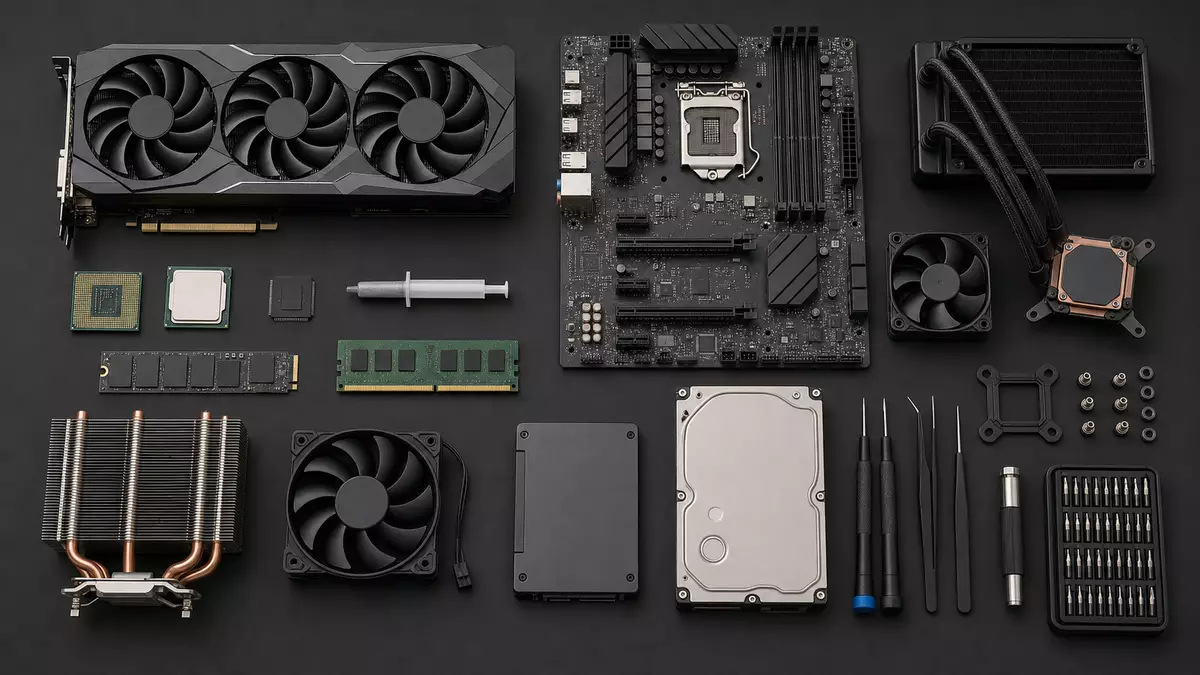
Nvidia product portfolio is anchored by its high performance GPUs and AI platforms used in data centers and cloud environments. Representative products include its flagship AI accelerator families used for training and inference of large neural networks, along with integrated systems that bundle GPUs, CPUs, networking, and software into turnkey solutions for customers. These offerings have been central to the revenue growth seen in recent fiscal quarters, as enterprises and cloud providers invest in infrastructure capable of handling complex AI workloads and high throughput computing tasks.
Nvidia stock and recent trading levels
Nvidia stock is listed on Nasdaq under the symbol NVDA. As of 31 May 2025, representative market quotations indicated a share price around $1,150, with intraday ranges near that level and a 52 week trading span from roughly $350 to about $1,200. At that time, the companys market capitalization was cited near $2.3 trillion, placing Nvidia among the largest constituents of the S&P 500 and Nasdaq 100 indices. These numbers highlight how AI driven revenue and earnings growth have translated directly into substantial stock market value for Nvidia.
Nvidia key data points
- Company: Nvidia Corporation
- ISIN: US67066G1040
- Ticker: NASDAQ: NVDA
- Trading venue: Nasdaq
- Price (as of 31 May 2025, 16:00 ET): 1,150 USD
- Market capitalization: 2,300,000,000,000 USD (as of 31 May 2025)
- Sector / Industry: Information Technology / Semiconductors
- Index membership: S&P 500, Nasdaq 100
- Next earnings date: 22 August 2025
Disclaimer regarding our articles: No investment advice, no buy or sell recommendation. Information on prices, companies, and markets is provided without guarantee; changes are possible at any time. Stock market transactions can lead to substantial losses. Our articles are created and reviewed in whole or in part automatically with the support of AI.