Rheinmetall Sheds Its Automotive Skin Just as a Key Tank Alliance Frays
14.06.2026 - 08:16:04 | boerse-global.de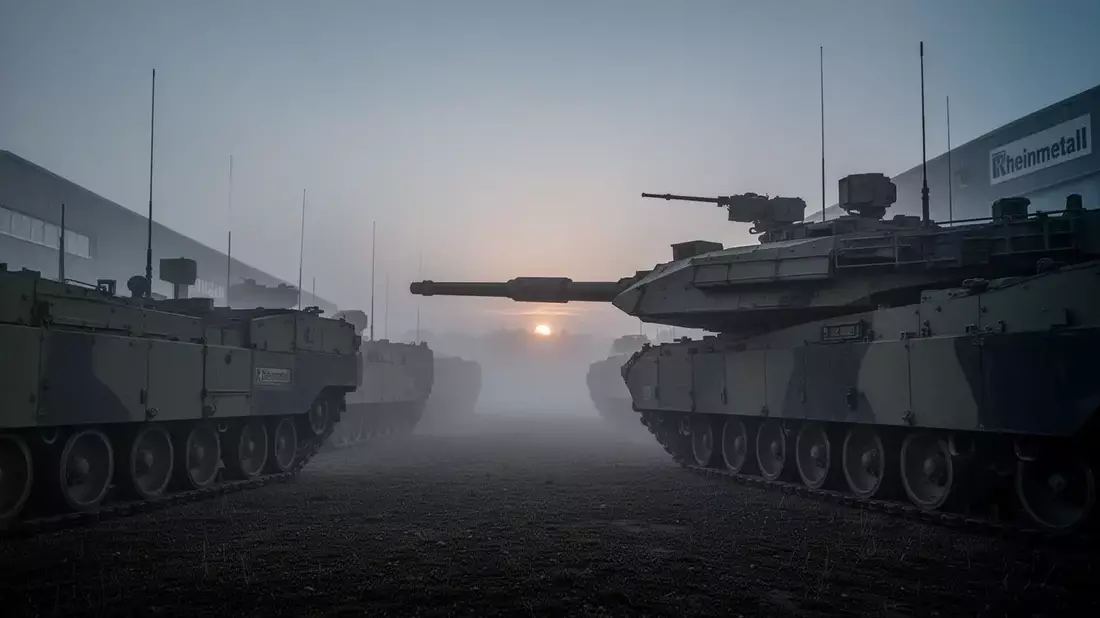
Rheinmetall enters a pivotal week stripped of its last excuse. The sale of its Automotive division to AEQUITA, signed in early June, transforms the German industrial group into a pure-play defense contractor — a cleaner story, but one that leaves the stock fully exposed to the sector’s mounting headwinds. The transaction still awaits regulatory clearance, but the market is already pricing in the new identity.
That identity is being tested on multiple fronts. The most immediate is the crumbling of the Franco-German MGCS tank programme. The project, meant to replace the Leopard 2 and Leclerc, is now in jeopardy after Paris signalled it may cut its budget to less than half of what was planned. CEO Armin Papperger has openly acknowledged the scenario, and the numbers are damning: since the project’s launch in 2017, only €25 million has flowed to participating companies — pocket change for a programme of this scale. The parallel FCAS fighter project has also collapsed, underscoring a pattern where sovereignty disputes, not technology, stall European defence cooperation.
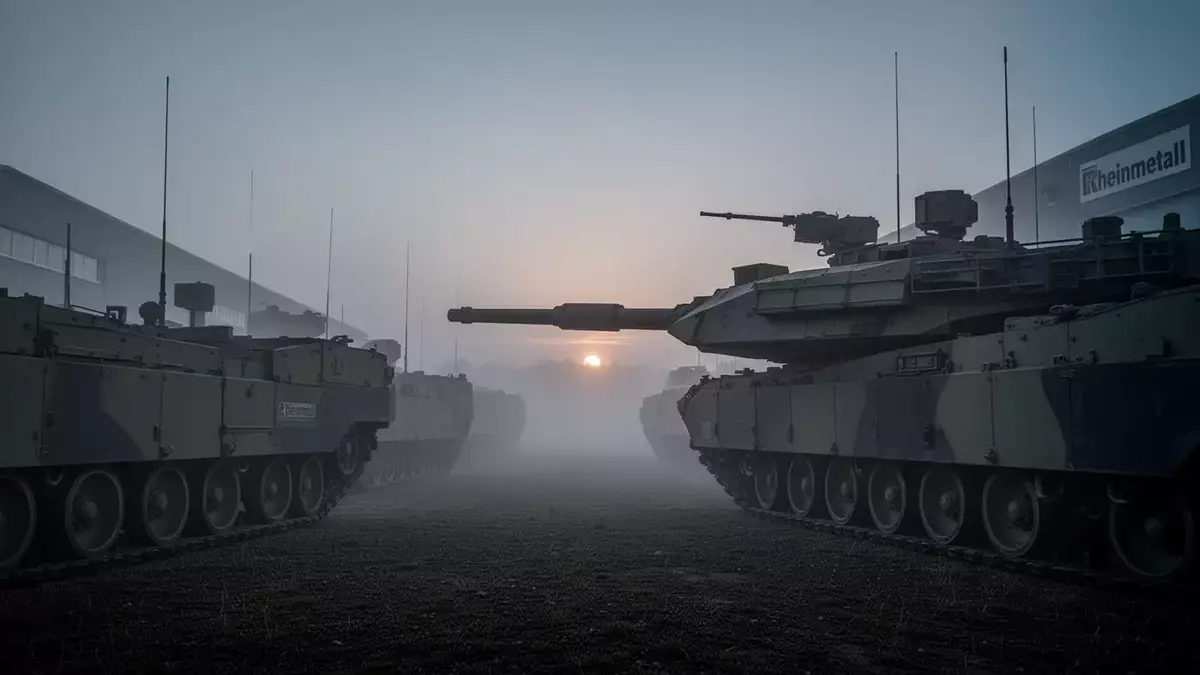
For Rheinmetall, the MGCS breakdown paradoxically clears the way. The group is already developing the Leopard 3 independently, with a target operational date in the early 2030s — a full decade earlier than the MGCS could have realistically delivered. Without the need for binational compromises, production lines can be streamlined and decisions made faster. The Bundeswehr and allied forces need tanks, and they need them sooner than any joint venture could supply.
This week’s Eurosatory defence show in Paris, opening on Monday, will serve as the stage for Rheinmetall’s answer. Papperger is unveiling a containerised rocket launcher as a world première, alongside other agile systems that reflect a shift away from decades-long development cycles. The company is also deepening its partnership with Boeing on the MQ-28 Ghost Bat drone, diversifying beyond its traditional tank portfolio.
Should investors sell immediately? Or is it worth buying Rheinmetall?
The strategic simplification comes at a cost. The stock closed last Friday at €1,196.60, down 3.11% on the day and 25.28% year-to-date. Over twelve months, the decline exceeds 31%. The gap to the 52-week high of €1,995, set in September 2025, now stands at roughly 40%, while the 52-week low of €1,099.80 lurks just 8.8% below. The relative strength index sits at 42.6 — not yet oversold, but uncomfortably close. Meanwhile, the 200-day moving average at €1,603.84 is nearly 25% above the current price, and the 50-day average of €1,322 is roughly 9.5% higher. With 30-day annualised volatility above 53%, sharp swings remain possible in either direction.
The automotive exit removes a cyclical drag that had long muddied Rheinmetall’s investment case. But it also removes the buffer: any turbulence in defence sentiment now hits directly. Sector-wide worries about the financing of higher defence budgets and the emergence of new military technologies have weighed on European defence equities, and a pure-play name like Rheinmetall feels the full force.
On the positive side, the group recently announced a broad order package from Romania under the EU’s Security Action for Europe (SAFE) programme, covering combat vehicles, air defence, munitions and naval systems. The deal emphasises local value creation and expansion along NATO’s eastern flank. The SAFE framework, which offers member states loans for joint defence procurement, is structurally favourable for Rheinmetall. But the market is demanding proof that political intent translates into sustainable revenue growth — orders, production, deliveries, earnings. The Romanian contract is a step, not a proof.
Rheinmetall at a turning point? This analysis reveals what investors need to know now.
Eurosatory will test whether the market reads Rheinmetall’s independent path as strength or as a consolation prize for failed collaboration. If investors see the Leopard 3 and the agile product line as assets freed from political gridlock, a relief rally may emerge. If not, the stock remains technically bruised, with the May low still in play. Below €1,322, the 50-day moving average, every bounce currently looks like a selling opportunity. The old story has returned — but now without a safety net.
Ad
Rheinmetall Stock: New Analysis - 14 June
Fresh Rheinmetall information released. What's the impact for investors? Our latest independent report examines recent figures and market trends.