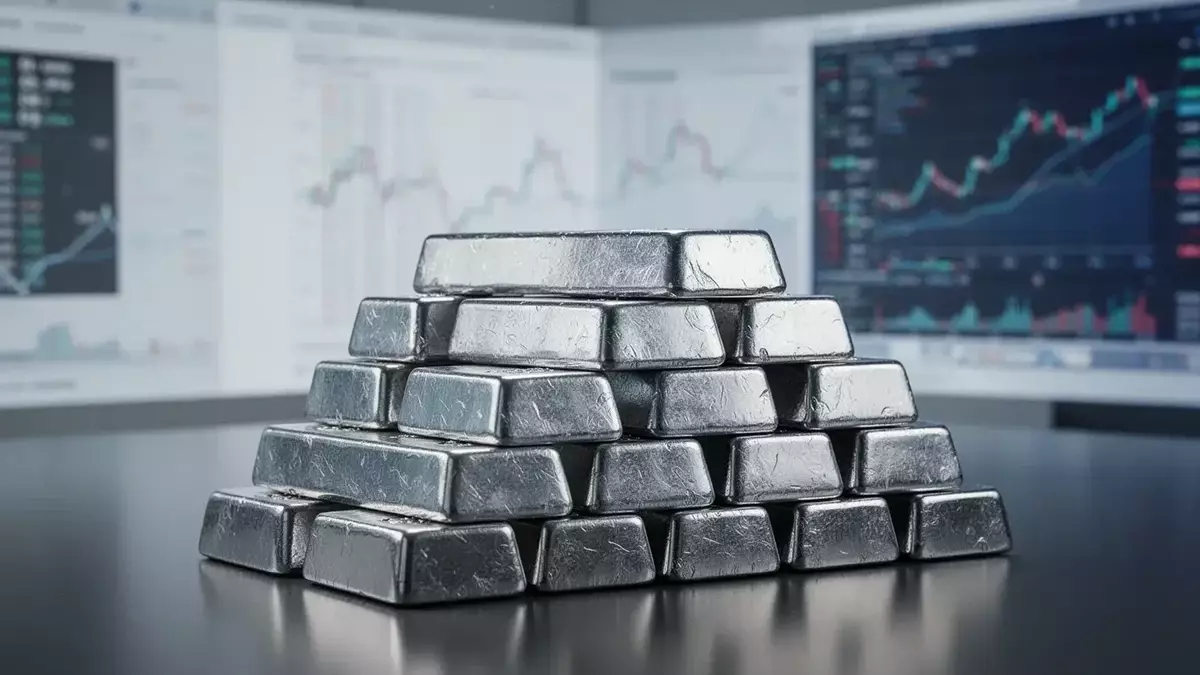
Silver’s $58.63 Bid: A Market Where Solar Thrifting Meets a 46 Million Ounce Supply Void
Published on 07/28/2026 at 03:31 | Redaktion boerse-global.de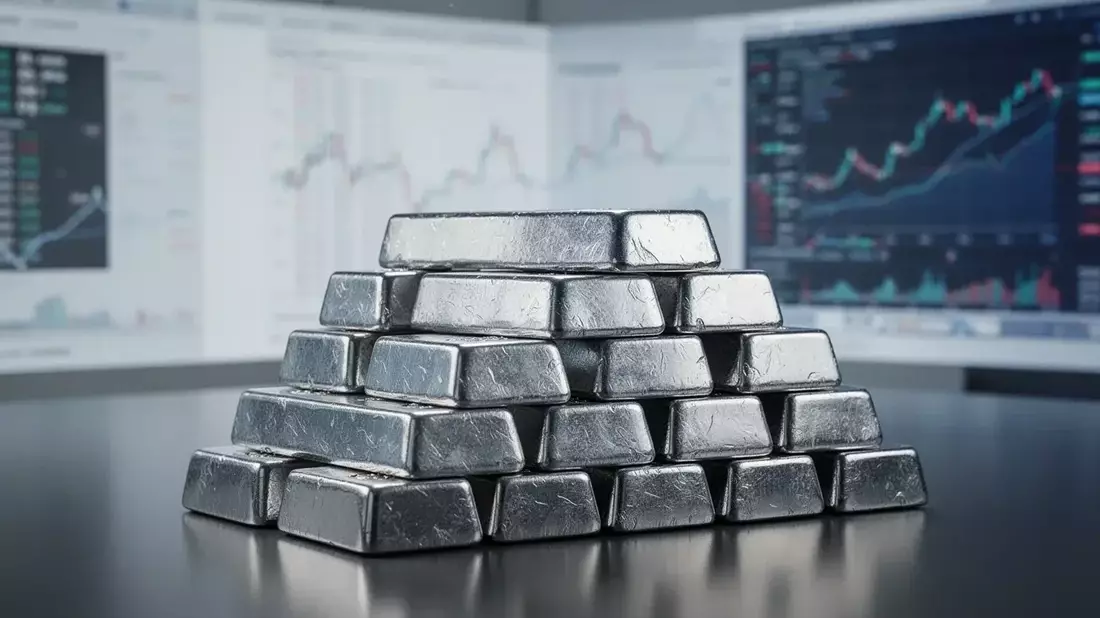
Silver edged higher on Monday, climbing 1.12 percent to $58.63 per ounce as a softer dollar and the approaching Federal Reserve meeting drew buyers back into the market. The move nudges the precious metal closer to the psychologically significant $60 threshold, a level that has proven stubbornly out of reach in recent sessions.
The dollar’s retreat over the weekend provided the immediate catalyst. Easing tensions in the Middle East sent oil prices sliding, which dampened short-term inflation expectations and weighed on the greenback. A weaker dollar makes dollar-denominated commodities like silver cheaper for international buyers, a dynamic that has historically supported demand. Treasury yields also edged lower on Monday, reducing the opportunity cost of holding the non-yielding metal.
The Fed’s Two-Day Pivot Point
All eyes now turn to the Federal Reserve’s July 28-29 policy meeting. While no rate change is expected, traders will scrutinize Chair Jerome Powell’s post-meeting press conference for clues on the central bank’s trajectory through the second half of the year. The outcome could determine whether the dollar’s recent softness persists — and with it, the tailwind that has helped silver recover from its recent slide.
A Deficit That Defies Austerity
Beneath the currency-driven price action lies a structural story that has kept the market in deficit for six consecutive years. Metals Focus and the Silver Institute peg the 2026 supply gap at roughly 46.3 million ounces — a shortfall that persists even as the largest industrial consumer slashes its usage.
Should investors sell immediately? Or is it worth buying Silber Preis?
The solar industry, which has been the primary driver of silver demand in recent years, is cutting consumption at a record pace. Module manufacturers are expected to reduce their silver intake by 19 percent in 2026, bringing the sector’s total to around 151 million ounces. The driver is simple: the metal’s rally into the high $50s and low $60s has forced the industry to economize. Higher prices have done their job, incentivizing thrifting in ways that smaller price moves never did.
Technologically, the shift is being led by a transition to copper-based cell architectures. Jinko Solar recently announced plans for a large-scale switch to copper modules, and BloombergNEF analysts project a modest decline in solar silver consumption even as overall solar installations grow. But a full breakthrough remains elusive. Many manufacturers are testing copper only as a cheaper conductor, and durability issues in the dominant cell technology persist. Industry experts do not expect widespread adoption until 2028 to 2030 at the earliest.
Where the Demand Is Actually Growing
While solar economizes, other sectors are picking up the slack. The expansion of AI data centers is emerging as a powerful new demand driver. High-performance chips, switching gear, and cooling systems in these facilities require significant amounts of silver, and the segment is growing at an estimated 15 to 25 percent annually. Grid infrastructure upgrades and electric vehicle production are also adding to the industrial appetite.
On the supply side, the constraints are deeply structural. Roughly 70 percent of global silver production comes as a byproduct of copper, zinc, lead, and gold mining. Only about 28 percent originates from primary silver mines. This means producers cannot easily ramp up output in response to higher prices — the metal’s availability is largely determined by demand for the base metals with which it is co-produced.
Recycling, meanwhile, hit a 12-year high in 2025 at roughly 198 million ounces recovered from scrap and old equipment. Yet that still covers only about one-sixth of total global supply.
The Ratio Signal
The gold-to-silver ratio, which stood at roughly 69 in July 2026, offers another lens on valuation. Historically, the ratio has traded as low as 15, suggesting that silver may be relatively undervalued compared to its yellow counterpart. On Monday, the ratio slipped to around 68.93, a sign of silver’s relative strength.
Silber Preis at a turning point? This analysis reveals what investors need to know now.
J.P. Morgan remains bullish for the remainder of the year, forecasting an average price of roughly $81 per ounce in 2026. The bank’s thesis rests on the same supply inflexibility that has kept the market in deficit: with production unable to respond quickly to price signals, any sustained demand growth will continue to tighten the market.
The $60 Hurdle
Chart watchers see $60 as the critical technical level. A decisive breakout above that mark, they argue, could trigger a fresh wave of buying. Whether that breakout materializes depends on a delicate interplay: a weaker dollar and dovish Fed signals would provide the near-term spark, but the deeper support comes from a market that simply does not have enough metal to go around.
For industrial buyers, the high price environment remains a persistent strain on margins. For financial investors, the structural deficit continues to underpin the bull case. The Fed meeting this week will test which narrative prevails.
Ad
Silber Preis Stock: New Analysis - 28 July
Fresh Silber Preis information released. What's the impact for investors? Our latest independent report examines recent figures and market trends.
Disclaimer regarding our articles: No investment advice, no buy or sell recommendation. Information on prices, companies, and markets is provided without guarantee; changes are possible at any time. Stock market transactions can lead to substantial losses. Our articles are created and reviewed in whole or in part automatically with the support of AI.