Silver's $60 Ceiling: Why Geopolitical Chaos Isn't Translating Into a Precious Metals Rally
Published on 07/23/2026 at 18:51 | Redaktion boerse-global.de
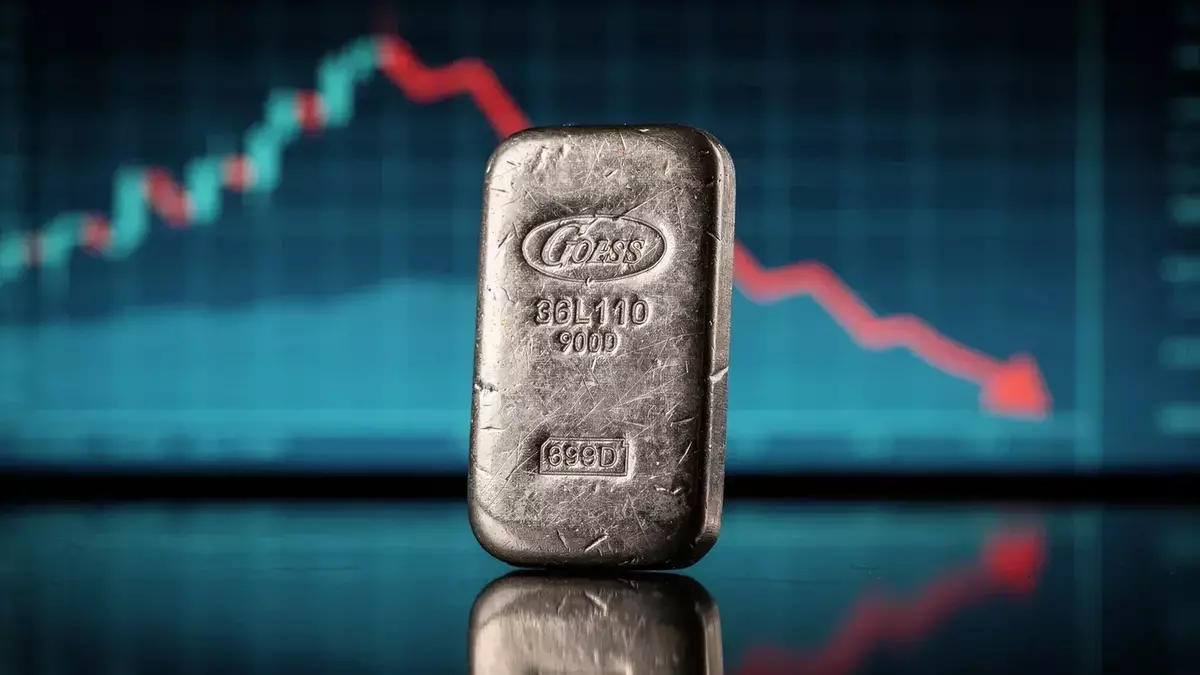
Silver closed Wednesday at $60.02 per ounce, gaining 1.61% on the day and posting a 7.63% weekly advance. Yet the metal remains more than 50% below its all-time high of $121.78 from January 29, 2026 — a gap that speaks volumes about the unusual dynamics currently gripping the precious metals complex.
The paradox is striking. Escalating conflict in the Middle East, disrupted shipping lanes, and a weakening US labor market would typically send investors scrambling for safe havens. Instead, silver has struggled to build sustained momentum, and major banks are now lowering their expectations for where the metal can go.
UBS Slashes Its Entry Point as Technicals Deteriorate
UBS has made a notable adjustment to its silver strategy, cutting the price threshold at which it considers the metal attractive for entry. The bank now sees a buying opportunity in the $48 to $50 per ounce range, down sharply from its previous $55 target. The revision reflects how far sentiment has shifted since January's record peak.
The move comes as Bank of America also expressed skepticism about the recent bounce in precious metals, characterizing it as a technical reaction rather than the start of a sustainable recovery. BofA points to a so-called "death cross" in gold — where the 50-day moving average has fallen below the 200-day moving average — as a bearish chart signal. The bank also notes that speculative long positioning remains elevated, adding further headwinds.
Should investors sell immediately? Or is it worth buying Silber Preis?
Geopolitics Cuts Both Ways for Silver
The Middle East crisis is proving to be a double-edged sword for precious metals. While conflicts typically boost demand for gold and silver as crisis hedges, the current escalation is simultaneously strengthening the very forces that suppress them.
Houthi militants attacked the Saudi oil tankers Encelia and Layla in the Red Sea, while the US launched its twelfth consecutive round of airstrikes on Iranian targets overnight on July 23. Iran's Revolutionary Guards declared the Strait of Hormuz fully closed and stopped several tankers. Brent crude surged past $100 per barrel for the first time since late May, according to a Spiegel report.
Higher oil prices feed inflation expectations, which in turn reinforce the view that the Federal Reserve will maintain its tightening bias. Markets are pricing in at least one rate hike before year-end, with the next Fed meeting scheduled for the coming week. Rising interest rates and a stronger dollar — both consequences of the oil shock — make non-yielding assets like silver and gold relatively less attractive.
UBS analysts explicitly cite rising bond yields and a firmer dollar as opportunity costs weighing on precious metals, even as geopolitical tensions escalate. Gold slipped to around $4,070 per ounce in certain trading sessions, a 1.5% decline.
Labor Market Weakness Offers a Counter-Narrative
Not all data points in the same direction. ADP employment figures show that private employers added an average of just 16,500 jobs per week in the four weeks through July 4, down from 19,250 previously — the fourth consecutive slowdown. This weakening labor market has led markets to expect the Fed will hold rates steady at next week's meeting, though the probability of a September hike still sits above 55%.
For silver, which is highly sensitive to interest rate expectations, this creates a tug-of-war. Weaker jobs data supports lower rates, which is bullish for the metal. But the inflationary impulse from higher oil prices pushes in the opposite direction.
The Gold-Silver Ratio Flashes a Bullish Signal
One encouraging sign emerged from this week's price action: the gold-silver ratio fell from above 70.7 to roughly 68.7, meaning silver outperformed gold. Analysts interpret a declining ratio as evidence that physical and industrial buyers are returning after last week's selloff, and historically such compression often precedes a period of silver leadership.
Silber Preis at a turning point? This analysis reveals what investors need to know now.
Structural Deficit Remains the Long-Term Anchor
Beneath the short-term noise, the fundamental case for silver remains intact. The World Silver Survey 2026 from the Silver Institute projects a sixth consecutive annual supply deficit. Demand from solar panels, electric vehicles, and electronics continues to strain a physical market supplied primarily by Mexico and Peru.
This structural tightness makes silver acutely sensitive to demand shocks — exactly the kind the current geopolitical crisis is generating. But for now, the metal remains stuck in a holding pattern, caught between the bullish case of supply scarcity and the bearish reality of rising rates and a strong dollar.
The Fed's decision next week will likely determine which force wins out.
Ad
Silber Preis Stock: New Analysis - 23 July
Fresh Silber Preis information released. What's the impact for investors? Our latest independent report examines recent figures and market trends.
Disclaimer regarding our articles: No investment advice, no buy or sell recommendation. Information on prices, companies, and markets is provided without guarantee; changes are possible at any time. Stock market transactions can lead to substantial losses. Our articles are created and reviewed in whole or in part automatically with the support of AI.