Silver's Conflicting Signal: A Hawkish Fed and Muddled Diplomacy Obscure a Widening Supply Debate
Veröffentlicht: 30.06.2026 um 06:52 Uhr, Redaktion boerse-global.de
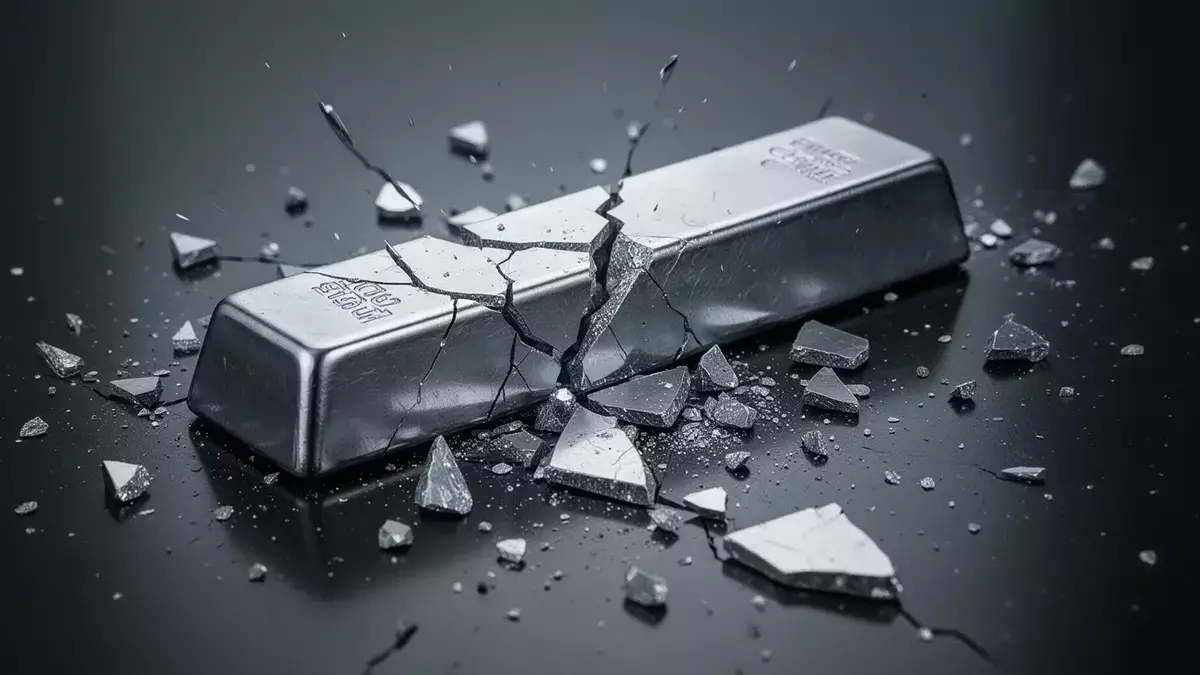
The precious metals complex has suffered a brutal June sell-off, with silver bearing the brunt. The white metal has halved since January, plunging from an all-time high of $121.64 to trade around $57–58 an ounce. June alone wiped out roughly a quarter of its value. Yet beneath the surface, the picture is anything but clear: geopolitics has delivered contradictory headlines, the Federal Reserve remains unyielding, and two separate projections from the Silver Institute point to sharply different supply deficits for 2026.
Geopolitical whiplash and the safe-haven unwind
At the start of the year, tensions in the Middle East provided a powerful tailwind for silver. That dynamic has now reversed, though with considerable confusion. A US-Iran agreement and peace talks scheduled in Doha for June 30 had already prompted investors to dismantle their hedge positions. But the diplomatic narrative took a bizarre turn. President Trump announced a meeting with Iran in Doha for Tuesday; Tehran immediately denied that any talks were planned, insisting it would instead focus on existing agreements. This came after a series of escalatory attacks — an Iranian strike on a container ship, a Qatari oil tanker, and US military bases — followed by a provisional halt to military action by both sides.
The resulting uncertainty has done little to restore safe-haven demand. Instead, markets are grappling with fresh inflation fears tied to the unsettled Gulf situation. Silver has lost precisely the geopolitical risk premium that had propelled it higher earlier in the year.
Hawkish Fed keeps the pressure on
The monetary backdrop offers no respite. Federal Reserve chair Kevin Warsh remains committed to a restrictive stance after the PCE index rose to 4.1% in May — a level that forced the Fed to raise its inflation forecasts for 2026. The market now prices three rate increases for the year, with the probability of a September hike hovering around 60–62%. Rising real rates inflate the opportunity cost of holding a non-yielding asset like silver.
Should investors sell immediately? Or is it worth buying Silber Preis?
The US Dollar Index is trading near a one-year high, making dollar-denominated commodities more expensive for foreign buyers. Silver, which carries a higher industrial beta than gold, has reacted more violently. The gold-silver ratio sits at around 69, a level considered neutral by historical standards.
Industry demand: solar savings vs. AI appetite
The industrial side of the equation is shifting in ways that complicate the demand outlook. Solar-panel manufacturers are cutting their silver content per module — through more efficient pastes or outright substitution with copper. The Silver Institute estimates that consumption from the solar sector will drop roughly 19% in 2026, from 186.6 million ounces to about 151 million ounces. Total industrial demand is expected to slip to around 650 million ounces.
Yet a countervailing force is emerging from the artificial intelligence infrastructure build-out, where silver's thermal properties make it virtually irreplaceable at heat interfaces. This segment is growing at an annual rate of roughly 25%, absorbing some of the slack left by solar.
A deficit disagreement
Fundamental indicators ought to support prices, but the data itself is contradictory. The Silver Institute projects a sixth consecutive global supply deficit for 2026 — though the size of that gap is reported differently. One analysis from the institute points to a shortfall of 46.3 million ounces, while another estimate from the same body puts the figure at roughly 67 million ounces. The discrepancy likely reflects varying assumptions about secondary supply or demand from emerging sectors.
Mine production remains stagnant because silver is mostly a by-product of copper, zinc, and lead mining. Physical inventories continue to dwindle. Long-term structural demand from solar, electric vehicles, and medical technology remains on an upward trajectory.
Silber Preis at a turning point? This analysis reveals what investors need to know now.
Analysts diverge on near-term trajectory
Professional forecasts are struggling to keep pace with the price decline. UBS had set a target of $85 an ounce by the end of June — a call that has been spectacularly missed. J.P. Morgan expects an average price of $81 for the full year 2026. Trading Economics sees silver ending the current quarter at roughly $59 and reaching $72 in twelve months' time.
All eyes are now on the US employment data due later this week. A strong reading would reinforce the hawkish Fed narrative and likely push silver lower. Conversely, any sign of labour-market weakness could reignite speculative interest. The long-term uptrend, built on a price that has more than tripled over the past twelve months, remains intact — but the short-term path is littered with conflicting signals.
Ad
Silber Preis Stock: New Analysis - 30 June
Fresh Silber Preis information released. What's the impact for investors? Our latest independent report examines recent figures and market trends.
Disclaimer zu unseren Artikeln: Keine Anlageberatung, keine Kauf oder Verkaufsempfehlung. Angaben zu Kursen, Unternehmen und Märkten ohne Gewähr; Änderungen jederzeit möglich. Börsengeschäfte können zu hohen Verlusten führen. Unsere Beiträge werden ganz oder teilweise automatisiert mit Unterstützung von AI erstellt und geprüft.