Silver’s Macro Boost Collides With Industrial Slowdown as Jobs Report Beckons
Veröffentlicht: 03.06.2026 um 04:47 Uhr, Redaktion boerse-global.de
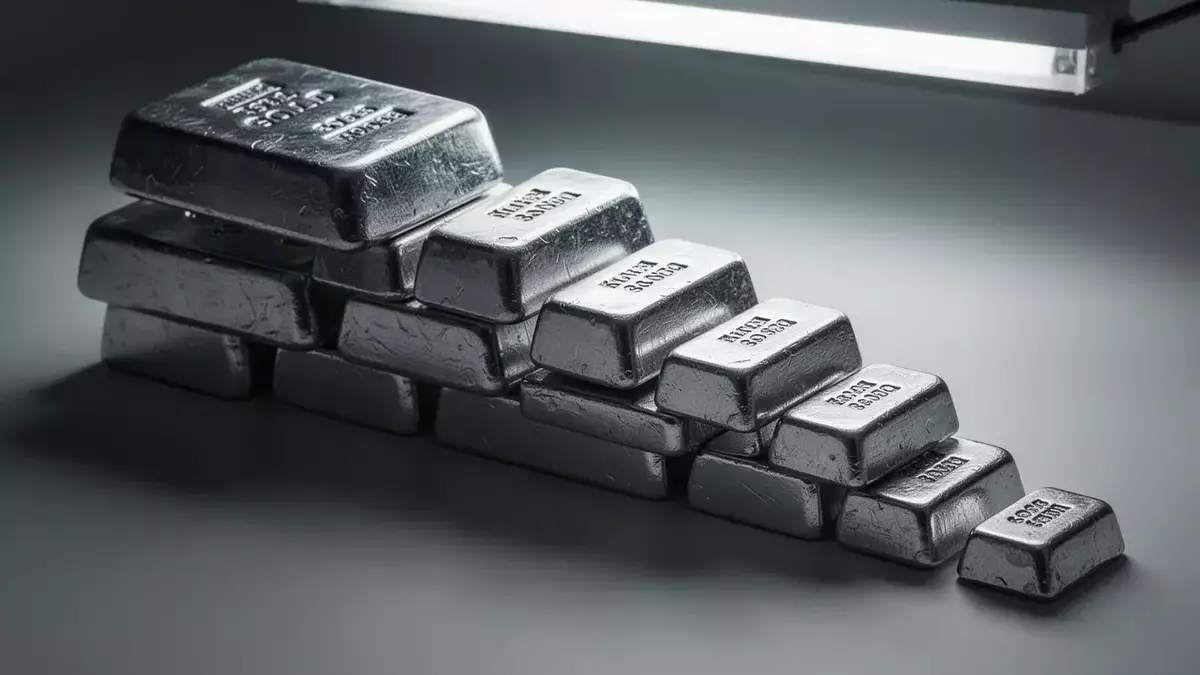
The white metal caught a rare tailwind on Tuesday as a benign mix of falling bond yields, sliding oil prices and tentative geopolitical détente propelled spot silver to $76.39 a troy ounce in early afternoon trading, a gain of 2.1%. Some market references pegged the session closer to $76.25, still up 1.85% on the day. The advance snapped a week of sideways drift and pushed the precious metal 4.87% higher on a monthly basis, while the year-on-year gain stands at a staggering 121%.
The catalyst was a synchronous easing across macro markets. The ten-year US Treasury yield dipped, lowering the opportunity cost of holding non-yielding bullion. At the same time, crude prices retreated after President Donald Trump confirmed that talks with Iran remained ongoing — a remark that countered earlier Iranian media reports that Tehran had suspended communication with Washington. Adding to the risk-off lightening, a partial ceasefire between Hezbollah and Israel in Lebanon was reported, which market participants interpreted as a limited de-escalation. As a result, the gold-to-silver ratio contracted from 59.90 to 59.31, underscoring how silver outperformed its more famous peer during the session.
Yet beneath the surface, the rally masks deep-seated crosscurrents. The Straits of Hormuz remain the single most explosive variable for energy prices — and by extension, for inflation expectations and Fed policy. While Trump expressed optimism that a memorandum to reopen the waterway could be reached as early as next week, the diplomatic fog is far from lifted. Silver itself still trades roughly 20% below the levels seen before the conflict erupted, a gap that reflects the market’s lingering fear of higher interest rates rather than pure crisis premium. Traders now price in a Fed rate hike before year-end, a scenario that would cap any sustained upside for precious metals.
This week’s data calendar feeds directly into that rate narrative. After Tuesday’s JOLTS job openings for April, the market will digest ADP employment figures, ISM services, and the Fed’s Beige Book. All eyes, however, are on Friday’s US nonfarm payrolls report for May. Any upside surprise in job growth or wages could harden the dollar and push yields back toward 4.5%, squeezing silver. Conversely, a soft print would revive hopes that the central bank can afford to hold steady, opening the door for further gains.
Should investors sell immediately? Or is it worth buying Silber Preis?
The industrial demand side of the equation adds a layer of structural caution. Global silver processing for industrial uses is expected to slide 2% to roughly 650 million ounces in 2026, marking a four-year low. The photovoltaic sector, the single largest industrial consumer, already saw demand drop 6% in 2025 to 186.6 million ounces. Industry observers project a further 19% decline in 2026, to about 151 million ounces, as manufacturers reduce silver paste content per module and increasingly turn to substitutes. The loss from solar is only partially offset by rising consumption in data centers, AI infrastructure, electric vehicles and charging networks — a switch that leaves the net direction uncertain.
On the supply front, global silver availability is expected to inch up 1.5% to 1.05 billion ounces in 2026. Mine output will grow a modest 1% to 820 million ounces, constrained by the fact that roughly 70% of global production is a byproduct of copper, lead and zinc mining, leaving supply slow to respond to price signals. Recycling provides a brighter note: volumes are forecast to rise 7%, crossing the 200-million-ounce threshold for the first time since 2012, as elevated prices draw out scrap from jewelry and silverware.
UBS has revised its deficit projection sharply downward, from 300 million ounces to a more modest 60–70 million ounces, and trimmed its annual investment demand forecast to 300 million ounces. Still, the bank sees the market remaining in a structural shortfall, underpinned by electronics, energy infrastructure and the broadening digital economy. But the cushion is thinner than earlier estimates suggested, and any further deterioration in industrial demand — especially from solar — could tilt the balance faster than expected.
Silber Preis at a turning point? This analysis reveals what investors need to know now.
For now, silver sits at the junction of two opposing forces: short-term relief from lower yields and tentative diplomacy, and medium-term headwinds from a softening industrial base and a hawkish Fed bias. Whether Tuesday’s rally proves to be a one-day wonder or the beginning of a sustained recovery depends largely on Friday’s payroll numbers and the next twist in the Hormuz saga. Either way, the metal’s quick rebound from sub-$75 levels suggests that the market is not ready to give up on silver — but it is also not yet willing to bet big.
Ad
Silber Preis Stock: New Analysis - 3 June
Fresh Silber Preis information released. What's the impact for investors? Our latest independent report examines recent figures and market trends.
Disclaimer zu unseren Artikeln: Keine Anlageberatung, keine Kauf oder Verkaufsempfehlung. Angaben zu Kursen, Unternehmen und Märkten ohne Gewähr; Änderungen jederzeit möglich. Börsengeschäfte können zu hohen Verlusten führen. Unsere Beiträge werden ganz oder teilweise automatisiert mit Unterstützung von AI erstellt und geprüft.