Silver’s Price Duality: A 67-Million-Ounce Deficit vs. the Fed’s Unyielding Stance
19.06.2026 - 08:13:40 | boerse-global.de
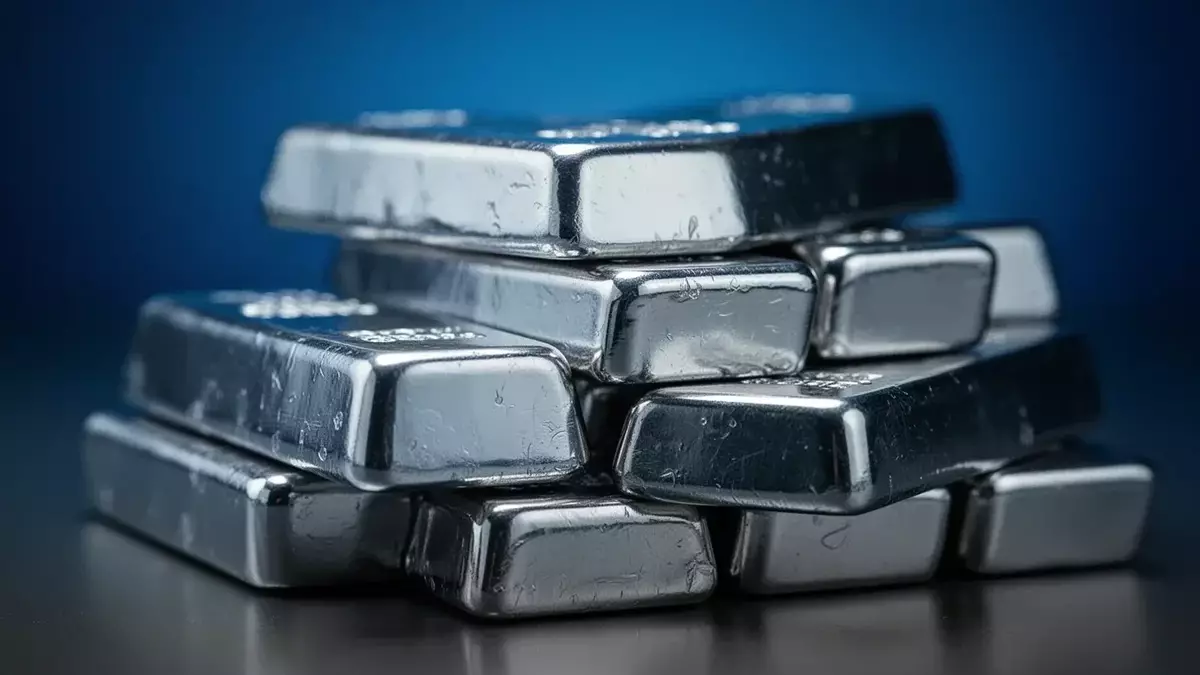
Silver is trapped in a tug-of-war. On one side, a sixth consecutive year of structural undersupply — 67 million ounces projected for 2026 — should be buoyant. On the other, the Federal Reserve’s hawkish rhetoric has sent the dollar surging and the metal sliding. The result: spot silver touched $66.05 an ounce intraday on Wednesday before settling at $66.31, and by June 19 it had fallen further to $64.26, a loss of 2.13% on the day and 15.28% from a month ago. Despite the retreat, the precious metal still holds a nearly 78% gain year-on-year.
The immediate catalyst was the Fed’s June dot plot, which revealed a divided committee on the path of interest rates. Chair Kevin Warsh offered no concrete guidance for the next meeting but emphasized that inflation has persistently run above the 2% target. The central bank left the federal funds rate unchanged at 3.50%–3.75% by a unanimous vote. The dollar climbed to its highest since May 2025, applying immediate downward pressure on silver. Although the metal recovered roughly 70% of its weekly loss, it remains about 5% lower on the week.
Underneath the price action, the fundamentals tell a different story. Global silver supply is expected to rise by 1.5% to 1.05 billion ounces in 2026, the highest in a decade, while recycling is set to increase 7% and cross 200 million ounces for the first time since 2012. Yet because most silver is produced as a byproduct of gold, copper and zinc mining, higher prices do little to stimulate additional output. The persistent deficit has forced heavy draws on inventories: since 2021, some 762 million ounces — roughly the entire annual mine production — have been pulled from global stockpiles. In London vaults, the share of unencumbered silver hit a historic low of 17% in September 2025, and a physical liquidity squeeze followed in October, pushing lease rates higher.
Should investors sell immediately? Or is it worth buying Silber Preis?
Demand patterns are shifting beneath the surface. Chinese solar manufacturers such as Longi Green Energy, Jinko Solar and Shanghai Aiko Solar are increasingly substituting silver with copper in photovoltaic cells, with Longi planning mass production from the second quarter of 2026. Thermal constraints in TOPCon cells limit the viability of alternative metals, but high-efficiency designs still rely on silver for now. The slack from solar is being partly taken up by electronics: data centers, AI hardware and automotive electronics are driving industrial consumption higher. On the investment side, physical buying is expected to jump 20% in 2026 to 227 million ounces — a three-year high — even as jewelry and silverware demand declines by 9% and 17% respectively.
The gold-silver ratio has widened to 64.05, reflecting silver’s heavier selling pressure relative to gold, which held relatively steady near $4,248. A reading near 62 is not historically a red flag for overvaluation. J.P. Morgan Global Research forecasts an average silver price of $81 an ounce for 2026, more than double last year’s average. Whether that target is achievable depends heavily on the Fed’s next moves. Fed Governor Lisa Cook signaled early June that she is prepared to raise rates if needed, and Goldman Sachs has scrapped all rate-cut expectations for 2026, now penciling in the first reduction no earlier than June 2027.
According to CME FedWatch, the probability of a rate hold at the July 29 meeting stands at 77.7%, though that drops to 50% for September. Much will hinge on incoming inflation data. If energy prices continue to ease and the rate-hike narrative weakens, the industrial demand case for silver could regain the upper hand. For now, the dollar remains the stronger adversary.
Ad
Silber Preis Stock: New Analysis - 19 June
Fresh Silber Preis information released. What's the impact for investors? Our latest independent report examines recent figures and market trends.