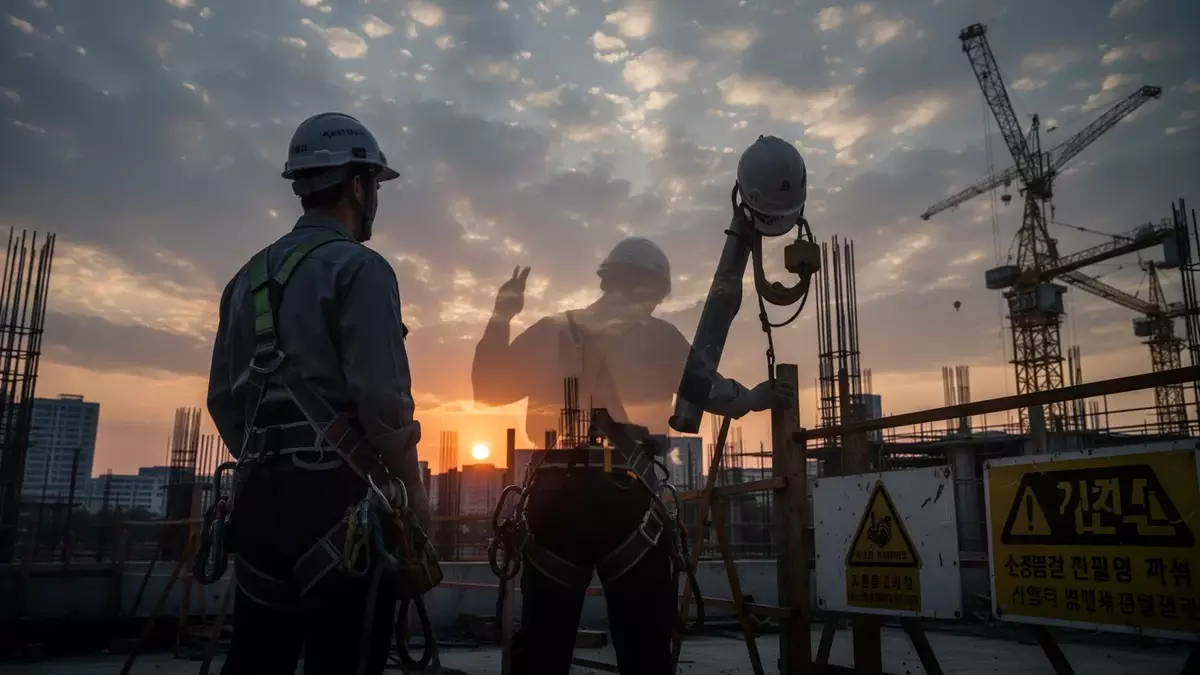
South Korea Mandates Annual Safety Reports for Large Employers
Published on 07/21/2026 at 06:37 | Redaktion boerse-global.de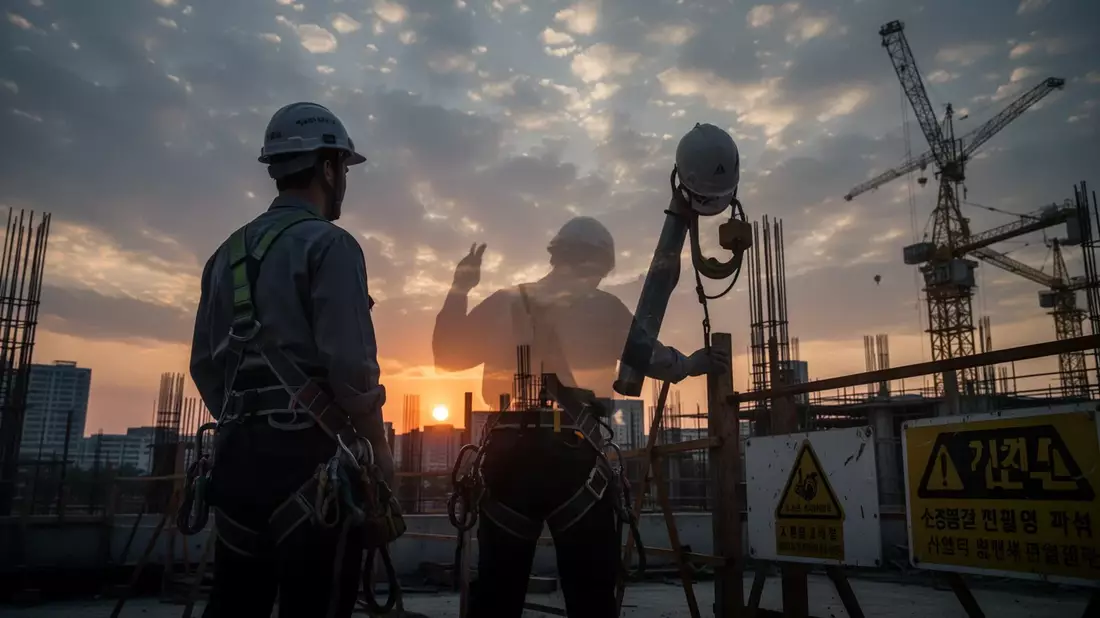
South Korea's Cabinet has approved new regulations requiring large employers and major construction projects to publicly disclose their safety and health status each year, marking a significant shift in workplace accountability. Approved on July 21, 2026, the measures come as industrial accidents face growing scrutiny from both labour officials and the public — a development with implications for international companies operating in the region.
With South Korea now mandating annual safety disclosures and risk assessments, the pressure to keep compliance documentation airtight is growing worldwide. A free Risk Assessment Toolkit offers 41 ready-to-use templates and checklists designed to help you document workplace hazards efficiently and meet regulatory expectations. Download the free Risk Assessment Toolkit
Disclosure Rules and Penalties
From August 1, 2026, companies with more than 500 employees must submit and publish annual reports on their safety and health management. The same requirement applies to construction projects with budgets exceeding 120 billion won. Organisations that fail to comply face administrative fines of up to 10 million won.
The regulatory framework will expand further in 2027. From January 1, workplaces with 50 or more employees must conduct workplace risk assessments or face tiered penalties: 5 million won for a first offence, rising to 7 million won for a second, and 10 million won for a third. Employers who fail to involve workers in the risk assessment process face separate fines ranging from 1.5 million to 5 million won. Smaller workplaces — those with fewer than 50 employees — will be brought under these requirements from January 1, 2028.
Recent Incidents Fuel Urgency
The Cabinet's approval follows a string of high-profile industrial accidents. On July 18, a 20-year-old Uzbek worker died at the HD Hyundai Heavy Industries shipyard in Ulsan after being trapped between a gondola and scaffolding. Labour ministry officials and police launched an investigation, leading to a partial work stoppage at the facility.
In a separate incident, a major fire at a Coupang logistics centre in Incheon broke out on the morning of July 18 and burned for 61 hours before being extinguished on July 20. While 121 employees were evacuated safely, two firefighters required hospitalisation. In response, the Ministry of Land, Infrastructure and Transport established a dedicated task force on July 20 to review fire safety management at logistics facilities, focusing on construction, operations, and fire prevention.
On the same day, the Gyeonggi Regional Employment and Labour Office signed a memorandum of understanding with the Korea Electric Power Corporation (KEPCO) and the Korea Occupational Safety and Health Agency. The agreement aims to prevent industrial accidents in the power sector, with priority given to small-scale workplaces.
The Coupang logistics centre fire that burned for 61 hours highlights how quickly workplace fires can spiral into major incidents. A free Fire Protection Toolkit provides risk assessments, evacuation plans, and fire extinguisher training documents to help you stay compliant and keep your people safe. Download the free Fire Safety Toolkit
Broader ESG and Disclosure Trends
The move toward mandatory safety reporting aligns with a wider push for institutionalised ESG (Environmental, Social, and Governance) disclosures in South Korea. Listed firms with assets of at least 10 trillion won will face mandatory ESG reporting from 2028, with the threshold dropping to 5 trillion won in 2029. Companies such as LG Display have already begun implementing specialised intelligence platforms to manage ESG data with the same rigour as financial statements.
Globally, social responsibility reporting is also gaining structure. The Task Force on Inequality and Social-related Financial Disclosures (TISFD) recently launched a consultation framework aimed at embedding workforce practices and social responsibility into corporate financial performance models.
This regulatory momentum extends beyond Asia. In the United States, new product safety e-filing rules for consumer goods took effect on July 8, 2026. Yet a recent survey of 500 respondents across 12 markets found that 64% of businesses in the Asia-Pacific region are not fully prepared for these requirements. Meanwhile, institutional investors face their own transparency deadlines, with the 2026 Principles for Responsible Investment (PRI) reporting window set to close on July 29.
Disclaimer regarding our articles: No investment advice, no buy or sell recommendation. Information on prices, companies, and markets is provided without guarantee; changes are possible at any time. Stock market transactions can lead to substantial losses. Our articles are created and reviewed in whole or in part automatically with the support of AI.