SpaceX Stock: A $4.9 Billion Loss and a $60 Billion AI Gamble Collide With an Impending Insider Liquidity Flood
Published on 07/09/2026 at 17:46 | Redaktion boerse-global.de
SpaceX’s entry into the Nasdaq-100 was meant to be a watershed moment, triggering billions in passive inflows and cementing its status among the market’s elite. Instead, the stock has spent its first two days of index membership sliding, closing Wednesday evening at $148 and then slipping below $147 on Thursday. That leaves the shares down roughly a third from their post-IPO peak and threatening to retest the $135 offer price.
The disconnect between Wall Street’s enthusiasm and the trading floor’s reality is stark. Analysts have rushed out a spectrum of price targets that stretches from cautious to nearly hyperbolic: Raymond James at $800, Morgan Stanley at $300, Goldman Sachs at $205, and Stifel at $190. Yet even the most bullish forecasts cannot mask the gravitational pull of a valuation that has reached 112 times trailing revenue — a multiple that, without earnings to anchor it, requires an almost perfect future to justify.
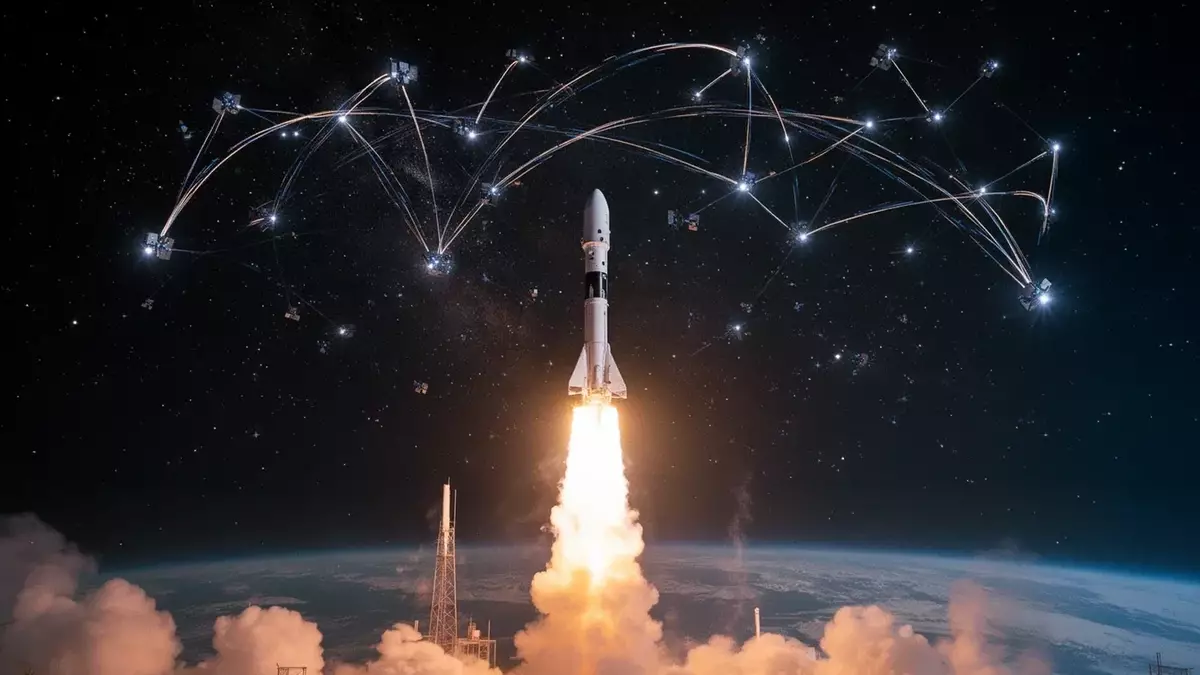
That future looks less certain when the financial statements are examined. SpaceX booked a net loss of $4.9 billion last year, and the red ink deepened in the first quarter of 2026, with another $4.3 billion in losses. Much of that cash is being poured into the company’s ambitious AI division, including the development of the Grok model and the acquisition of Anysphere, creator of the Cursor coding platform, for $60 billion in stock. Management’s longer-range vision — placing AI satellites in orbit by 2028 and eventually installing a terawatt of computing power in space — is a narrative that excites long-term believers but does little to bridge the gap between today’s losses and a $2 trillion market capitalization.
Should investors sell immediately? Or is it worth buying SpaceX?
The nearer-term challenge, however, is one of supply, not demand. Fewer than 5% of SpaceX’s shares currently trade freely. That is about to change. The first insider lock-up agreements expire at the end of July, allowing managers and employees to sell roughly 20% of their restricted holdings after the company reports second-quarter results. A second, much larger tranche becomes eligible in August, and additional waves are scheduled through October. Some market participants, including former Nasdaq CEO Robert Greifeld, have warned that the cumulative selling could approach $800 billion in value — a figure that would dwarf any typical secondary offering.
Elon Musk’s personal stake, notably, is locked until the summer of 2027 and will not contribute to the overhang. That provides some comfort, but the staggered release schedule — designed, according to the company, to prevent a single panic event — will still test whether the current share price can withstand a sustained drip of insider liquidity. The real signal will come at the end of July, when the first insiders must decide whether to hold their conviction or cash in their chips.
For now, the stock’s post-index slide has drawn a mixed reaction from the sell side. JPMorgan had predicted passive inflows of over $4 billion on the Nasdaq-100 inclusion alone, but those flows were overwhelmed by profit-taking and a broader tech sell-off. MoffettNathanson has set a price target of $131, citing regulatory hurdles and uncertain end-market demand, while Morningstar estimates fair value at $780 per share — implying a company worth roughly $780 billion, less than half of its current market cap.
The next few months will determine which camp is closer to the truth. The combination of enormous losses, a gargantuan AI bet, and a looming insider selling wave creates a volatility cocktail that no analyst model can fully capture. SpaceX’s stock may have gained a place in the Nasdaq-100, but its real test has only just begun.
Ad
SpaceX Stock: New Analysis - 9 July
Fresh SpaceX information released. What's the impact for investors? Our latest independent report examines recent figures and market trends.
Disclaimer regarding our articles: No investment advice, no buy or sell recommendation. Information on prices, companies, and markets is provided without guarantee; changes are possible at any time. Stock market transactions can lead to substantial losses. Our articles are created and reviewed in whole or in part automatically with the support of AI.