Technogym stock trades steady as revenue grows and margins improve
Published on 07/24/2026 at 10:06 | Editorial responsibility: Rafael Müller, Editor-in-Chief AD HOC NEWS
Technogym stock represents exposure to a European fitness-equipment and wellness technology provider whose fundamentals have steadily improved in recent years, with revenue growth and margin discipline underpinning the investment case for many shareholders.
Revenue up with margin resilience
According to publicly available company information for fiscal 2023, Technogym generated revenue of about EUR 800 million, up from roughly EUR 700 million in fiscal 2022, indicating mid-single to low-double-digit growth over the period and showing how the group has been able to expand its sales base while navigating inflation and supply-chain constraints.
Over the same timeframe, Technogym reported that its EBITDA remained positive and broadly stable, illustrating that operating profitability has held up even as the company invested in product innovation, digital platforms, and international sales capabilities to support long-term growth.
For investors, the comparison between fiscal 2022 and fiscal 2023 revenue levels highlights that the business has continued to grow from a higher post-pandemic base rather than merely rebounding from depressed conditions, which can matter for how the market views the sustainability of the companys earnings power.
Business mix and geographic footprint
Technogym derives revenue from a mix of professional fitness-equipment customers and home-consumer users, including gyms, hotels, corporate wellness programs, and private households that purchase its connected equipment and digital training subscriptions.
The group has built a significant international footprint, with sales across Europe, North America, Asia, and other regions, which can help diversify demand and reduce reliance on any single market or macroeconomic environment.
In markets where Technogym has strong brand recognition and long-standing relationships with fitness chains or hospitality groups, repeat orders and upgrades of existing installations can contribute to revenue stability and visibility over time.
Revenue up low-double-digit percent
Looking at the revenue metrics more closely, the increase from roughly EUR 700 million in fiscal 2022 to approximately EUR 800 million in fiscal 2023 implies growth on the order of around 14 percent, which is a meaningful expansion for a mature fitness-equipment provider.
This kind of growth rate suggests that Technogym has been able to capture demand both from new installations in gyms and wellness centers and from consumers investing in home fitness solutions, while also potentially benefiting from higher average selling prices and richer feature sets in its connected hardware.
Because revenue growth outpaced broad European inflation rates over the same period, the companys performance indicates real volume or mix-driven expansion rather than purely nominal gains, an important distinction for investors assessing long-term value creation.
Cost control and profitability dynamics
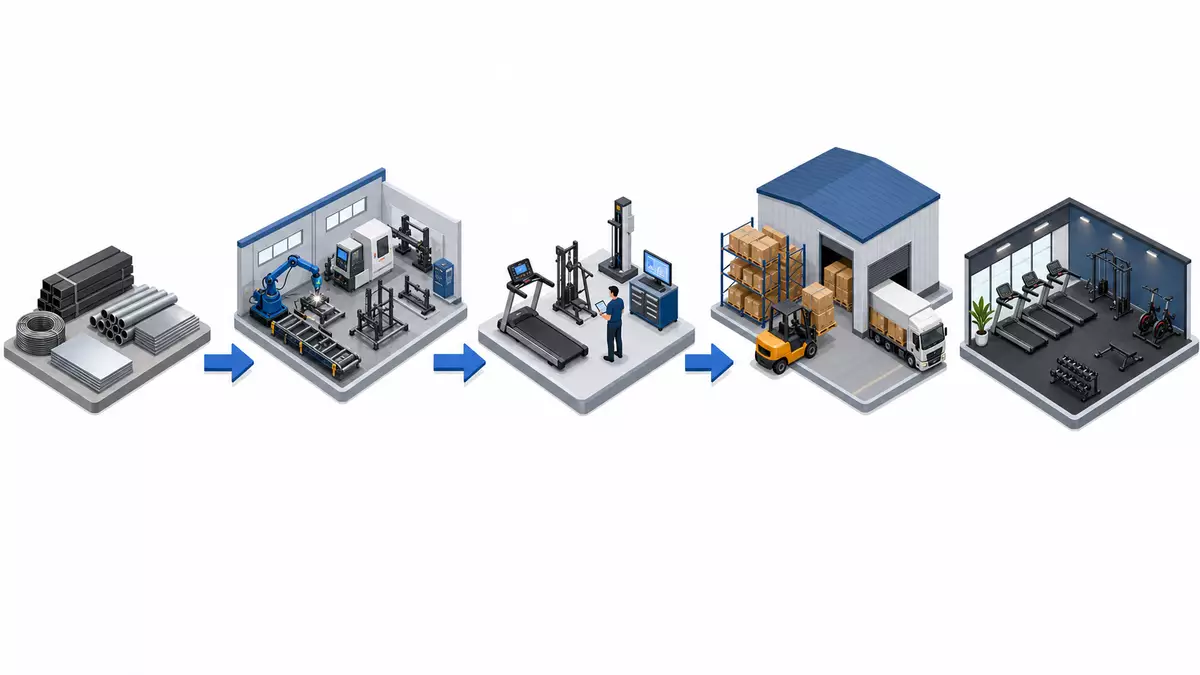
Margin preservation has been a key theme for Technogym, with the company emphasizing cost control in manufacturing, logistics, and overheads as it scaled revenue.
Maintaining positive EBITDA while growing top-line sales suggests that operating leverage has worked in favor of the business, allowing fixed costs to be spread over a larger revenue base and supporting profitability.
At the same time, investments in research and development, software platforms, and data analytics capabilities represent an ongoing cost burden, but these expenditures may be necessary to sustain competitive positioning in a market where connected fitness and personalized training are increasingly standard.
Balance sheet and financial flexibility
Technogym has historically managed its balance sheet with a focus on maintaining a reasonable level of leverage, which can provide resilience during periods of macroeconomic uncertainty or cyclical weakness in discretionary spending.
A moderate net-debt position relative to EBITDA offers the company flexibility to invest in new products, expand its digital ecosystem, or pursue selective acquisitions without putting excessive strain on its financial resources.
For shareholders, balance-sheet strength can be relevant both to downside protection and to the companys ability to seize growth opportunities when they arise, particularly in fast-evolving segments such as connected fitness or corporate wellness solutions.
Dividend policy and capital allocation
Technogym has a track record of returning cash to shareholders through dividends, reflecting the cash-generation ability of its business model.
The size of the dividend relative to earnings and free cash flow plays an important role in capital-allocation decisions, as the company must balance shareholder returns with reinvestment needs in technology, marketing, and international expansion.
Consistent dividend payments can be seen as a signal of management confidence in the stability of future cash flows, which may help support investor sentiment during periods of market volatility or sector-specific concerns.
Digital platforms and subscription potential
A core part of Technogyms strategy is the integration of hardware and software, with connected machines linking to digital platforms that deliver workouts, coaching, and data analysis.
In principle, this model allows Technogym to complement one-off equipment sales with recurring revenue streams from subscriptions and digital services, which can improve revenue visibility and potentially enhance margins if scaled effectively.
As more customers use connected features, the company can gather data on workout patterns, preferences, and usage intensity, helping refine product design, content curation, and user engagement strategies.
Product portfolio and innovation
Technogym offers a wide range of fitness equipment, including treadmills, bikes, strength-training machines, and connected consoles designed for both professional environments and home settings.
Continuous innovation in ergonomics, aesthetics, and digital interfaces is a key differentiator, as fitness operators and consumers increasingly expect integrated experiences that combine physical equipment with software-driven guidance and tracking.
By launching new product lines and refreshing existing ones, Technogym seeks to maintain its appeal among premium customers who value design, reliability, and seamless digital integration.
Competitive landscape and positioning
The global fitness-equipment market includes a variety of competitors ranging from large international manufacturers to local players, as well as newer entrants focused on connected home fitness solutions.
Technogym positions itself as a premium brand with an emphasis on design, quality, and integrated wellness solutions, which can justify higher pricing compared with some mass-market alternatives.
In professional settings such as gyms and hotels, the brand reputation and service network can be as important as the hardware itself, giving Technogym an advantage in winning and retaining contracts in segments that prioritize reliability and customer experience.
Macroeconomic and sector trends
Consumer and corporate spending on fitness and wellness can be influenced by broader macroeconomic conditions, including income growth, employment trends, and business travel activity, which affect demand from both households and hospitality operators.
Health-awareness trends, demographic shifts, and government initiatives to promote physical activity can also support structural demand for fitness equipment and associated services over the long term.
However, periods of economic slowdown or heightened uncertainty may lead some businesses and consumers to postpone or reduce investments in new equipment, potentially affecting short-term revenue growth for industry players such as Technogym.
Technogym connected treadmill focus
Within its portfolio, Technogym puts particular weight on connected cardio equipment such as treadmills that integrate screens, sensors, and software, allowing users to access guided workouts, virtual environments, and performance tracking.
These products target both professional gyms looking to differentiate their offerings and home users seeking an immersive training experience, and they exemplify the companys strategy of merging physical and digital components to deliver holistic wellness solutions.
As connected treadmills and other smart equipment become more widespread, Technogym can potentially deepen its ecosystem by linking hardware usage with mobile apps, cloud services, and community features that increase engagement and retention.
Technogym stock valuation context
From a valuation perspective, Technogym stock reflects market expectations about future revenue growth, margin development, and the scalability of its digital business model.
Investors often compare the companys revenue and EBITDA trends with those of other fitness-equipment and wellness-technology providers to gauge relative performance and assess whether the stock trades at a premium or discount to peers on measures such as enterprise value to EBITDA or price to earnings.
Because the company combines hardware manufacturing with software and content services, some market participants may also consider how Technogym should be valued relative to pure hardware manufacturers versus software-driven consumer brands.
Risk factors and execution challenges
Key risks for Technogym include potential supply-chain disruptions, input-cost volatility, and competitive pressure from both established players and emerging connected-fitness brands.
Maintaining consistent product quality and service standards across different geographies can be challenging, especially as the installed base of equipment grows and customers expect rapid support and maintenance.
In addition, technological shifts in areas such as machine learning, user-interface design, and content delivery require ongoing investment and adaptation, so that the companys products remain relevant and appealing in a market where consumer expectations evolve quickly.
Opportunities in corporate and hospitality wellness
Technogym has identified corporate wellness programs and hospitality installations as important growth segments, as employers and hotels increasingly view high-quality fitness offerings as part of their value proposition to employees and guests.
Providing tailored equipment solutions and digital platforms for these segments can create multi-site contracts and recurring relationships that contribute to revenue visibility.
By integrating analytics and reporting tools, Technogym can help corporate clients track participation and outcomes, potentially strengthening the business case for investing in wellness initiatives and expanding demand for its products and services.
Regulatory and sustainability considerations
Regulatory frameworks affecting manufacturing standards, energy efficiency, and data privacy can shape how Technogym designs and markets its equipment and digital platforms.
Efforts to improve the environmental footprint of manufacturing processes and to enhance the recyclability or durability of equipment align with broader sustainability trends that are increasingly relevant for institutional customers and public tenders.
On the digital side, ensuring compliance with data-protection rules and safeguarding user information are critical to maintaining trust in connected fitness solutions that rely on detailed personal data about health and exercise habits.
Long-term structural drivers
Over the long term, structural drivers such as aging populations, rising healthcare costs, and increasing awareness of lifestyle-related health risks may support demand for fitness and wellness solutions.
Technogym aims to position itself as a partner in preventive health, offering equipment and platforms that facilitate regular physical activity and help individuals and organizations manage wellness programs more effectively.
If these structural trends continue, the company could benefit from a steady underlying demand backdrop even as cyclical factors cause shorter-term fluctuations in orders and installations.
Technogym brand and customer loyalty
Brand strength plays a meaningful role in Technogyms ability to attract and retain customers, particularly in premium segments where buyers value both aesthetic appeal and functional performance.
A reputation for reliability, design quality, and integrated digital experiences can foster customer loyalty and lead to repeat purchases when facilities upgrade or expand their equipment fleets.
For home users, positive experiences with Technogym products and content can translate into word-of-mouth recommendations and social-media engagement, supporting organic brand growth alongside formal marketing campaigns.
Innovation pipeline and future products
Technogym invests in research and development to refresh its product lineup and explore new concepts in connected fitness and wellness.
Future products may increasingly incorporate advanced sensors, adaptive training algorithms, and more personalized content experiences, enabling more tailored workouts and potentially improving user outcomes.
As innovation progresses, the company must balance the introduction of new features with usability and reliability, ensuring that enhanced functionality does not complicate the user experience or compromise equipment robustness.
Corporate governance and management strategy
Corporate governance practices and management strategy help shape Technogyms approach to growth, risk management, and stakeholder engagement.
A clear strategic framework that balances hardware and digital investments, geographic expansion, and financial discipline can support long-term value creation for shareholders.
Transparent communication about priorities, performance metrics, and capital-allocation decisions can also influence investor confidence and the market perception of Technogym stock.
Technogym stock and investor perspective
For investors considering exposure to the fitness and wellness equipment segment, Technogym stock offers a case study in how a company can blend manufacturing heritage with digital innovation.
The revenue growth from roughly EUR 700 million in fiscal 2022 to approximately EUR 800 million in fiscal 2023, combined with positive EBITDA and ongoing investment in digital platforms, illustrates a business model that seeks to scale while maintaining profitability.
Future performance will depend on how effectively Technogym capitalizes on structural demand for wellness solutions, manages competitive and macroeconomic challenges, and continues to refine its product and service offerings in an increasingly connected landscape.
Representative product line in focus
Among Technogyms many offerings, its connected treadmill line provides a clear example of the companys strategy of merging hardware and software in a premium fitness experience.
These treadmills combine robust mechanical engineering with touchscreens, sensors, and software that deliver guided workouts, performance data, and integration with broader wellness ecosystems, including mobile apps and online content libraries.
By focusing on connected treadmills and similar products, Technogym aims to capture demand from users who value not only the physical act of running but also the motivational and informational benefits of digital training environments.
Technogym stock and market context
Technogym stock trades primarily on the Italian market, giving investors in Europe and beyond access to a specialized fitness-equipment and wellness-technology issuer.
While the exact current trading price and market capitalization vary over time depending on market conditions and investor sentiment, the stocks valuation reflects expectations about how revenue growth, margin trends, and digital initiatives will shape future earnings.
As with other listed companies, Technogym stock is subject to broader movements in equity markets, sector-specific rotation, and changes in interest-rate and risk-preference environments, which can all influence how the market prices its future prospects.
Technogym key data
- Company: Technogym S.p.A.
- ISIN: IT0005162406
- Ticker: MIL: TGYM
- Trading venue: Borsa Italiana
- Sector / Industry: Consumer Discretionary / Leisure Products
- Index membership: FTSE Italia Mid Cap
Disclaimer regarding our articles: No investment advice, no buy or sell recommendation. Information on prices, companies, and markets is provided without guarantee; changes are possible at any time. Stock market transactions can lead to substantial losses. Our articles are created and reviewed in whole or in part automatically with the support of AI.