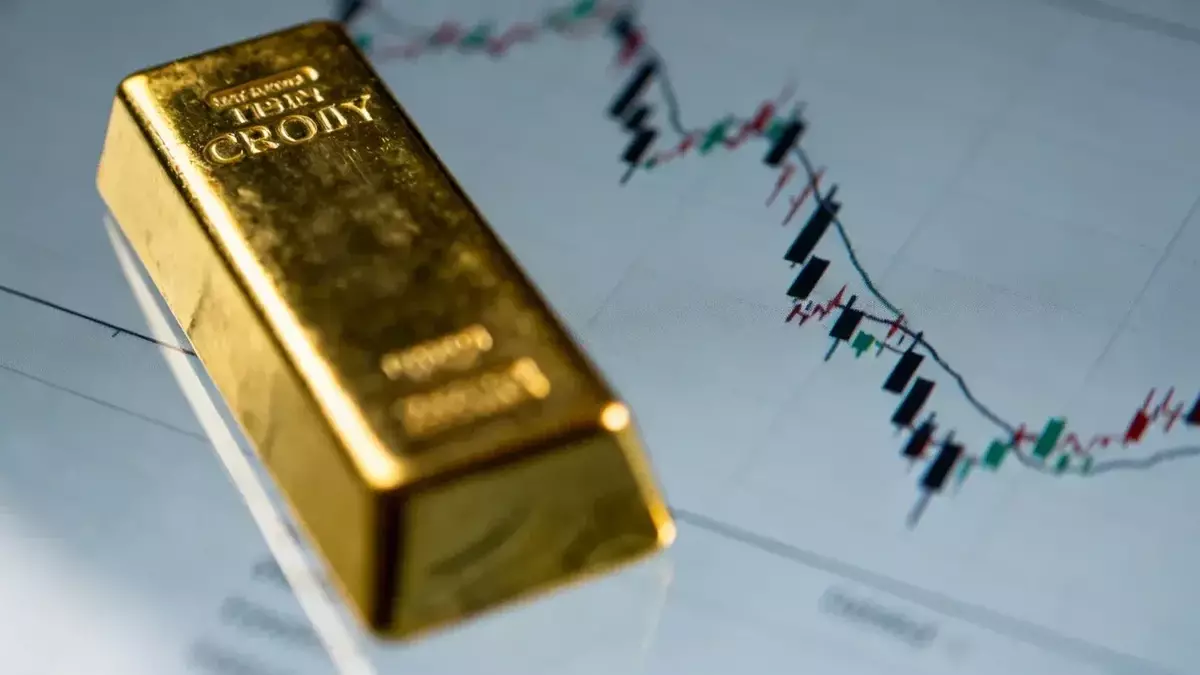
The $4,900 Question: Why Goldman Stood Alone in Cutting Its Gold Target While Rivals Stay Bullish
23.06.2026 - 05:05:11 | boerse-global.de
Goldman Sachs has broken ranks with the rest of Wall Street by slashing its gold price target to $4,900 per ounce, a move that puts it sharply at odds with rivals still forecasting prices above $6,000. The bank lowered its year-end estimate from $5,400 on June 19, pushing back its expected Federal Reserve rate cuts to June and December 2027 — a full year later than previously pencilled in.
The revision reflects a hawkish Fed that continues to dominate the precious metal's near-term trajectory. Nine of the 19 Federal Reserve members now anticipate at least one rate increase this year, and markets are already pricing in a possible hike by September. With inflation stubbornly above the 2% target, the central bank's tightening bias has pushed gold to a close of $4,209.80 an ounce, roughly 7% below its 50-day moving average and down for the year to date.
Yet the Goldman cut stands in stark contrast to the outlook from other major houses. Wells Fargo sees gold trading in a $6,100 to $6,300 range in 2026, JPMorgan holds at $6,300, and UBS targets $6,200. That divergence suggests the market is caught between cyclical headwinds and powerful structural demand.
The structural story is being written by central banks. In the first quarter, monetary authorities added 244 tonnes of gold to their reserves. The buying accelerated in April with a net 19 tonnes, led by Poland. China extended its purchasing streak to a 19th consecutive month in May, buying nearly 10 tonnes. A World Gold Council survey found that 45% of reserve managers plan to increase their gold holdings over the next year, while not a single one intends to sell.
Should investors sell immediately? Or is it worth buying Gold?
The motivation is political as much as economic. Ever since Western nations froze Russian central bank assets in 2022, countries such as China and the Czech Republic have been diversifying away from the dollar. Nearly three-quarters of the central banks surveyed said they intend to reduce their US dollar holdings going forward. Goldman's own model now assumes central banks will buy an average of 60 tonnes of gold per month in 2026 — a pace that should provide a solid floor under prices.
Nevertheless, near-term sentiment is being shaped by geopolitics of a different kind. The US-Iran peace talks in Burgenstock produced a 60-day roadmap that includes tariff-free passage through the Strait of Hormuz and a ceasefire in Lebanon. US Vice President JD Vance confirmed that Iran has readmitted IAEA inspectors. While that reduces the geopolitical risk premium for gold, it also pushes oil prices lower, dampening inflation expectations and easing pressure on the Fed to cut rates — a double-edged sword for bullion.
On the sell side, Russia and Turkey stand out. Russian sales underscore the financial strain of war, while Turkey is offloading gold to support the ailing lira and manage local demand. That counterweight is modest, however, compared with the buying wave from the rest of the world.
Gold at a turning point? This analysis reveals what investors need to know now.
All eyes are now on the US data calendar. Manufacturing and services PMI readings are due later today, followed by the core PCE price index for May and the first-quarter GDP revision on June 25. A higher-than-expected PCE print would cement the Fed's restrictive stance and push gold deeper into oversold territory — the relative strength index is already at 38. A softer reading, by contrast, could spark a relief rally from levels that many technicians see as oversold.
Gold thus faces a tug-of-war between a relentlessly hawkish Fed and the most determined accumulation of bullion by central banks in modern history. For now, the rate fears are winning. But with Goldman standing alone among the major banks, the question is whether its bearish call will prove prescient or premature.
Ad
Gold Stock: New Analysis - 23 June
Fresh Gold information released. What's the impact for investors? Our latest independent report examines recent figures and market trends.