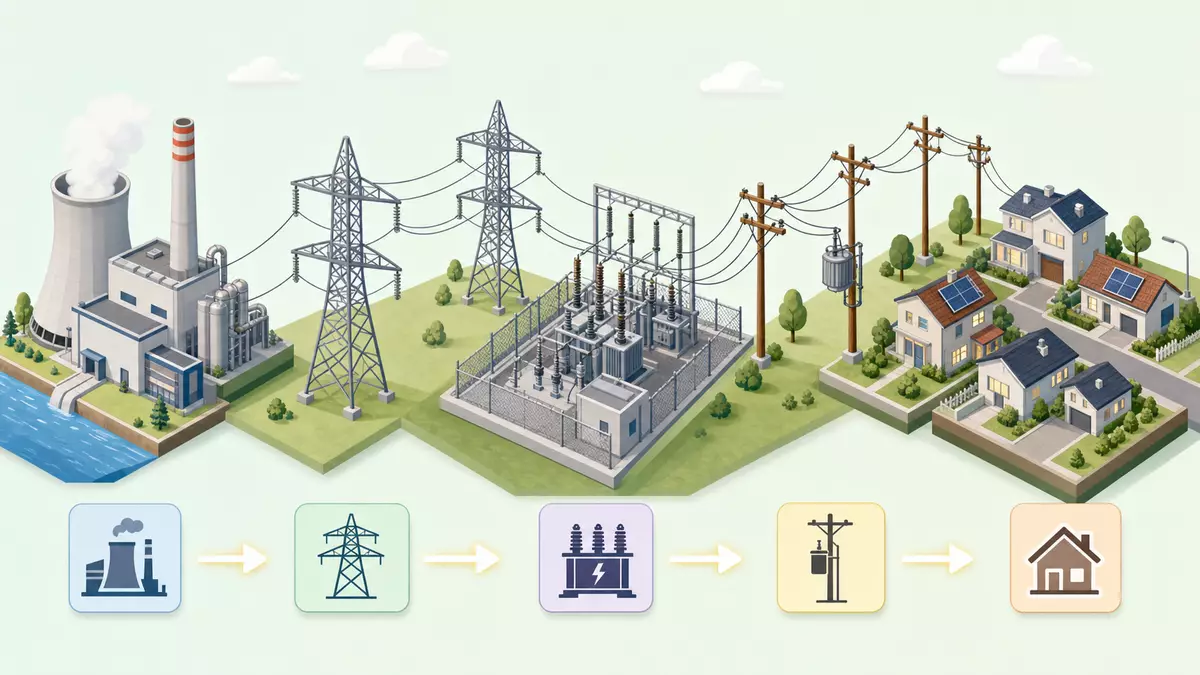
The Distributed Energy Resource Management System - National Grid bets on smarter low-voltage grids
Published on 07/21/2026 at 18:52 | Editorial responsibility: Rafael Müller, Editor-in-Chief AD HOC NEWS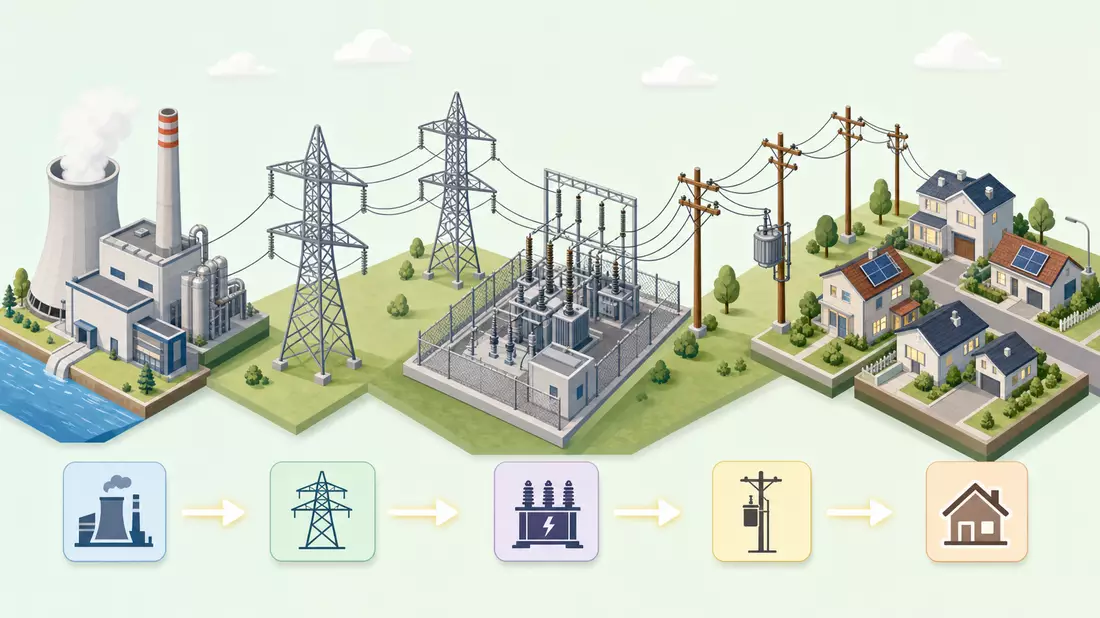
The Distributed Energy Resource Management System from National Grid lives mostly out of sight, tucked into control rooms where engineers watch rows of screens glow in soft blues and greens as local grid data flows in real time. Operators like Michael Lewis, a senior control engineer in Wokingham, describe the constant hum of servers and the occasional whirr of a portable fan as they steer low-voltage networks that now host solar panels, home batteries and clusters of EV chargers. The sensory experience is more data than diesel: the click of a mouse, the faint buzz of switchgear relays, and the sharp ping when an alert fires for a transformer heading towards overload.
Software that sees behind the meter
National Grid’s Distributed Energy Resource Management System, often shortened to DERMS in internal documents, is designed to give planners and control-room staff a live picture of how distributed energy assets are behaving on specific feeders and substations. It ingests data from smart meters, feeder sensors, transformer monitors and sometimes directly from larger customer-owned assets such as commercial-scale batteries, aggregating those streams into a network model that can be refreshed in granularity down to minutes. As described in a National Grid ESO technical publication on distributed resource integration, the software can flag when rooftop solar output and EV charging loads combine to push a suburban street’s transformer towards its thermal limit on a sunny early evening. In that scenario, planners see not only the forecast overload but also how much flexibility sits nearby: for instance, how many flex contracts exist for smart EV charging or battery discharging on that feeder.
One core function Michael Lewis and his colleagues rely on is a set of constraint maps overlayed on the network schematic, which colour-code areas by headroom for additional distributed resources. These maps draw from load-flow analyses that DERMS runs with up-to-date asset data, allowing planners to answer practical questions like whether a new 500 kW rooftop solar project or an additional cluster of fast chargers can be connected to a given circuit without violating voltage or thermal limits. On quiet afternoons, Lewis describes walking past the wall-mounted screens and seeing certain areas shine a reassuring pale green, meaning comfortable headroom, while a handful of urban pockets flicker amber or red under forecasted EV charging peaks. Those colours are not decorative; they steer investment decisions and connectable capacity offers made to developers.
National Grid PLC as a flexible grid operator
Background reports and regulatory filings show how National Grid PLC weaves software like DERMS into its broader UK electricity and gas network strategy.
From pilot projects to everyday operations
The current DERMS environment National Grid uses has roots in pilot projects under UK innovation funding schemes such as the Low Carbon Networks Fund and subsequent Network Innovation Competition rounds, where early software platforms tested active network management on selected substations. One often cited example is the "Flexible Plug and Play" approach used in parts of Cambridgeshire, where active control schemes allowed more distributed generation to connect to constrained rural circuits, setting patterns later absorbed into DERMS logic. Over years, the patchwork of pilots and interim tools has been consolidated into a more standardised platform inside the distribution businesses that National Grid has owned or influenced, giving staff like Rachel Singh, a planning engineer, consistent dashboards instead of ad hoc spreadsheets. Singh recalls how earlier studies required exporting data into standalone tools for load-flow analysis, whereas now DERMS can trigger simulations directly from the current network state, cutting hours off routine connection assessments.
According to UK energy regulator Ofgem’s guidance on flexibility, distribution operators are expected to use systems like DERMS to explore non-wire alternatives before defaulting to traditional reinforcement such as upgrading transformers or adding new feeders. In practice, this means National Grid’s planners can test options like demand-side response, local battery dispatch or curtailment of distributed generation, seeing how these levers affect voltage profiles and asset loading under different scenarios. The aim is to meet reliability standards and accommodate new connections while controlling costs that ultimately feed into regulated revenues and customer bills. For investors, this software-driven approach can signal a mix of capex and opex trade-offs, where smarter use of existing assets might defer big hardware investments but still requires ongoing spending on digital platforms and data infrastructure.
How DERMS interacts with EVs and heat pumps
Most distributed energy conversations in the UK today quickly turn to electric vehicles and heat pumps, both of which change the shape of residential load curves, and DERMS is one of the tools National Grid uses to track and manage those changes. Data from smart chargers and smart thermostats is not always directly visible at the device level, but aggregated effects show up in transformer load profiles and feeder voltage trends that the system digests into forecasts. In an internal case study shared in a technical presentation, National Grid planners looked at a neighbourhood where EV ownership rose from around 5% of households to 30% over several years, significantly pushing up evening peaks as drivers plugged in after work. DERMS models indicated that without some form of managed charging, the local transformer would exceed its thermal rating during winter evenings within a few years. That prompted a mix of actions: encouraging time-of-use tariffs, piloting smart charging programmes, and planning reinforcement for the most stressed assets.
Heat pumps add a different flavour to the load profile, often increasing daytime and early evening demand in winter as homes maintain indoor temperatures electrically instead of burning gas. With weather data integrated into DERMS scenarios, planners can see how cold spells, when many heat pumps run nearly continuously, combine with EV charging and reduced solar output to create tight margins on some feeders. The software can identify where those combined effects are tolerable with minor voltage control tweaks and where they cross critical thresholds that the engineering standards forbid. In those more stressed areas, National Grid can design targeted reinforcement projects, such as upsizing specific transformers or reconfiguring network topology, backed by DERMS evidence about when and how often constraints occur. These choices feed into regulatory submissions and investment plans that Ofgem reviews as part of price-control periods like RIIO-ED2.
Behind the dashboards: the data plumbing
DERMS only works if the data feeding it is timely and accurate, which means National Grid’s digital teams spend significant effort on integrating diverse sources into a coherent pipeline. According to a technical overview published by National Grid ESO on digital architecture, much of the operational data flows through secure message buses and data lakes, where timestamps and asset identifiers are aligning before models consume them. Field sensors on poles and inside substations push readings at intervals ranging from seconds to minutes, while smart meter data and market information may update less frequently but still contribute to the view of demand and generation. For planners and operators like Lewis and Singh, this plumbing is largely invisible day to day, except when data lags show up as warnings on the DERMS interface. In those moments, the sensory cue is less the hum of hardware than a red banner flashing at the top of a screen saying that a specific feed has stale data.
National Grid’s engineering staff are careful to stress that DERMS does not magically resolve all uncertainty. Some small-scale resources, particularly older rooftop solar installations or basic EV chargers, may not report granular data, leaving the system to estimate their behaviour using statistical models and load profiles. These models are calibrated using observed aggregate data and occasionally verified through targeted studies, but they still involve assumptions that planners must treat cautiously. In internal training materials, staff are reminded that DERMS is a decision-support tool, not an automated autopilot; human engineers must still validate the results, particularly for high-impact investment decisions or complex connection offers. That balance between digital recommendations and human judgement is central for regulated network operators, who remain accountable to Ofgem and ultimately to customers for reliability and fairness.
Regulation, revenue and investor relevance
For retail investors looking at National Grid PLC, DERMS sits in the background of many regulatory and financial conversations even though it never appears on a monthly bill. Under Ofgem’s RIIO framework for electricity distribution and transmission, companies are incentivised to deliver capacity and reliability efficiently, with rewards and penalties linked to performance metrics, customer satisfaction and innovation outcomes. Using systems like DERMS to unlock more flexible use of existing assets can support those efficiency goals, because it may allow National Grid to defer some traditional reinforcement while still connecting new loads and generation. When Ofgem evaluates business plans, it looks closely at how companies justify their network investments and how they plan to accommodate trends like electrification of transport and heating, areas where DERMS-based analysis plays a visible role in supporting modelled scenarios.
For a share priced on long-term regulated asset bases and predictable dividends, investors rarely see DERMS in headline numbers but feel its influence indirectly through approved capex, opex allowances and performance adjustments. As National Grid expands and maintains digital platforms, it records spending in its accounts, but the bigger story is how those tools help keep reliability high and connection queues manageable as new technologies arrive. In London trading, National Grid PLC stock reflects the broader outlook for UK infrastructure, regulation and energy transition, not the success of any single software suite. Yet the Distributed Energy Resource Management System is one of the quiet systems steering that transition at the street level, shaping how quickly and how smoothly households and businesses can plug into a lower-carbon electrical future.
Key facts on DERMS and National Grid
- Product: Distributed Energy Resource Management System (DERMS)
- Manufacturer: National Grid PLC
- Category: Software / Service / Subscription (grid operations software)
- Market launch: Evolved from UK innovation-funded pilots during the 2010s, now in operational use across selected UK distribution and transmission environments.
- MSRP / Price: Internal platform, with costs capitalised and expensed within National Grid’s regulated business units rather than sold at a public retail price.
- Availability: Used internally across National Grid’s UK electricity network operations and planning teams, supporting integration of distributed energy resources.
- Target group: Grid control-room staff, network planners and digital teams managing distributed generation, EVs, heat pumps and local flexibility resources.
- Highlight / USP: Live, constraint-aware view of low-voltage and medium-voltage networks, helping National Grid accommodate more distributed energy resources while meeting reliability and regulatory standards.
Disclaimer regarding our articles: No investment advice, no buy or sell recommendation. Information on prices, companies, and markets is provided without guarantee; changes are possible at any time. Stock market transactions can lead to substantial losses. Our articles are created and reviewed in whole or in part automatically with the support of AI.