The Memory Bottleneck: How Micron Became the Indispensable Gatekeeper of AI Infrastructure
Veröffentlicht: 28.06.2026 um 13:53 Uhr, Redaktion boerse-global.de
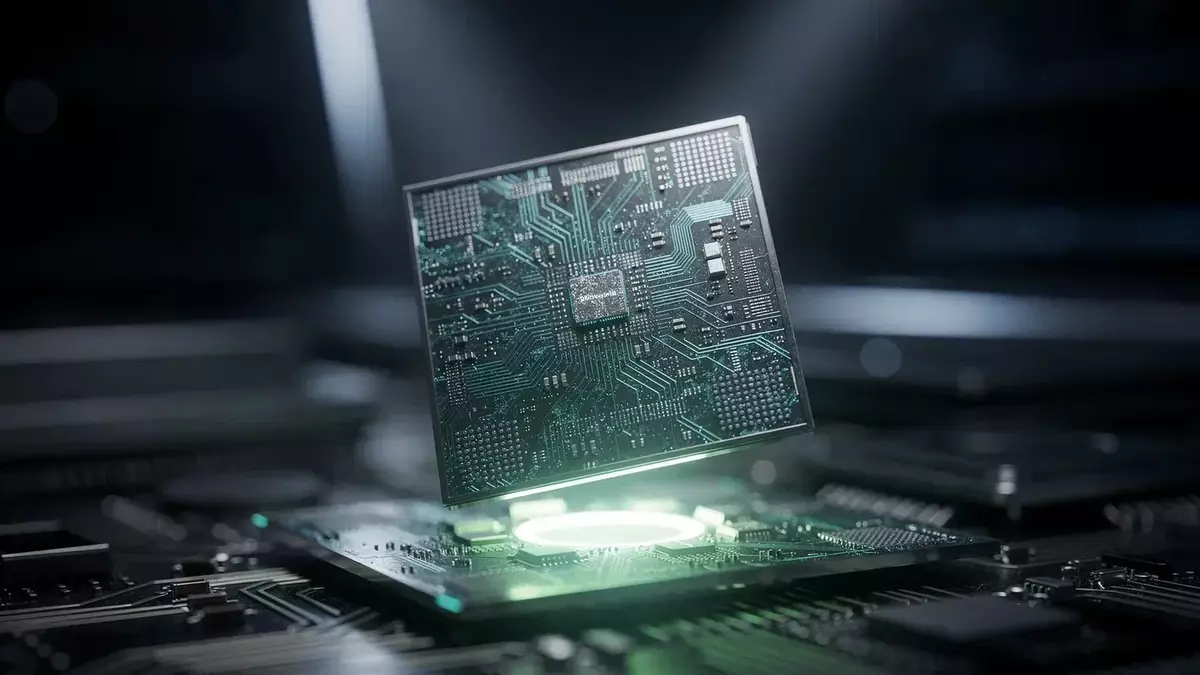
The physics of artificial intelligence has created an unexpected chokepoint. Graphics processors, no matter how powerful, run up against a physical limit: their silicon real estate. The only way to cram more compute into a chip is to stack memory vertically. And that has thrust Micron Technology into a position the memory industry has never occupied before — the strategic bottleneck of the global AI buildout.
The numbers that landed on June 24 make that clear. Micron reported fiscal third-quarter revenue of €41.46 billion, a 346% leap from the same period a year earlier. The gross margin hit 84.6%, a historic high. Adjusted earnings per share came in at $25.11, smashing the consensus estimate of $20.28 by nearly a quarter. The growth was powered almost entirely by High Bandwidth Memory (HBM) and data-center SSDs, which alone contributed over €5 billion to the top line.
Yet the market reacted with a shrug — or worse. The stock closed the week at €995.60, down 6.5% from the all-time high of €1,103.80 touched the day before. Classic “sell the news” after a 270% year-to-date run, but the selloff also reflects a deeper tension. The average analyst target sits at €920, roughly 7.6% below Friday’s close, creating overhead resistance even as fundamentals dazzle.
This time, however, the cycle looks different. Micron has signed 16 strategic customer agreements, non-cancelable take-or-pay contracts that already carry $22 billion in customer prepayments. The total minimum volume across those deals exceeds $100 billion. For the first time in its history, the company is entering a fiscal year with its high-performance capacity fully sold out before the year has even begun. CEO Sanjay Mehrotra told analysts that supply will not catch up with demand before 2028.
Should investors sell immediately? Or is it worth buying Micron?
The technology roadmap reinforces that view. HBM4 is already in mass production for a lead customer, and qualification samples of the next-generation HBM4E have been distributed. The urgency is driven by the physical constraints of GPU design: faster compute requires denser memory stacks, and Micron’s current fabrication technologies are the only answer available at scale.
Mehrotra also flagged a new growth vector that is closer than most expect. Humanoid robots, he noted, require roughly ten times the memory of a mobile device. Orders for autonomous units are beginning to appear for 2027 and 2028, adding another dimension to Micron’s addressable market. Two years after nursing a pandemic-era inventory hangover, the company now sits at a chokepoint the entire AI economy cannot bypass.
The technical picture offers some breathing room. After Friday’s correction, the 14-day relative strength index settled at 59.7, well clear of overbought territory. That leaves room for institutional buyers who missed the initial rally. The 50-day moving average stands at €707.86, a full 40% below the current price, underscoring how far the stock has run. Whether the roughly 10% pullback from the high deepens into a more prolonged consolidation will depend in part on how the broader semiconductor sector absorbs what some analysts have dubbed "memflation" — the persistent price inflation in memory chips that is squeezing hardware makers' margins. For Micron, higher prices are a boon; for customers, less so.
Meanwhile, the competitive landscape is shifting. Rival SK Hynix, which holds a 56.4% share of the HBM market, is preparing a landmark Nasdaq listing. The South Korean memory maker plans to raise roughly $29.4 billion through American Depositary Shares, trading under the ticker “SKHY,” with a tentative debut on July 10. Its shares in Seoul have gained about 850% over the past twelve months and the market capitalization has crossed $1 trillion. HSBC analysts view the listing as a catalyst to close the valuation gap with Micron.
Micron at a turning point? This analysis reveals what investors need to know now.
The broader semiconductor sector took a hit on Friday as profit-taking swept across chip stocks after a record week. ASML lost nearly 5% on geopolitical concerns related to the MATCH Act and export restrictions to China. Marvell Technology fell 15% despite strong execution, and Qualcomm dropped 16% after presenting a server-chip strategy that will not bear fruit until 2028. But the profit-taking felt most concentrated in memory names, where valuations have run far ahead of even the most bullish narratives.
For Micron, the real story is not the Friday selloff. It is that the company has exited the commodity cycle for good. The order book is locked, the foundries are sold out years in advance, and the physical constraints of AI hardware ensure demand will not soften. The question is whether the market can adjust its mental model as quickly as Micron has adjusted its business model.
Ad
Micron Stock: New Analysis - 28 June
Fresh Micron information released. What's the impact for investors? Our latest independent report examines recent figures and market trends.
Disclaimer zu unseren Artikeln: Keine Anlageberatung, keine Kauf oder Verkaufsempfehlung. Angaben zu Kursen, Unternehmen und Märkten ohne Gewähr; Änderungen jederzeit möglich. Börsengeschäfte können zu hohen Verlusten führen. Unsere Beiträge werden ganz oder teilweise automatisiert mit Unterstützung von AI erstellt und geprüft.