The Opel Grandland - Stellantis bets on a quiet EV transition in Eisenach
Published on 07/18/2026 at 15:14 | Editorial responsibility: Rafael Müller, Editor-in-Chief AD HOC NEWS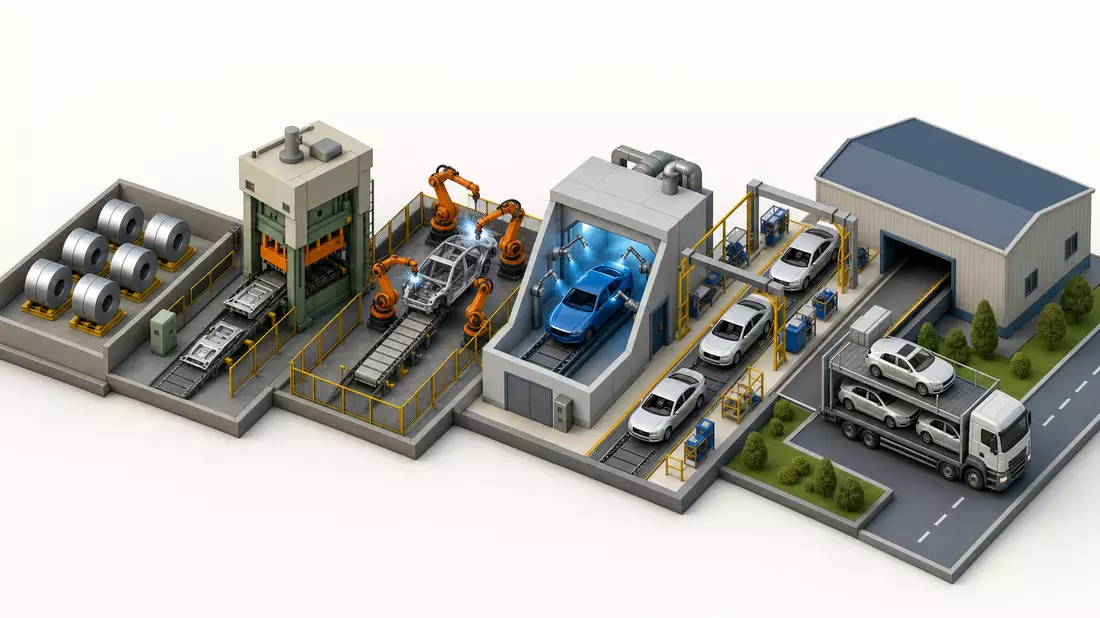
The Opel Grandland stands under the bright factory lights in Eisenach, its two-tone roof catching reflections from the polished concrete floor as workers fit the last trim pieces by hand. You can almost smell the mix of fresh paint and warm plastic in the final assembly hall. Opel brand chief Florian Huettl calls the Grandland a “pillar of our compact SUV lineup” as he walks past a row of finished cars waiting for software checks.
Compact SUV with electrified options
Opel, part of Stellantis N.V., positions the Opel Grandland as a compact SUV available with combustion, plug-in hybrid and, depending on market phase, increasingly electric-focused configurations. The current Grandland, updated from the former Grandland X nameplate, sits on the EMP2 platform shared within Stellantis and targets families who want an elevated seating position without a full-size SUV footprint. The boot opens with a dull thud and reveals around 514 liters of luggage space in standard configuration, making room for two large suitcases and a folded stroller.
In its plug-in hybrid variant, the Opel Grandland uses a 1.6-liter four-cylinder petrol engine paired with an electric motor and a lithium-ion battery, delivering system power of up to about 165 kW and an electric range of roughly 60 to 65 km under WLTP, depending on trim and wheel size. When you press the accelerator gently in electric mode, the SUV glides away almost silently, with only the faint hum of tires on asphalt audible at city speeds. A dedicated drive-mode selector lets drivers switch between Hybrid, Electric and Sport, balancing efficiency and performance for daily commuting or weekend trips.
Stellantis N.V. and the electrified Opel Grandland line
Track how the Opel Grandland contributes to Stellantis N.V.'s transition strategy and revenue mix in the compact SUV segment.
Interior, tech and everyday usability
Inside the Opel Grandland, the driver faces Opel’s so-called Pure Panel cockpit, a pair of digital displays integrated behind a single glass surface, combining instrument cluster and central infotainment screen in a slightly curved rectangle. The physical climate-control buttons sit just below, so you can feel the distinct click when adjusting temperature, instead of hunting through submenus. Seats in higher trims are AGR-certified ergonomic chairs, with extendable thigh support and adjustable lumbar sections designed to reduce fatigue on longer trips.
For connectivity, the Opel Grandland offers Apple CarPlay and Android Auto integration, typically via wired connection in lower trims and sometimes wireless in better-equipped versions, depending on market and year. The infotainment system includes navigation with real-time traffic and EV-specific routing for plug-in hybrid drivers, suggesting charging points along planned routes when the battery is low. Opel also provides a suite of driver-assistance systems such as lane-keep assist, adaptive cruise control and optional night vision on certain related Stellantis platforms, while the Grandland focuses on core ADAS features like automatic emergency braking and traffic-sign recognition.
Production hub and Stellantis strategy
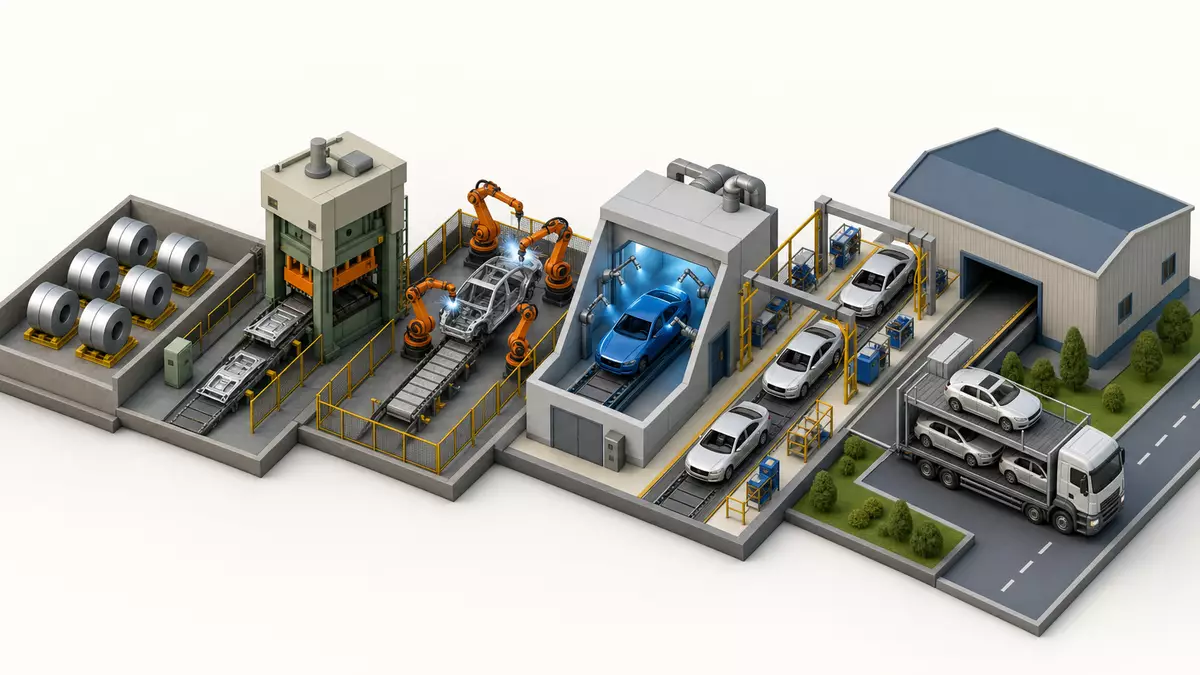
The Opel Grandland is produced at the Eisenach plant in Germany, which Stellantis has gradually transformed from a predominantly combustion-focused site into a location prepared for high-voltage architectures and electrified drivetrains. During a factory walk-through, plant manager Uwe Höhn points to newly installed battery assembly stations and high-voltage testing bays, describing how production workers were trained step by step to handle plug-in hybrid components safely. The hum of welding robots and the rhythm of automated guided vehicles carrying parts crates underline how methodically Stellantis is reconfiguring its manufacturing footprint.
Stellantis CEO Carlos Tavares has repeatedly argued that compact SUVs like the Opel Grandland play a practical role in the group’s Dare Forward 2030 strategy, which aims for significant electrification across European brands. In press statements and analyst calls, he emphasizes that vehicles such as the Grandland help bridge customers from traditional combustion cars to plug-in and fully electric models by offering familiar formats with reduced emissions. On the product level, Opel aligns the Grandland’s equipment packages and pricing with mainstream expectations rather than pursuing luxury margins, keeping the model accessible to families and fleet operators who need predictable total cost of ownership.
Market positioning and customer segments
In Europe, the Opel Grandland competes in the crowded C-SUV segment against models such as the Peugeot 3008, Volkswagen Tiguan, Ford Kuga and Hyundai Tucson, many of which also offer plug-in hybrid options. Opel carves out its niche by emphasizing German design cues, straightforward ergonomics and relatively simple trim lines, rather than heavily customized configurations. Fleet managers appreciate that the plug-in hybrid Grandland typically falls into favorable company-car taxation brackets in markets like Germany, France and the Benelux states, provided drivers regularly charge the battery and use electric driving for urban routes.
Private buyers often come from smaller Opel models like the Astra or Corsa when children grow and space demands change, with sales advisers steering them toward the Grandland as a natural step-up in size. On a dealership forecourt on a drizzly afternoon, you can see parents loading a child seat into the back and testing how easily the rear doors close with one hand while juggling shopping bags. These everyday moments illustrate why Opel keeps the rear-seat entry angle generous and avoids excessively sloped rooflines, trading a more dramatic silhouette for headroom and practicality.
Energy use, charging and running costs
The plug-in hybrid Opel Grandland’s battery can be charged via AC up to around 7.4 kW, which corresponds to roughly two hours for a full charge at a typical home wallbox or public AC charging point. For drivers who plug in overnight at home, the Grandland’s usable electric range covers many daily commutes across European cities, reducing fuel consumption and allowing access to low-emission zones where pure combustion vehicles face restrictions. Fuel consumption figures for the plug-in hybrid, under WLTP, often fall into the roughly 1.5–2.0 l/100 km band when the battery is regularly charged, though real-world results depend heavily on usage patterns.
Stellantis structures maintenance intervals for the Opel Grandland in line with other compact SUVs, often at around 20,000 to 30,000 km or every one to two years, whichever comes first, including checks on the high-voltage system for plug-in versions. Opel dealers are equipped with insulated tools, diagnostic testers and specific training modules to work safely on battery packs and electric motors, a requirement Tavares and his leadership team have flagged as central to scaling electrified volumes. For owners, this means that while service visits may include additional hybrid system inspections, the overall routine remains familiar compared to traditional petrol models.
Pricing, trims and availability
Pricing for the Opel Grandland varies by country, powertrain and trim, but plug-in hybrid versions in Germany generally start in the low- to mid-€40,000 range, before subsidies or dealer discounts. Higher-spec variants, with larger wheels, premium interiors and more driver-assistance features, can climb closer to €50,000, though Opel often runs seasonal campaigns and fleet deals to keep effective transaction prices competitive. In France and other Eurozone markets, similar price structures apply with local adjustments, reflecting tax regimes and incentives for low-emission vehicles.
The Opel Grandland is widely available across Opel’s European dealer network, including Germany, France, the Benelux region, parts of Southern Europe and selected non-EU markets. Some markets may emphasize combustion engines where charging infrastructure still lags, while others push plug-in hybrids. For Germany, Opel highlights the role of the Eisenach-built Grandland in national marketing campaigns and showroom lineups, linking the SUV to domestic production and the country’s broader mobility transition narrative. On the Stellantis corporate site, the model appears alongside Peugeot, Citroën and other brands’ offerings as part of the group’s multi-brand strategy.
Stellantis N.V. share and Grandland impact
From an investor’s perspective, the Opel Grandland is one of several compact SUVs that contribute to Stellantis N.V.’s European volume and margin mix, rather than a single flagship that dominates the income statement. Analysts who follow Stellantis point to the Grandland, and its platform siblings, as evidence of the group’s modular approach: shared underpinnings, differentiated brand identities, and a blend of combustion and electrified options to manage regulatory pressures while maintaining scale. The Stellantis N.V. stock trades on Euronext Milan and other European venues, where performance reflects the combined output of brands including Opel, Peugeot, Citroën, Fiat and others, with products like the Grandland feeding into segment results and regional revenue trends.
Key data on the Opel Grandland
- Product: Opel Grandland
- Manufacturer: Stellantis N.V.
- Category: B2B/Pro line (compact SUV, fleet and private)
- Market launch: Originally as Grandland X around 2017; updated Opel Grandland facelift introduced in the early 2020s in Europe
- MSRP / Price: Plug-in hybrid variants typically starting in the low- to mid-€40,000 range in Germany, depending on trim
- Availability: Available across much of Opel’s European dealer network, including Germany and other Eurozone markets
- Target group: Families, commuting professionals and fleet customers seeking a compact SUV with electrified options
- Highlight / USP: Combines familiar compact-SUV format with plug-in hybrid capability and German-built production in Eisenach
Disclaimer regarding our articles: No investment advice, no buy or sell recommendation. Information on prices, companies, and markets is provided without guarantee; changes are possible at any time. Stock market transactions can lead to substantial losses. Our articles are created and reviewed in whole or in part automatically with the support of AI.