Tomra stock trades steady as recycling and sorting specialist builds on solid 2024 earnings
Published on 07/25/2026 at 07:54 | Editorial responsibility: Rafael Müller, Editor-in-Chief AD HOC NEWS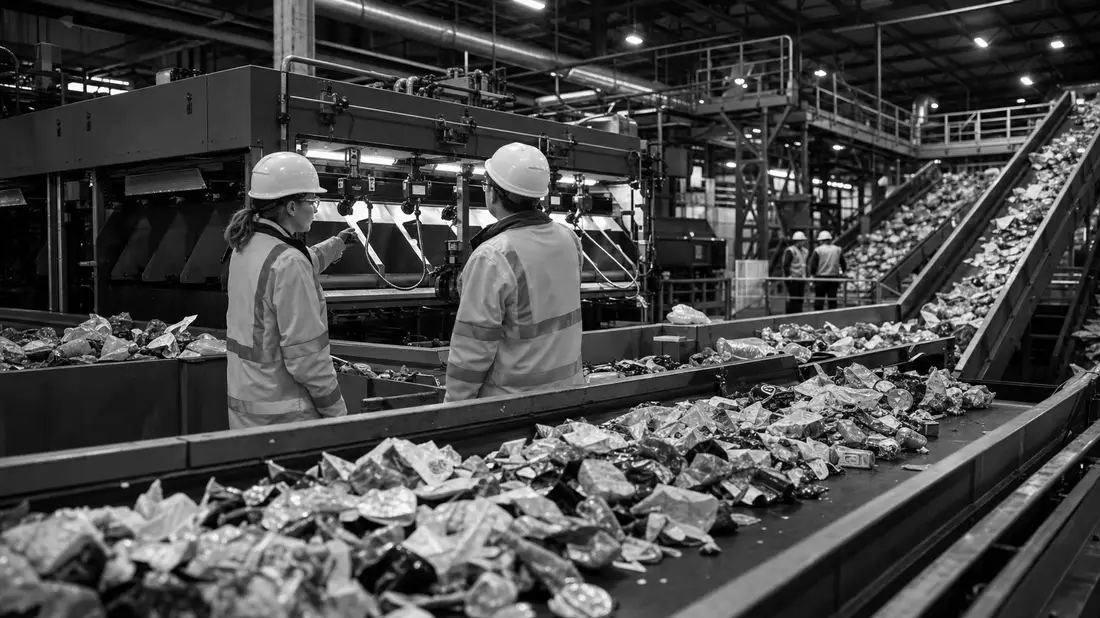
Tomra stock represents exposure to a global leader in reverse vending, recycling, and sensor-based sorting systems, with the Norwegian group Tomra ASA (ISIN NO0005668905) active in deposit-return and resource recovery markets worldwide. In the context of 2024 reporting and recent investor-relations communication, Tomra remains a reference name for automated collection and sorting technologies, supported by its multi-segment business model and ongoing investment in innovation. For investors, the combination of established reverse-vending operations and growth in collection and sorting systems underpins the long-term narrative around circular-economy and waste-reduction themes.
Revenue and earnings momentum
Tomra generates its revenue from several business segments including Collection, Recycling, and Food, each tied to sensor-based sorting and collection technologies used in deposit-return systems, material-recovery facilities, and food-processing lines. The Collection segment centers on reverse vending machines that automatically accept used beverage containers, while the Recycling and Food segments focus on optical sorting technologies that help processors separate materials and products with high precision. Across these segments, Tomra pursues both equipment sales and long-term service and maintenance contracts, creating a mix of one-off capital expenditure and recurring service income that can support cash flow stability over time.
In its recent financial reporting for 2024, Tomra detailed revenue growth at the group level, including changes across its main operating divisions and markets. The company has historically reported figures in Norwegian kroner (NOK) and highlighted year-on-year trends in operating profit, earnings per share, and margins. Investors often look closely at segment performance to understand where growth is strongest, such as whether reverse-vending rollouts in new markets are driving the Collection segment or whether demand from material-recovery facilities and food processors is supporting the Recycling and Food segments. Margin dynamics and the balance between capital equipment and service revenues play an important role in how Tomra converts top-line growth into bottom-line results.
Balance sheet and cash flow profile
Tomra’s financial profile includes long-term investments in manufacturing, R&D, and service capabilities that support its installed base of reverse vending machines and sorting systems. Capital expenditure tends to follow major contract wins or technology-refresh cycles, while operating cash flow reflects both equipment deliveries and ongoing service income. The balance sheet structure, with a mix of equity and debt financing, shapes Tomra’s capacity to sustain R&D initiatives aimed at more efficient sensors, data analytics, and connectivity features in its machines. For investors, the ability to fund innovation while maintaining a disciplined leverage profile is central to Tomra’s ability to navigate regulatory shifts and competitive pressures.
Cash-generation patterns can be influenced by the timing of large orders, particularly in the Collection segment when governments or beverage-industry coalitions expand or introduce deposit-return systems. In the Recycling and Food segments, project-driven deliveries and global capex cycles in waste management and food-processing industries affect working-capital needs and cash conversion. As Tomra refines its service offerings, including remote monitoring, predictive maintenance, and data-driven optimization services, the share of recurring revenues may increase, which can help smooth cash flows and support a more resilient financial profile over time.
Regulatory backdrop and market drivers
Tomra operates in markets heavily shaped by regulation, particularly in deposit-return systems for beverage containers and waste-management policies that encourage higher recycling rates. Governments and regulators across Europe, North America, and other regions continue to evaluate schemes that incentivize container collection, reduce landfill use, and raise recycling targets. Such policies create structural demand for reverse vending machines and sorting systems, as retailers, beverage producers, and waste-management firms need reliable technology to meet collection obligations and reporting requirements.
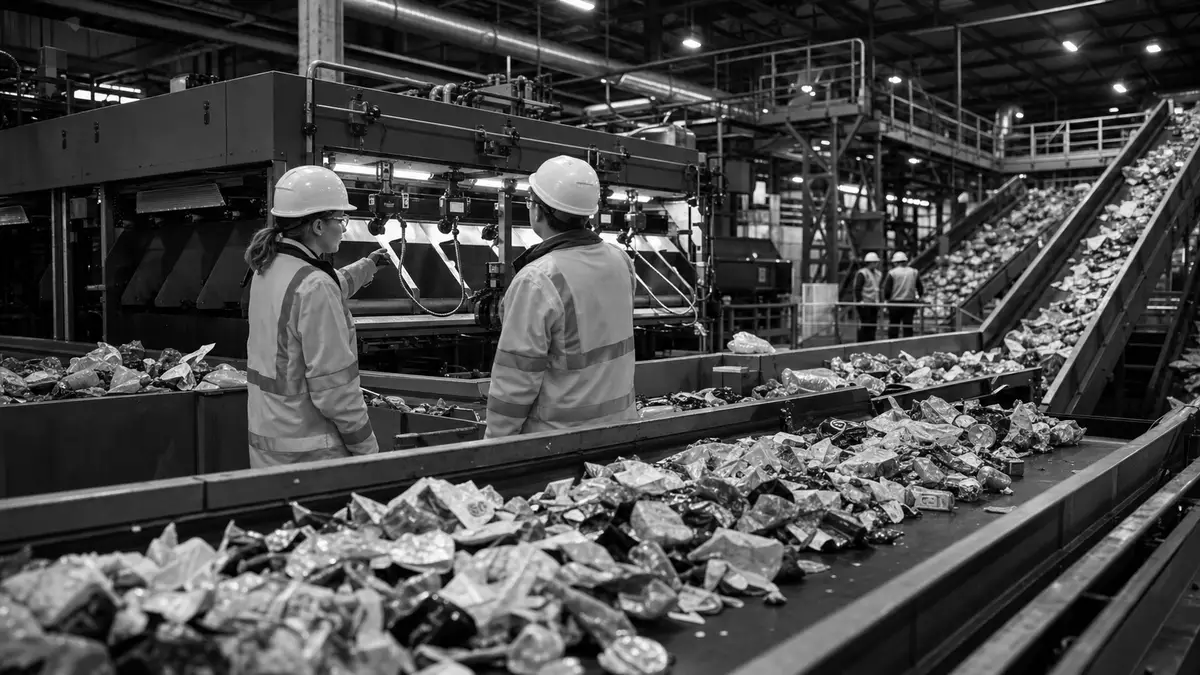
In the recycling segment, Tomra’s sensor-based sorting systems address needs in plastics, metals, paper, and other materials, where stricter quality standards and contamination limits require high-precision sorting. Demand from material-recovery facilities can rise as regulators and brand owners seek higher-quality recyclable material streams, reducing downcycling and improving the economics of circular supply chains. For the Food segment, food-safety rules, quality requirements, and labor constraints encourage automated sorting solutions that can handle large volumes with consistent quality, reducing waste and optimizing yields for processors.
Technology and innovation strategy
Tomra invests heavily in sensor technology, software, and connectivity features that differentiate its reverse vending and sorting solutions. Optical sensors, cameras, and spectroscopy technologies allow the company’s machines to identify containers and materials by type, composition, and even brand, supporting accurate deposit refunds and more efficient sorting. Integrated software and data analytics enhance system performance, enabling operators to monitor machine status, optimize maintenance schedules, and improve throughput across collection networks and sorting plants.
Innovation also extends to machine design, user interfaces, and integration with retailer and waste-management workflows. Reverse vending machines must be durable, easy to use, and compatible with different container formats and deposit schemes. Sorting systems in recycling and food-processing plants require modularity and scalability to adapt to changing material streams and capacity needs. Tomra’s ongoing R&D efforts aim to improve accuracy, speed, and uptime while reducing energy consumption and total cost of ownership, positioning the company as a partner for customers seeking long-term efficiency gains.
Operational footprint and geographic exposure
Tomra’s operations span multiple regions, with production sites, service hubs, and sales offices supporting its installed base across Europe, North America, Asia, and other markets. The company’s Norwegian roots and listing context reflect its historical development, but its business is global, with revenue streams tied to international customers and multi-country deposit-return and sorting projects. Geographic diversification helps mitigate regional economic cycles, but also exposes Tomra to currency movements, regulatory changes, and competitive dynamics in each market.
In Europe, Tomra is closely associated with mature deposit-return systems and established recycling infrastructure, where its technology helps maintain high collection and recycling rates. In North America, gradual expansion of deposit schemes and increasing focus on recycling quality create opportunities for reverse vending and sorting solutions. In emerging markets, early-stage regulatory frameworks and infrastructure projects may support future growth, although such opportunities often involve longer project cycles, policy risk, and the need for localized partnerships.
Customer segments and contract structures
Tomra’s customer base includes retailers operating deposit-return schemes, beverage producers and distributors, waste-management companies, recycling plants, and food processors. In the Collection segment, retailers and beverage industry stakeholders often procure reverse vending machines as part of compliance obligations and consumer-service offerings, with long-term contracts that cover installation, maintenance, and upgrades. In the Recycling and Food segments, customers invest in sorting systems to improve resource efficiency, reduce waste, and meet quality standards, often with project-based agreements and life-cycle service packages.
Contract structures can include leasing arrangements, service contracts, and performance-based agreements, where system uptime, throughput, and sorting accuracy are key metrics. Such models help customers manage upfront capex while aligning payments with operational performance. For Tomra, recurring revenue from service and maintenance contracts creates a stable income base, complementing cyclical equipment sales and supporting long-term relationships with customers who rely on its technology for mission-critical operations.
Competitive landscape and differentiation
Tomra competes with global and regional players in the recycling, waste-management, and food-processing equipment markets. Competitors may offer alternative sorting technologies, reverse vending solutions, or manual and semi-automated collection options. Tomra’s differentiation lies in its integrated technology platforms, sensor expertise, and track record in implementing deposit-return systems at scale. The company’s ability to deliver end-to-end solutions, from machine deployment to data analytics and service support, reinforces its positioning as a long-term partner rather than a pure equipment supplier.
Competitive dynamics are shaped by regulatory developments, customer preferences, and technological advances. For example, new sorting technologies or digital platforms could change how waste streams are managed or how deposit schemes are implemented. Tomra’s strategy of continuous innovation and close collaboration with customers aims to ensure that its solutions remain relevant as markets evolve. At the same time, competition can influence pricing, margins, and the pace of contract wins, which investors monitor carefully when evaluating Tomra’s financial performance and outlook.
ESG considerations and circular-economy themes
Tomra’s business is tightly linked to environmental, social, and governance (ESG) themes, particularly circular-economy policies, waste reduction, and resource efficiency. Reverse vending machines and sorting systems help divert materials from landfill, improve recycling rates, and support the reuse of materials in new products. These contributions align with ESG goals of reducing emissions, preserving natural resources, and promoting sustainable consumption patterns. As companies and governments set more ambitious sustainability targets, Tomra’s technology offerings can play a role in implementing practical solutions.
ESG-focused investors often view Tomra as a pure-play exposure to circular economy and waste-management themes, although they also scrutinize the company’s own environmental footprint, governance structures, and social impact. Metrics such as energy efficiency of machines, recycling rates achieved through Tomra’s installed base, and efforts to reduce waste in manufacturing and operations can influence ESG assessments. Transparent reporting on ESG performance, including quantitative indicators and case studies, can strengthen Tomra’s profile among stakeholders seeking measurable impact.
Dividend policy and capital allocation
Tomra’s capital-allocation policy typically balances investments in growth, including R&D and capacity expansion, with returns to shareholders through dividends. The company’s board assesses earnings levels, cash-generation, and future investment needs when determining dividend proposals. A consistent dividend track record can be an element of investor appeal, particularly among shareholders seeking exposure to sustainability themes with recurring income. At the same time, reinvestment in technology and market expansion remains crucial for Tomra to sustain competitive advantages in fast-evolving recycling and sorting markets.
Capital allocation may also include selective acquisitions that broaden Tomra’s technological capabilities or geographic reach. Acquiring complementary technologies or regional players can accelerate entry into new markets or strengthen the company’s presence in existing segments. Such transactions are evaluated in terms of strategic fit, valuation, and integration risks, with investors closely watching how acquisitions affect margins, earnings growth, and balance-sheet leverage over subsequent periods.
Long-term growth drivers
Tomra’s long-term growth prospects are tied to structural trends in resource efficiency, regulatory push for higher recycling rates, and the digitization of waste-management and food-processing operations. As governments tighten rules on waste disposal and producers assume more responsibility for end-of-life management of their products, deposit-return systems and advanced sorting technologies become central to compliance and cost optimization. These trends can support demand for Tomra’s reverse vending machines and sensor-based sorting systems across multiple regions.
Digitalization and data-driven management of material flows add another dimension to growth. Tomra’s systems can collect data on container returns, material composition, and machine performance, enabling customers to optimize operations and track progress toward sustainability targets. As data and analytics become more embedded in recycling and food-processing processes, Tomra’s ability to provide integrated hardware and software solutions can enhance its value proposition. Over time, new business models built around data services could complement equipment sales and traditional maintenance contracts.
Risks and sensitivities
Despite its exposure to structural sustainability themes, Tomra faces risks that investors consider when evaluating the stock. Regulatory changes can affect deposit-return systems and recycling policies, potentially altering demand patterns or project timelines. Economic cycles may influence customer capex budgets, especially in segments where investments in new equipment depend on broader market conditions. Currency fluctuations can impact reported results, as Tomra’s global operations involve revenues and costs in multiple currencies beyond Norwegian kroner.
Technological risks include the emergence of competing solutions or disruptive innovations in waste management and food sorting. If alternative approaches become more cost-effective or better suited to evolving regulatory frameworks, Tomra may need to adapt its offerings or face margin pressure. Operational risks, such as supply-chain disruptions, manufacturing challenges, or service performance issues, can also affect customer satisfaction and contract renewals. The company’s risk-management processes and contingency planning are therefore critical components of its long-term resilience.
Representative product: reverse vending systems
One representative product line for Tomra is its family of reverse vending machines used in deposit-return systems for beverage containers. These systems automatically accept bottles and cans, identify them via barcodes or material-recognition sensors, and credit consumers with deposits or vouchers. Reverse vending machines are installed in supermarkets, convenience stores, and other retail locations where consumers return containers. The technology must handle high transaction volumes, maintain uptime, and integrate with point-of-sale systems and deposit accounting frameworks.
Tomra’s reverse vending solutions often include modular hardware components such as infeed units, compactors, and storage modules, as well as software platforms for managing data and reporting. The company’s experience in implementing deposit-return systems across different countries helps it adapt machines to local container mixes, regulatory requirements, and consumer habits. As more regions consider or adopt deposit schemes, demand for reverse vending technology can expand, reinforcing Tomra’s position as a key provider of infrastructure for circular-bottle systems.
Tomra stock and investor perspective
Tomra stock trades on the Oslo market, offering investors access to a company embedded in circular-economy and resource-efficiency themes through its reverse vending, recycling, and food-sorting technologies. Shareholders evaluate the stock based on growth prospects in deposit-return systems, recycling infrastructure, and food-processing automation, as well as Tomra’s ability to convert these opportunities into revenue, earnings, and cash flow. The balance between recurring service income and cyclical equipment sales, along with the company’s investment in innovation, informs assessments of earnings stability and upside potential.
Over the long term, Tomra’s positioning at the intersection of regulation-driven markets and sustainability-focused investment trends provides a distinctive profile among industrial and technology names. For investors, the key questions revolve around how quickly deposit schemes expand, how recycling and food-processing customers adopt advanced sorting solutions, and how Tomra leverages its sensor technology, data capabilities, and service offerings to maintain competitive advantages. The trajectory of Tomra stock will continue to reflect the interplay of these structural drivers, operational execution, and broader market conditions.
Tomra ASA key data
- Company: Tomra ASA
- ISIN: NO0005668905
- Ticker: OSE: TOM
- Trading venue: Oslo Stock Exchange
- Sector / Industry: Industrials / Machinery and equipment for recycling and food processing
- Index membership: Norwegian equity indices with industrial and sustainability focus
Disclaimer regarding our articles: No investment advice, no buy or sell recommendation. Information on prices, companies, and markets is provided without guarantee; changes are possible at any time. Stock market transactions can lead to substantial losses. Our articles are created and reviewed in whole or in part automatically with the support of AI.