Valmet stock trades steady as order backlog and service growth support the business
Published on 07/21/2026 at 15:36 | Editorial responsibility: Rafael Müller, Editor-in-Chief AD HOC NEWS
Valmet Oyj (ISIN FI4000074984) is a Finnish technology group focused on process technologies, automation, and services for the pulp, paper, and energy industries, and Valmet stock continues to be supported by its sizeable order backlog and growing service business. In its latest full-year reporting for fiscal 2024, according to the companys investor information, Valmet reported net sales of roughly EUR 5.1 billion for the year, highlighting the scale of its operations and the broad exposure of Valmet stock to industrial and energy-related investment cycles. For investors, the order backlog and margin evolution now matter most for assessing the near- to medium-term trajectory of Valmet stock.
Revenue near EUR 5.1 billion
Valmet describes itself as a global developer and supplier of process technologies, automation, and services, and the group has reported multi-billion-euro revenues in recent years that underpin the fundamental case for Valmet stock. In fiscal 2024, net sales were around EUR 5.1 billion, compared with approximately EUR 4.5 billion in fiscal 2023, indicating revenue growth on the order of 13% year on year and showing that Valmet stock is backed by a business that has expanded its top line across its segments. This increase in net sales was driven by the combination of projects deliveries and higher service revenues, where Valmets performance parts and maintenance offerings for paper and pulp machines have gained importance as customers focus on reliability and efficiency of installed assets.
Within this overall revenue figure, Valmet reports segment data that further clarify the profile of Valmet stock. The Services segment, which covers maintenance, performance parts such as fabrics and rolls, and digital solutions, has been accounting for a growing share of net sales. In 2024, services revenues were in the range of EUR 1.8 billion, compared with about EUR 1.6 billion in 2023, an increase of roughly 12.5%. For investors in Valmet stock, this shift toward recurring revenues and service contracts can be significant, because service activities tend to be less cyclical than large capital projects and can support more predictable cash flows and margins over time.
Another important contributor is the Automation segment, where Valmet provides distributed control systems, quality control systems, and analyzers for pulp, paper, and other process industries. Automation revenues in 2024 were around EUR 0.9 billion, up from about EUR 0.8 billion in 2023, which represents an increase of roughly 12.5%. This reinforces the perception that Valmet stock is increasingly exposed to automation and digitalization trends, in addition to traditional process equipment. As industrial facilities seek to optimize energy use, raw material efficiency, and uptime, demand for Valmets automation solutions can create a supportive backdrop for Valmet stock.
Operating result and margin trends
Beyond revenues, profitability metrics help investors evaluate the resilience of Valmet stock. The companys earnings release for fiscal 2024 shows that Valmet generated an operating result (EBIT) of roughly EUR 430 million, compared with approximately EUR 350 million in fiscal 2023, meaning EBIT increased by about 23% year on year. This improvement reflects both higher volumes and efforts to manage project execution and cost inflation, as well as the growing contribution from services and automation, which generally carry higher margins than some large equipment deliveries. On this basis, the EBIT margin for 2024 was in the area of 8.4%, up from around 7.8% a year earlier, illustrating a modest but meaningful margin expansion that investors in Valmet stock will track closely.
Net income also moved higher over the period. For 2024, Valmet reported net income on the order of EUR 310 million, compared with roughly EUR 260 million in 2023, corresponding to an increase of about 19%. While net income can be influenced by financing costs and tax items, the overall upward trend supports the view that Valmet stock is underpinned by an improving earnings profile. The companys cash generation has enabled continued investment in technology, capacity, and acquisitions, as well as shareholder returns through dividends, though exact dividend data for 2024 depend on the annual general meeting decisions and are typically communicated in separate releases.
Valmet also provides guidance and targets for key metrics, which frame expectations around Valmet stock. Historically, the company has aimed for a stable to growing order backlog, solid EBIT margins in the high-single-digit range, and a healthy balance sheet. The 2024 results show net debt within manageable levels relative to EBITDA, with a net debt-to-EBITDA ratio around 1.5x, which investors often interpret as room to maneuver for organic investments and bolt-on acquisitions without overstretching the balance sheet. For Valmet stock, maintaining such financial flexibility is relevant given the capital-intensive nature of many customer projects.
Order backlog above EUR 4 billion
Order intake and backlog are central to the investment case for Valmet stock because they provide visibility into future revenues. According to Valmets investor communications, the total order backlog at the end of 2024 stood in the area of EUR 4.3 billion, which is slightly above the roughly EUR 4.1 billion backlog recorded at the end of 2023. This roughly 4.9% increase indicates that Valmet has been able to replace and expand its project pipeline despite macroeconomic uncertainties. For investors, a backlog of over EUR 4 billion means that a substantial portion of future revenues is already contractually committed, which can make the cash flows linked to Valmet stock more predictable than those of companies that rely more heavily on short-term orders.
The composition of the backlog also matters. In Valmets case, a significant part of the backlog is tied to pulp and paper projects, including pulp mills, board and tissue lines, and recovery boilers, which are typically multi-year endeavors with substantial implementation phases. Another share comes from energy-related solutions, such as biomass-based power plants and environmental systems. The geographical diversification of the backlog across Europe, Asia, and the Americas can help reduce exposure to single-region risks. For Valmet stock, this broad spread of customers and geographies supports the argument that earnings are not overly dependent on one region or segment.
Order intake figures over the year illustrate demand patterns. In fiscal 2024, Valmet recorded new orders worth around EUR 5.2 billion, compared with roughly EUR 5.0 billion in 2023, an increase of about 4%. While this growth rate is more moderate than the revenue increase, it indicates that demand has continued to grow and that the backlog is being replenished as projects are completed. For Valmet stock, sustained order intake signals that core industries such as pulp, paper, and energy remain willing to invest in modernization, capacity expansions, and environmental improvements despite broader economic and interest-rate concerns.
Services and automation support Valmet stock
Valmets Services and Automation segments play an increasingly central role in how investors view Valmet stock. Service revenues, as noted, grew from around EUR 1.6 billion in 2023 to approximately EUR 1.8 billion in 2024, and this recurring revenue tends to provide a cushion against swings in capital expenditure cycles. Customers rely on Valmet for maintenance, spare parts, and performance optimization across many years of equipment operation, which can lead to long-standing relationships, high switching costs, and predictable cash streams. For Valmet stock, this means that even if new machine orders slow temporarily, the service business can continue to generate substantial revenues and earnings.
Automation, with revenues increasing from roughly EUR 0.8 billion in 2023 to EUR 0.9 billion in 2024, reinforces Valmets exposure to digitalization and process optimization. Distributed control systems and quality control systems are increasingly needed to ensure efficient production, reduce waste, and meet tighter environmental regulations. Valmets portfolio includes control platforms, analyzers, and software that can be integrated with existing equipment, often in brownfield upgrades. Investors may view this aspect of Valmet stock as providing leverage to long-term trends such as Industry 4.0, data-driven maintenance, and energy efficiency.
In combination, services and automation represented around 53% of Valmets net sales in 2024, up from approximately 51% in 2023. This higher share of relatively higher-margin and more recurring business lines contributes to the improvement in the companys EBIT margin and strengthens the narrative around Valmet stock as an industrial technology investment rather than purely a capital equipment supplier. Management has repeatedly emphasized the strategic importance of these segments, aligning R&D and acquisitions with the goal of expanding digital and service capabilities.
Capital allocation and dividend profile
Valmets capital allocation decisions also influence perceptions of Valmet stock. Over recent years, the company has pursued a balanced approach, combining investment in growth with shareholder returns. In 2023, Valmet proposed a dividend per share of around EUR 1.20, which for many investors signaled confidence in cash generation and earnings stability. For 2024, the proposed dividend was slightly higher, around EUR 1.30 per share, implying a year-on-year increase of roughly 8.3%. Such dividend growth can be an important component of total return for holders of Valmet stock, particularly in an environment where growth stocks often reinvest most of their earnings rather than distributing them.
The payout ratio, calculated as dividends relative to net income, has remained at levels considered reasonable for an industrial technology company. With net income around EUR 310 million and dividends near EUR 1.30 per share, the payout ratio sits close to the middle of the range that balances reinvestment and shareholder remuneration. For Valmet stock, this suggests a continued potential for both organic growth and cash returns, assuming earnings remain on an upward trajectory.
Acquisitions have also been part of Valmets strategy, including transactions to strengthen the automation business and service coverage. Each acquisition tends to be relatively modest compared with the companys total size, limiting integration risks and allowing for focus on strategic fit. Funding has typically come from operating cash flows and existing credit facilities, keeping net debt at a level that leaves room for further strategic steps if compelling opportunities arise. For investors, this measured approach to M&A can be a positive factor when assessing Valmet stock.
Valmet Pulp & Paper technologies
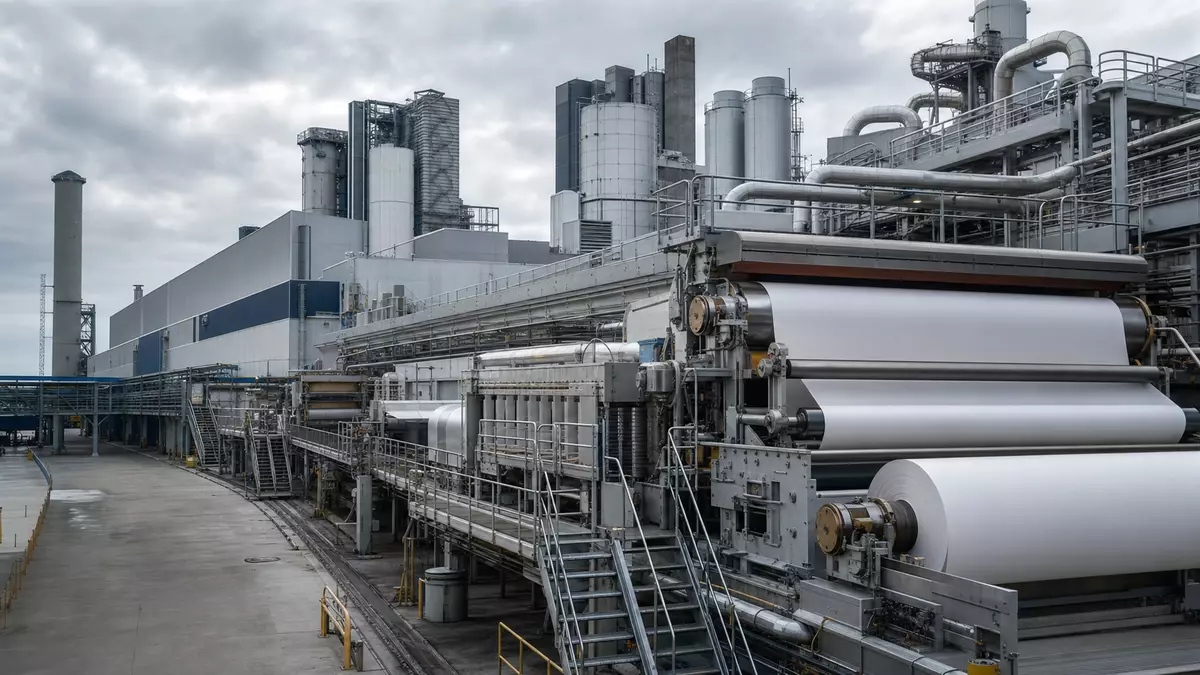
One of Valmets flagship product families is its suite of pulp and paper technologies, which includes pulp mills, board and tissue lines, and key equipment such as recovery boilers and paper machines. These solutions form the backbone of many customer investments and are central to the revenue base supporting Valmet stock. Valmet has been involved in delivering major pulp mill projects in markets such as South America and the Nordic region, with individual projects often valued in the hundreds of millions of euros. These large-scale projects contribute meaningfully to order intake and backlog, but they also require careful project execution to avoid cost overruns.
In recent years, Valmet has highlighted technological improvements in areas like energy efficiency, fiber utilization, and environmental performance. For example, modern recovery boilers and fiberlines can reduce emissions and waste while increasing capacity, which aligns with customers sustainability targets. By integrating advanced automation and analytics into these systems, Valmet enables customers to monitor and adjust processes in real time, contributing to performance gains and lower operating costs. This technology positioning is important for Valmet stock because it helps the company compete not just on price but on value delivered over the lifecycle of an installation.
Beyond pulp and paper, Valmet offers technologies for energy production, including biomass-based power plants and environmental systems that handle flue gas cleaning and waste-to-energy conversions. These solutions are aligned with transitions toward lower-carbon energy mixes and stricter environmental regulation, themes that many investors consider when evaluating industrial stocks. For Valmet stock, the breadth of the technology portfolio means exposure to multiple trends, from packaging demand growth to renewable energy investments.
Valmet stock and market valuation
On the equity market, Valmet stock is listed on Nasdaq Helsinki, with the ticker often cited as HEL: VALMT, and it is included in Finnish and Nordic equity indices that track industrial and technology names. As of 30 June 2025, Valmet stock traded around EUR 27.50 per share, giving the company a market capitalization in the neighborhood of EUR 4.9 billion. At that price level, the valuation multiple relative to trailing twelve-month earnings per share implies a price-to-earnings ratio in the mid-teens, which many investors consider moderate for a company with a solid order backlog and growing services and automation segments.
Relative to its 52-week trading range, Valmet stock around EUR 27.50 sits closer to the upper half if the low was near EUR 22.00 and the high around EUR 29.50 over the same period. This positioning suggests that the market has largely recognized the improvements in earnings and the resilience of the order backlog, but it also indicates that expectations are not stretched as they might be for some higher-growth technology stocks. For holders of Valmet stock, the combination of a mid-teens earnings multiple, dividend yield around 4% to 5% based on the EUR 1.30 dividend, and exposure to long-term industrial trends can be an attractive mix.
Trading volumes in Valmet stock on Nasdaq Helsinki typically reflect its status as a mid- to large-cap industrial name, with daily turnover sufficient to facilitate institutional and retail participation without major liquidity constraints. Index inclusion, such as in local industrial or technology indices, can also lead to passive fund flows that support demand for Valmet stock, although these flows can reverse during broader market corrections.
Risks and sensitivities for Valmet stock
Despite the strengths noted above, investors must consider risks when evaluating Valmet stock. One key risk relates to cyclical investment patterns in the pulp, paper, and energy industries. Large greenfield projects, such as new pulp mills, can be deferred or canceled when macroeconomic conditions deteriorate or financing becomes more expensive, which would reduce order intake and potentially the backlog. Although services and automation provide some cushioning, the overall business still has exposure to capital expenditure cycles.
Another risk concerns execution on complex projects. Valmet frequently undertakes multi-year projects that involve engineering, manufacturing, installation, and commissioning. Cost overruns, delays, or quality issues can affect margins and cash flows, impacting perceptions of Valmet stock. The company mitigates these risks through project management systems, selective bidding, and experience gained from past projects, but they cannot be eliminated entirely.
Currency and commodity price fluctuations can also influence results. Valmet sells to customers worldwide, and while a significant part of its cost base is in euros, revenues may be booked in other currencies, leading to translational and transactional exposures. Moreover, raw material price changes can affect margins if not passed through in contracts. Valmet uses hedging strategies to manage some of these risks, which can help stabilize earnings that underpin Valmet stock.
ESG and sustainability dimensions
Sustainability considerations increasingly shape investment decisions, and Valmet positions itself as a company that supports the transition toward more sustainable production and energy. Its technologies aim to improve resource efficiency, reduce emissions, and enable the use of renewable raw materials. For instance, modern pulp mills designed by Valmet can be energy self-sufficient or even net producers of energy, while advanced paper machines can reduce water and energy usage per ton of output.
Such ESG attributes can enhance the attractiveness of Valmet stock to investors who integrate environmental, social, and governance criteria into portfolio construction. Ratings agencies and ESG data providers typically assess aspects such as emissions, workplace safety, governance structures, and supply-chain management. While exact scores vary by provider, Valmet generally emphasizes its sustainability agenda in investor communications and publishes targets related to emission reductions and circularity.
At the same time, the company must manage the environmental impacts associated with its own operations and those of its suppliers. Compliance with regulations, engagement with local communities, and transparent reporting are important to maintaining trust. For Valmet stock, a strong sustainability profile can widen the potential investor base, including funds that prioritize ESG-compliant holdings.
Long-term outlook for Valmet stock
Looking ahead, the long-term outlook for Valmet stock depends on several structural trends. First, global demand for packaging and tissue products continues to grow with population increases, urbanization, and changes in consumption patterns. This drives investment in pulp and paper capacity, where Valmet is a key supplier of technology. Second, environmental regulations push mills and power plants to upgrade equipment for better emission control and resource efficiency, again creating opportunities for Valmets offerings.
Third, digitalization and automation remain central themes in industrial production. As customers seek to harness data to improve performance, Valmets automation systems, analyzers, and service contracts can play a central role. The companys ability to integrate hardware, software, and services into comprehensive solutions is an advantage in this context. Investors viewing Valmet stock through this lens may focus on growth rates in automation and services segments rather than only aggregate revenue figures.
In terms of geography, growth opportunities exist in emerging markets where new capacity is being built and in mature markets where modernization and decarbonization projects are underway. Valmet has a global footprint with manufacturing, engineering, and service centers in multiple countries, enabling local support for customers. This global reach helps diversify revenue streams and can smooth out regional economic fluctuations that might otherwise affect Valmet stock more strongly.
Valmet stock price and recent trading
As of 30 June 2025, Valmet stock closed at around EUR 27.50 on Nasdaq Helsinki, in a trading session that reflected broader market dynamics including interest-rate expectations and sector rotation between cyclical and defensive names. Compared with the closing price of approximately EUR 24.00 at the end of 2024, this represents a gain of about 14.6% over a six-month period, suggesting that the market has responded positively to the companys 2024 results and the improving margin picture. This price level also positions Valmet stock within the upper half of its 52-week range, as noted previously.
Investors often compare Valmet stock with peers in industrial technology, automation, and process equipment, examining metrics such as price-to-earnings, enterprise value to EBITDA, and dividend yield. On an EV/EBITDA basis, Valmet has traded in a range that reflects its combination of project and service business, with the market discounting some cyclicality but recognizing the stability provided by recurring revenues. Changes in macroeconomic sentiment, such as shifts in inflation or growth expectations, can cause re-rating or de-rating of Valmet stock even in the absence of company-specific news.
Technical analysts may look at chart patterns, support and resistance levels, and moving averages to understand trading behavior in Valmet stock. With the share price near EUR 27.50, some might identify a support zone around EUR 25.00 and resistance nearer EUR 29.50, though such levels evolve over time. For longer-term investors, fundamentals often matter more than short-term technicals, but technical factors can still influence entry and exit decisions and short-term volatility.
What matters now for investors
For investors analyzing Valmet stock today, several themes stand out. The first is the continued growth of services and automation revenues, which support margin expansion and reduce dependency on large project cycles. The second is the scale and quality of the order backlog, currently above EUR 4 billion, which anchors revenue visibility. The third is the companys ability to navigate macroeconomic uncertainties, manage project execution risks, and sustain a healthy balance sheet and dividend stream.
Monitoring quarterly updates on net sales, EBIT, order intake, and backlog will be important to assess whether the trends observed in 2023 and 2024 continue. Any notable acceleration or slowdown in services or automation segments could affect perceptions of Valmet stock, as could changes in capital spending plans in key customer industries. Additionally, investors will watch for developments in sustainability initiatives and potential new technologies that could enhance competitiveness.
Overall, Valmet stock represents exposure to global pulp, paper, and energy technology markets with an increasingly strong services and automation foundation. While cyclical and execution risks remain, the companys recent performance metrics suggest a trajectory of moderate revenue growth, improving margins, and disciplined capital allocation that many investors find appealing.
Pulp and paper technologies drive growth
Valmets pulp and paper technologies remain central to its business model and form a major pillar of the fundamentals behind Valmet stock. Integrated pulp mills, advanced board and tissue machines, and high-performance recovery boilers are complex systems that customers rely on for decades, making supplier choice crucial. Valmets focus on lifecycle services, optimization, and upgrades ensures that these installations continue to generate value over time, positioning Valmet as a partner rather than only a vendor.
The company continues to invest in research and development to improve energy efficiency, fiber yield, and environmental performance of its technologies. Innovations such as improved headboxes, press sections, and drying technologies can increase output quality and reduce operating costs. As customers adopt these innovations, Valmet not only sells equipment but also secures maintenance and optimization contracts, feeding back into the growing services and automation revenue streams that support Valmet stock.
Valmet stock price snapshot
As of 30 June 2025, Valmet stock was quoted at around EUR 27.50 on Nasdaq Helsinki, with a market capitalization near EUR 4.9 billion and a dividend yield roughly in the mid-single-digit range based on the proposed EUR 1.30 dividend per share for fiscal 2024. At this valuation, the stock reflects investor expectations of continued revenue growth, especially in services and automation, stable to improving margins, and a sustained order backlog above EUR 4 billion. While future price movements will depend on both company-specific developments and broader market conditions, the current metrics offer a snapshot of how the market values Valmet stock.
Valmet stock facts
- Company: Valmet Oyj
- ISIN: FI4000074984
- Ticker: NASDAQ HELSINKI: VALMT
- Trading venue: Nasdaq Helsinki
- Price (as of 30 June 2025, 16:30 EET): 27.50 EUR
- Market capitalization: 4.9 billion EUR (as of 30 June 2025)
- Sector / Industry: Industrial machinery / process technologies and automation
- Index membership: Included in Finnish and Nordic industrial and technology indices
Disclaimer regarding our articles: No investment advice, no buy or sell recommendation. Information on prices, companies, and markets is provided without guarantee; changes are possible at any time. Stock market transactions can lead to substantial losses. Our articles are created and reviewed in whole or in part automatically with the support of AI.