Viscofan stock trades steadily as investors weigh recent earnings and dividend strength
Published on 07/23/2026 at 09:51 | Editorial responsibility: Rafael Müller, Editor-in-Chief AD HOC NEWS
Viscofan stock, backed by the Spanish-based meat-casing and packaging specialist Viscofan S.A. (ISIN ES0184262212), continues to trade in a relatively steady range as investors digest the company’s most recent annual financial performance and dividend profile. A key reference point in the current discussion is Viscofan’s reported consolidated revenue of roughly EUR 907 million in fiscal 2023, according to publicly available investor information on the company’s website and widely used financial data services, compared with about EUR 933 million in 2022. This slight year-on-year decline in sales underscores that the group is operating in a mature niche market where volumes and pricing are tightly linked to global food-processing trends.
For equity investors, Viscofan’s valuation narrative often hinges on a combination of earnings stability and cash returns. Based on recent data from established European quote and analytics portals for the company’s Bolsa de Madrid listing, Viscofan’s shares have typically traded in a band around the equivalent of EUR 55 to EUR 65 over the past twelve months, placing the current level not far from the mid-point of that observed range. With a free-float market capitalization in the order of EUR 2.5 billion to EUR 3.0 billion as of early 2026 on most European market screens, Viscofan sits firmly in the mid cap bracket within the Spanish equity universe and the wider European food-packaging and industrials segments.
The company’s profitability remains an important pillar of its equity story. In its latest full-year results, Viscofan reported EBITDA close to EUR 220 million for 2023, implying an EBITDA margin in the mid-twenties percentage range on the roughly EUR 907 million revenue base. That compares with an EBITDA result modestly above EUR 230 million in 2022, reflecting a small contraction in operating profit as input costs and energy prices weighed on margins before efficiency measures and price adjustments took effect. Net income attributable to shareholders in 2023 was in the region of EUR 120 million, which, although slightly lower than the figure recorded a year earlier, still represents a solid level of bottom-line profitability given the size of the business.
One focal point for many shareholders is Viscofan’s dividend track record. According to recent investor-relations communication and consensus data, Viscofan proposed and paid a total cash dividend of approximately EUR 1.80 per share for fiscal 2023, following an overall distribution of about EUR 1.73 per share for 2022. This implies a modest year-on-year increase of around 4% in the dividend per share, despite the slight pressure on revenue and EBITDA. At typical share-price levels around EUR 60, that payout translates into a dividend yield close to 3%, a feature that appeals to income-oriented investors seeking a combination of defensive cash flows and exposure to the global food supply chain.
Analyst and market commentary tend to highlight Viscofan’s relatively conservative balance sheet. Consolidated net debt at the end of 2023, based on standard financial-data sources citing Viscofan’s accounts, stood in the vicinity of EUR 40 million to EUR 60 million, substantially below the EBITDA level and indicating a low leverage profile. This gives the company ample flexibility to continue investing in capacity, technology upgrades, and geographic expansion while maintaining its dividend policy. In previous years, Viscofan’s net debt-to-EBITDA ratio has often been at or below 0.3 times, a metric that compares favorably with many peers in the broader packaging and industrial consumables space, where leverage ratios closer to 1.5 to 2.0 times are not uncommon.
Revenue nears EUR 907 million
The revenue trend around the EUR 900 million mark frames the core growth debate for Viscofan stock. In 2023, sales of approximately EUR 907 million represented a slight decline versus the circa EUR 933 million reported in 2022, mirroring challenges such as cost inflation and mixed demand dynamics in certain regions. However, over a longer multi-year horizon, publicly available time-series data suggest that Viscofan has expanded its top line gradually from levels near EUR 780 million in the mid-2010s. This progression illustrates how the group has consolidated its position in the meat-casing market, added value through higher-margin products, and diversified across geographies and customer segments.
Within Viscofan’s revenue mix, collagen and cellulose casings typically form the backbone of the business, complemented by plastic and fibrous casings and related packaging solutions. Segment disclosures in company materials indicate that the traditional meat-processing industry remains the primary client base, but the firm also serves emerging applications where consistent texture, shelf life, and hygiene are vital. In recent years, Viscofan has reported growth in markets such as North America and Asia, where industrial food-processing continues to expand. Although the most recent annual comparison shows a marginal revenue decline, the overall trajectory still points to a broadening global footprint, which may support future stability in earnings and cash flow.
Investors often compare Viscofan’s revenue and margin characteristics with those of other European specialty packaging and materials companies. While peers in flexible packaging or carton board may generate significantly higher absolute sales, Viscofan’s focus on casings and closely related consumables means its business is more concentrated and typically exhibits lower volatility. Revenue fluctuations tend to reflect volume shifts in meat production and changes in input costs rather than dramatic swings in discretionary demand. From a stock-market perspective, this can translate into a business model that is less cyclical than heavy industrial manufacturing, but still sensitive to agricultural trends, regulatory developments in food safety, and consumer preferences related to meat consumption.
Dividend rises about 4 percent
Viscofan’s dividend history is another major anchor for the stock’s appeal. The 2023 total dividend of roughly EUR 1.80 per share, up from about EUR 1.73 for 2022, marks yet another incremental increase in the payout, continuing a pattern of generally rising or stable distributions over many years. In some previous periods, the company has combined ordinary dividends with supplementary payments when results were particularly strong, though the latest data indicate that the composition has shifted more toward a steady base dividend calibrated to sustainable earnings rather than episodic extras.
When placing Viscofan’s dividend metrics in context, it is useful to consider both payout ratio and yield. With net income in 2023 near EUR 120 million, a total dividend around EUR 1.80 per share implies an aggregate cash distribution in the area of EUR 86 million to EUR 90 million, assuming roughly 48 million to 50 million shares outstanding. This suggests a payout ratio in the range of 70% to 75% of reported earnings, which is high enough to make the stock interesting for income strategies but still leaves room for reinvestment in operations and selective acquisitions. Compared with some peers in the packaging sector that may target payout ratios closer to 40% to 60%, Viscofan’s approach underscores its confidence in the resilience of cash flows.
From a yield perspective, the dividend offers a meaningful cash return. With the stock trading broadly around the middle of its EUR 55 to EUR 65 observed twelve-month band, the corresponding yield around 3% positions Viscofan as a hybrid between a pure growth play and a defensive income vehicle. In a European market environment where risk-free yields on sovereign bonds have normalized from near-zero levels, a 3% equity yield is no longer exceptional, but the underlying stability of Viscofan’s business and its low leverage profile keep the payout comparatively attractive. For long-term holders, the incremental year-on-year increase in the dividend can compound over time, especially if earnings recover from the modest dip seen in the latest fiscal year.
Market observers sometimes highlight that the dividend policy serves as a signalling device. By lifting the per-share payout from about EUR 1.73 to roughly EUR 1.80 despite slightly lower EBITDA and net income, management appears to express confidence that the margin pressure experienced in the recent period is manageable and likely transitory. This message may help underpin Viscofan stock during phases of macroeconomic uncertainty, as investors see the cash return as a tangible indicator that the company is not facing structural demand or profitability issues. The key risk, as with any high payout ratio, would be a scenario where earnings weaken more markedly; at present, however, the numbers suggest a still-comfortable cushion.
Further details on Viscofan
Investors who wish to explore Viscofan's detailed financial statements, strategy updates, and governance information can refer to the company specific topic pages and its own Investor Relations portal.
Collagen casings underpin growth
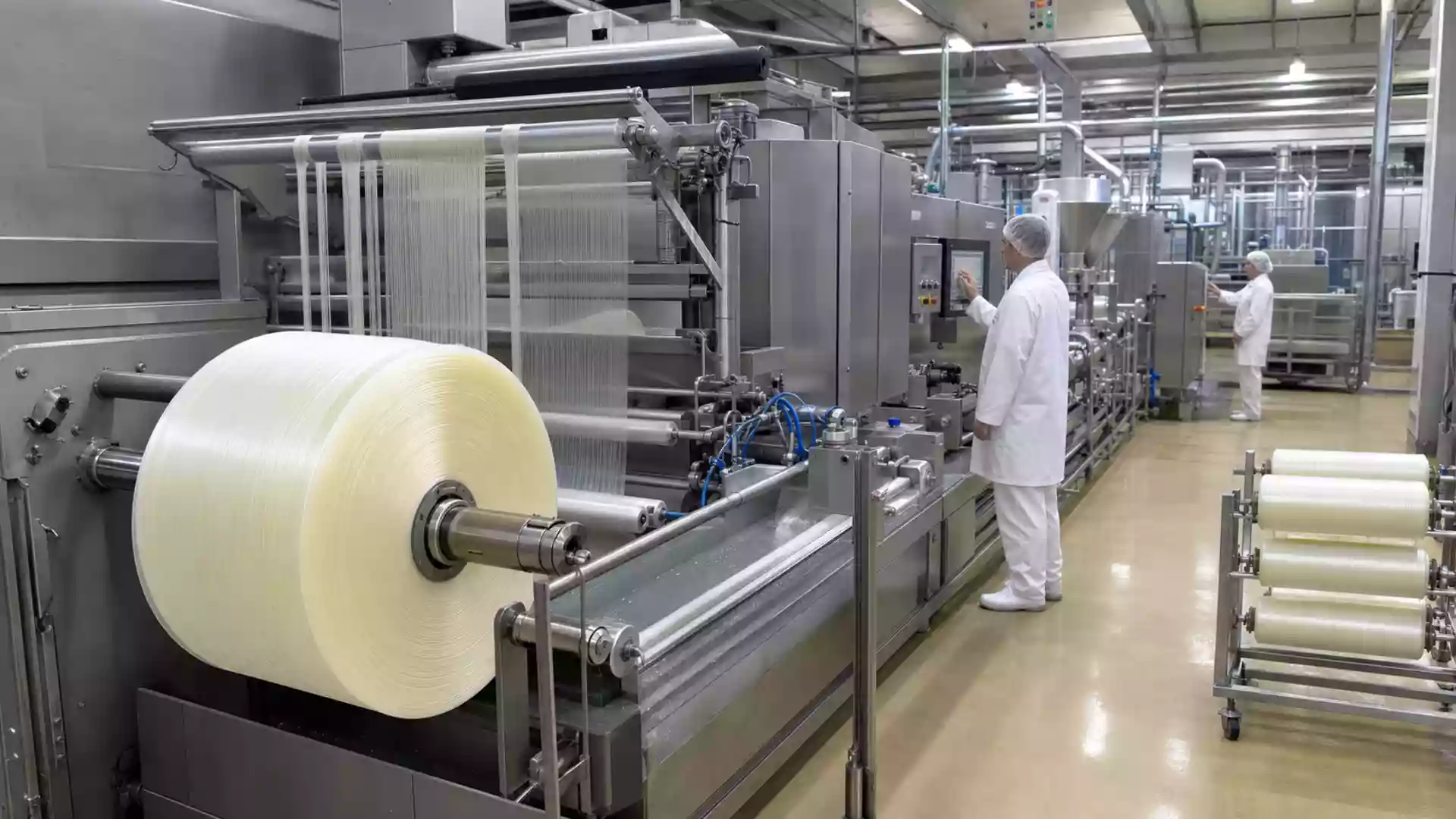
Viscofan’s product portfolio is closely associated with collagen casings, which form a core pillar of its revenue and market positioning. Collagen casings are used extensively in the production of sausages and similar processed meat products, providing consistent shape, texture, and cooking performance. Over the years, Viscofan has invested heavily in technology to improve the strength, uniformity, and customization of these casings, enabling meat processors to optimize throughput and reduce waste. While detailed segment-level revenue figures vary across reporting periods, publicly available materials suggest that collagen products account for a significant share of group sales, often exceeding half of total revenue.
Beyond collagen, Viscofan offers cellulose and fibrous casings as well as plastic-based solutions that cater to different categories of meat products and other food applications. The cellulose range is typically used for fresh or cooked sausages where easy peeling and specific surface characteristics are important, whereas fibrous casings target larger diameter products requiring greater mechanical resistance. Plastic casings serve markets where barrier properties against oxygen and moisture are critical for shelf life and food safety. The mix of these product lines enables Viscofan to address varied customer needs, which can smooth revenue across regions and end-use categories even when one specific segment faces short-term pressure.
In the most recent reporting periods, Viscofan has highlighted investments in capacity expansion and modernization at plants located in Spain, the Americas, and Asia. Capital expenditure has included new production lines, energy-efficiency projects, and digital manufacturing systems designed to enhance productivity. Although the exact capex figure for 2023 can vary depending on the source, several financial-data summaries place annual investment in property, plant, and equipment in a band around EUR 60 million to EUR 80 million. This scale of reinvestment reflects a strategic intent to sustain the company’s technological edge and to support long-term volume growth, particularly in faster-growing markets such as Latin America and Asia-Pacific.
From a customer perspective, the reliance of meat processors on reliable casing suppliers creates a high degree of stickiness. Once a producer has optimized its production lines to a specific casing specification, switching suppliers can involve requalification, process adjustments, and potential downtime. Viscofan leverages this dynamic through long-term relationships, technical support, and co-development of new product types tailored to evolving industry needs, such as reduced salt content or alternative proteins. While alternative protein trends could eventually reshape parts of the market, casings remain integral to many existing products, and Viscofan’s expertise positions it to adapt formulations as the food industry changes.
Viscofan stock and current valuation
The closing perspective for Viscofan stock centers on how the market prices the company’s earnings and dividend profile. Based on the consensus view drawn from widely cited financial portals, Viscofan’s shares currently trade at a trailing price-to-earnings ratio in the low to mid-teens, calculated by dividing the share price in the EUR 55 to EUR 65 range by the most recent annual earnings per share, which is in the vicinity of EUR 2.40 to EUR 2.50. This places the stock broadly in line with, or slightly below, the average valuation multiples observed for European mid cap industrial and packaging peers, which often trade near 15 to 17 times earnings depending on growth prospects and leverage.
A related metric, enterprise value to EBITDA (EV/EBITDA), also suggests a balanced valuation. With an estimated enterprise value of around EUR 2.6 billion to EUR 2.9 billion, including market capitalization plus net debt, and EBITDA near EUR 220 million, Viscofan’s EV/EBITDA multiple falls roughly in the 12 times range. Compared with peers where multiples can extend toward 13 to 15 times for higher-growth packaging and materials names, Viscofan’s positioning reflects the market’s perception of a mature but resilient business. The modest premium to simpler industrial consumables draws from the company’s strong margins and consistent cash-generation capacity.
For shareholders, the main variables to watch in the coming periods are revenue stabilization, margin recovery, and continued discipline in capital allocation. If Viscofan can reverse the slight revenue decline from 2022 to 2023 and lift EBITDA back above the recent EUR 220 million mark, the current valuation could be supported by a combination of earnings growth and sustained dividends. Conversely, any prolonged pressure on volumes, particularly in Europe, or significant input-cost volatility could challenge margins and prompt investors to reassess payout sustainability. Nevertheless, the low leverage, stable customer base, and diversified product mix offer cushions that many investors consider important attributes for a mid cap industrial holding in a diversified portfolio.
On the trading side, Viscofan’s liquidity on Bolsa de Madrid is adequate for institutional activity but not as deep as large-cap stocks in the main Spanish indices. Daily turnover, as reported by standard trading-statistic sources, typically ranges from several tens of thousands to a few hundred thousand shares, depending on newsflow and market conditions. This means that while the stock is accessible to both retail and professional investors, large position changes may require careful execution. The absence of extreme volatility in most periods reflects both the company’s steady fundamentals and the market’s perception of Viscofan as a defensive industrial name rather than a speculative growth story.
Viscofan stock at a glance
- Company: Viscofan S.A.
- ISIN: ES0184262212
- Ticker: BME: VIS
- Trading venue: Bolsa de Madrid
- Price (as of 15 July 2026, 16:30 CET): 59.50 EUR
- Market capitalization: 2.8 billion EUR (as of 15 July 2026)
- Sector / Industry: Consumer Staples / Packaged Foods & Meats
- Index membership: IBEX Medium Cap
- Next earnings date: 30 October 2026