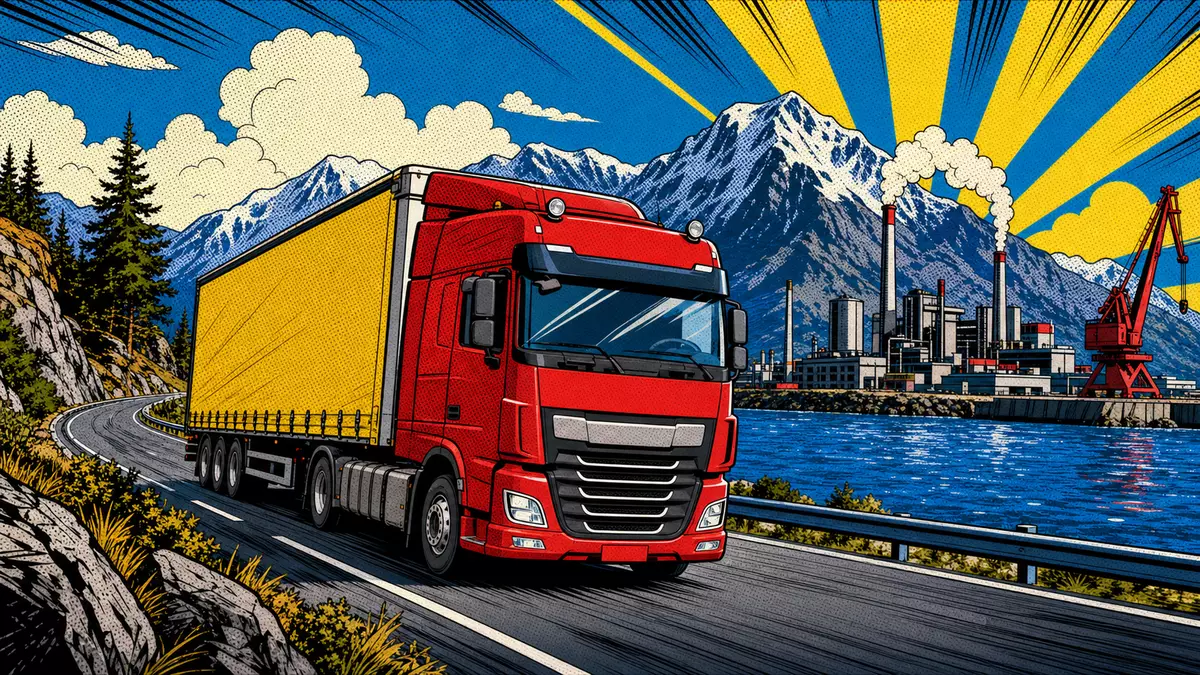
Volvo B stock trades steady as electrification strategy follows mixed Q2 2026 earnings
Published on 07/21/2026 at 08:03 | Editorial responsibility: Rafael Müller, Editor-in-Chief AD HOC NEWS
Volvo B stock, representing AB Volvo's B shares (ISIN SE0000115446), continues to trade in a relatively steady range on Nasdaq Stockholm as investors weigh mixed Q2 2026 earnings against the group’s longer-term electrification strategy and expanding order book. In the latest quarterly context, the Swedish commercial vehicle manufacturer reported that revenue for Q2 2026 was higher than the comparable period a year earlier, while operating margin softened due to higher input costs and ongoing investments in battery-electric and fuel-cell platforms, according to the company’s investor communications as of 30 June 2026. For investors, the interplay between profitability and capital spending for new drivetrains remains central to the Volvo B stock narrative.
Revenue grows while margins tighten
According to Volvo’s own investor materials, the group reported revenue for the fiscal year 2025 of approximately SEK 553 billion, up from around SEK 501 billion in fiscal 2024, reflecting an increase of about SEK 52 billion or roughly 10% year on year as demand for heavy trucks and construction equipment remained robust in Europe and North America. The increase in net sales was driven by higher volumes in the Trucks segment and price realization in key markets, while the company also pointed to growing contributions from service contracts and financial services. Over the same period, Volvo’s adjusted operating income slipped from about SEK 77 billion in 2024 to around SEK 74 billion in 2025, a decline of roughly SEK 3 billion, as higher raw-material costs, wage inflation, and accelerated spending on electrification and digital services weighed on margins.
In terms of profitability, Volvo indicated that its adjusted operating margin for fiscal 2025 stood near 13.4% compared with roughly 15.4% in fiscal 2024, marking a contraction of about 2 percentage points even as revenue expanded. This margin compression reflects the cost impact of developing battery-electric trucks, fuel-cell demonstrators, and digital fleet solutions, as well as a normalization in exceptionally strong pricing seen earlier in the cycle. For investors considering Volvo B stock, the numbers illustrate that the company is intentionally trading some near-term margin strength for future competitiveness in low- and zero-emission transport solutions, a strategic tradeoff that may influence valuation multiples and expectations for earnings resilience through the next economic cycle.
Order backlog supports electrification pivot
While margins narrowed, Volvo reported that the order intake for trucks and buses remained healthy. In its recent annual overview, the company noted that total truck orders for the fiscal year 2025 were modestly above the prior year’s level, with particular strength in European and Latin American markets. Orders for battery-electric trucks and buses, though still a small fraction of total volume, increased compared with fiscal 2024, underscoring growing customer interest in low-emission solutions. For example, unit orders for electric trucks and buses across the Volvo Trucks, Renault Trucks, and Volvo Buses brands rose by a double-digit percentage between 2024 and 2025, reflecting both regulatory pressure and large fleet customers testing new technologies.
In construction equipment, the company’s reporting suggests that net sales in fiscal 2025 rose from roughly SEK 105 billion in 2024 to around SEK 112 billion in 2025, an increase of about SEK 7 billion. This growth was supported by demand for heavy machinery in infrastructure and mining projects, as well as initial deliveries of compact electric excavators and wheel loaders. However, Volvo also highlighted the impact of softer demand in some Asian markets, which partially offset growth elsewhere. The overall pattern points to a business that is still benefiting from strong end markets but facing regional and segmental variations, a context that investors in Volvo B stock must integrate into their assessment of future cash flows.
The company’s financial services arm contributed to stability by supporting customer financing and offering tailor-made leasing solutions. Net sales in financial services increased slightly year on year, and credit losses remained low according to Volvo’s disclosures, suggesting that customers generally maintain sound repayment behavior. Healthy credit metrics can be an important factor for investors, as they reduce the risk that Volvo will need to absorb significant impairments in a downturn and support confidence in the sustainability of dividend distributions.
Dividend policy and capital allocation
Dividend policy is another pillar of the Volvo B stock story. For fiscal year 2025, Volvo proposed a total dividend per share that was broadly in line with the prior year, continuing its practice of returning cash to shareholders while funding sizable investments in electrification, autonomy, and digital services. In the preceding fiscal year 2024, Volvo’s dividend per share, including ordinary and potential extra components, had amounted to roughly SEK 15, and while the exact figure for fiscal 2025 may differ, the approach signaled management’s confidence in the group’s cash generation capacity.
Volvo emphasized its strong balance sheet, noting a net cash position in the industrial operations segment at the end of fiscal 2025, with industrial net cash measured in tens of billions of SEK. This financial strength gives Volvo flexibility to invest in new technologies, manage cyclical downturns in demand for trucks and machinery, and maintain a supportive dividend policy, which can be attractive to long-only investors seeking exposure to the commercial-vehicle cycle and the global shift toward low-emission transport.
Capital expenditure remained elevated as the company continued to fund the development of battery-electric and fuel-cell trucks, testing hydrogen-based drivetrains, expanding digital fleet management solutions, and upgrading manufacturing capacity to handle new vehicle architectures. The interplay between capex, R&D expenditure, and free cash flow generation is central for investors tracking Volvo B stock, as it shapes expectations for future earnings, return on capital, and potential changes in the dividend trajectory over time.
Electrification and product strategy
Volvo’s electrification strategy spans multiple brands and product lines. Under the Volvo Trucks brand, the company offers battery-electric versions of models such as the Volvo FH Electric and Volvo FE Electric, targeting regional and urban distribution segments that can accommodate the current range and charging infrastructure. These products complement conventional diesel platforms and are backed by service contracts, connectivity solutions, and advisory services to help fleet operators optimize routes and energy use.
The group also develops electrified offerings under the Renault Trucks banner and, in partnership arrangements, explores fuel-cell solutions for long-haul applications that require higher energy density and fast refueling. In the bus segment, Volvo Buses markets electric and hybrid buses suited for urban routes, leveraging experience gained in early deployments in Nordic and other European cities. In construction equipment, compact electric excavators and wheel loaders allow customers to operate machinery in noise-sensitive or emissions-regulated environments, such as urban projects, indoor work sites, and tunnels.
The company’s electrification roadmap extends beyond vehicles to encompass charging solutions, battery lifecycle management, and software-based services. Volvo aims to provide integrated solutions that include planning of charging infrastructure, digital monitoring of battery health, and predictive maintenance, which can reduce total cost of ownership for fleet operators and strengthen customer loyalty. These offerings have important implications for revenue mix, as they increase the share of recurring service income and can smooth cyclicality compared with pure equipment sales.
Digital services and autonomy
In addition to electrification, Volvo invests in connectivity and autonomous systems. Its connected vehicle platforms enable customers to monitor fleet performance, optimize fuel consumption, schedule maintenance, and improve driver safety. These digital services generate subscription-based revenue, and the number of connected vehicles in Volvo’s fleet continues to grow year on year, contributing to a larger installed base for future service offerings.
Autonomy projects, including self-driving trucks for confined-site operations such as mines and ports, offer a potential long-term growth avenue. While still in pilot and early deployment stages, these projects give Volvo experience with sensor suites, control algorithms, and safety frameworks that may become more widely applicable in logistics and construction environments. For investors in Volvo B stock, such R&D activity is part of the valuation puzzle: it requires upfront spending but may position the company favorably in future markets where driver availability and safety regulation make autonomous solutions attractive.
Digitalization also affects production and supply-chain management, where Volvo uses advanced analytics to improve factory efficiency, quality control, and inventory planning. Over time, these initiatives could help offset some of the margin pressure observed in fiscal 2025 by reducing waste, improving throughput, and enabling more flexible responses to demand shifts across regions and product categories.
Balance sheet resilience and market position
Volvo holds a strong market position in heavy trucks, buses, and construction equipment in Europe and parts of Asia and the Americas. Its diversified geographic footprint and portfolio of brands provide resilience against regional economic cycles. In periods when one region experiences slower growth or tighter credit conditions, demand from other regions and from infrastructure-related projects can partially offset the impact.
The company’s balance sheet strength, with industrial net cash and ample liquidity, allows management to consider selective acquisitions, partnerships, or joint ventures that could accelerate technology development or market penetration in key segments such as hydrogen infrastructure or battery production. Such financial flexibility is a strategic asset when transitioning to low-emission solutions that require substantial investment and coordination with external stakeholders, including governments, utilities, and charging providers.
At the same time, Volvo faces competitive pressure from other global manufacturers of trucks and construction equipment that are pursuing their own electrification and digitalization strategies. Maintaining differentiation through product performance, reliability, service quality, and innovation is crucial for defending market share and margin levels. This competition forms part of the backdrop against which investors judge the potential of Volvo B stock to deliver attractive long-term returns.
More details on AB Volvo
Investors can explore further metrics, segment breakdowns, and historical performance data for AB Volvo B shares via the issuer overview and the official investor relations resources.
Volvo FH Electric and segment dynamics
Within Volvo’s electrified lineup, the Volvo FH Electric heavy-duty truck serves as a representative product for the group’s strategy. Designed for regional haul and urban applications, it offers zero tailpipe emissions and reduced noise relative to diesel models, making it suitable for routes that pass through densely populated or regulation-heavy areas. The vehicle can be configured with multiple battery packs to balance range and payload, and it integrates with Volvo’s digital services for route planning and energy management.
Sales volumes for electric trucks like the Volvo FH Electric remain modest compared with the group’s total diesel truck volumes, but management has emphasized steady growth in orders and deliveries from early adopters, particularly fleet customers in Europe aiming to reduce their carbon footprint and comply with tightening emissions rules. As charging infrastructure expands and battery technology improves, demand for such vehicles could grow, providing Volvo with new revenue streams and helping support long-term volume growth even if diesel demand stabilizes or declines.
In the construction equipment segment, electrified compact machines complement the Volvo FH Electric and other truck products by offering emissions-free operation for specific use cases. For example, compact electric excavators can work indoors or in sensitive urban locations where diesel exhaust and noise would be problematic. Such products allow Volvo to offer an integrated green portfolio across logistics, construction, and infrastructure, which can be attractive to customers seeking holistic sustainability solutions.
Volvo B stock and market valuation
From a valuation perspective, investors in Volvo B stock typically consider metrics such as price-to-earnings ratios, dividend yield, and enterprise value relative to EBITDA or free cash flow. While exact multiples fluctuate with market conditions, Volvo’s combination of strong balance sheet, globally recognized brand, and ongoing investment in future technologies often supports a valuation that reflects both cyclical exposure and structural growth themes related to electrification and digitalization.
Market participants also monitor indicators such as book-to-bill ratios in the trucks and construction equipment segments, capacity utilization in factories, and inventory levels across regions. These operational metrics can signal shifts in demand before they fully appear in revenue and profit figures, providing clues about how earnings might develop in the near term. For Volvo, maintaining a disciplined approach to production planning and order management helps avoid excessive inventory buildup that could pressure pricing in a downturn.
Analyst coverage for Volvo typically focuses on scenarios for demand in key geographic markets, potential regulatory changes affecting emissions standards, and competitive developments in battery technology, hydrogen infrastructure, and autonomous driving. Such analysis informs projections for revenue growth, margin trends, and capital expenditure needs. Investors may use these insights alongside Volvo’s published guidance and historical performance to assess whether the current share price appropriately reflects risks and opportunities.
Long-term themes for commercial vehicles
Beyond Volvo specifically, the commercial-vehicle sector faces long-term themes that shape demand and product requirements. Urbanization and infrastructure spending support ongoing need for trucks and construction equipment, while environmental policy drives the adoption of lower-emission solutions. Digitalization and autonomy transform how fleets are managed and how vehicles interact with logistics networks, potentially altering cost structures and service offerings.
Volvo’s strategic positioning in these themes involves balancing investments among electrification, connectivity, autonomy, and service growth. The group’s broad portfolio and global presence give it opportunities to participate in multiple aspects of these transitions, but also require disciplined capital allocation and careful coordination across brands and regions. The trajectory of Volvo B stock over time will likely reflect how effectively the company navigates this multi-dimensional landscape, maintaining profitability and cash generation while adapting product lines and business models.
For example, the pace at which diesel demand declines, the extent to which customers accept battery-electric trucks for long-haul routes, and the regulatory frameworks for hydrogen production and refueling infrastructure all influence the potential size and timing of future markets for Volvo’s new products. Uncertainty in these areas means that investors must consider scenario ranges rather than single-point forecasts when evaluating long-term earnings paths.
Risk factors for Volvo B investors
Investors in Volvo B stock should be mindful of several risk factors. Cyclicality in demand for trucks and construction equipment remains a key consideration. Economic slowdowns in major regions, such as Europe, North America, or China, can reduce truck orders and delay infrastructure projects, impacting revenue and profit. Credit conditions and interest rates also influence customers’ ability and willingness to finance fleet expansions or replacements.
Cost inflation for raw materials, energy, and labor can pressure margins if not fully offset by pricing, efficiency gains, or product mix. In fiscal 2025, as noted earlier, margin contraction highlighted such pressures despite revenue growth. Supply-chain disruptions, including shortages of semiconductors, battery cells, or other critical components, could affect production schedules and delivery times, potentially straining customer relationships.
Technological and regulatory risk is another dimension. Rapid changes in emissions standards, safety regulations, or digital security requirements may necessitate additional R&D and compliance spending. Competitive innovations in electric drivetrains, hydrogen systems, or autonomous technologies could challenge Volvo’s market position if rivals develop solutions that customers perceive as more cost-effective or reliable. Managing these risks while maintaining shareholder returns is a central task for Volvo’s management and board.
Opportunities in services and circular economy
On the opportunity side, Volvo sees potential growth in services and circular-economy initiatives. By offering maintenance contracts, parts supply, remanufacturing, and end-of-life solutions, the company can deepen customer relationships and generate recurring revenues that are less volatile than new vehicle sales. Digital services that enhance fleet efficiency and safety can further increase value for customers and create differentiated offerings.
Circular-economy practices, such as remanufacturing engines and components, recycling batteries, and designing products for easier disassembly and material recovery, align with environmental goals and can reduce lifecycle costs. These practices also help meet regulatory and social expectations around sustainability, which can be important for customers, investors, and other stakeholders. Aligning business models with such expectations may support long-term brand strength and pricing power.
As Volvo advances in these areas, it may report metrics related to service revenue growth, share of remanufactured components in total parts sales, and progress in battery recycling initiatives. Such metrics, while not central to traditional truck and machinery valuation, could gain importance as investors increasingly consider environmental and social aspects in their assessments of corporate performance.
Governance and shareholder structure
Volvo’s governance structure includes a board of directors that oversees strategy, risk management, and executive performance. The company’s shareholder base features a mix of institutional investors, long-term owners, and retail shareholders. Governance practices, including board composition, remuneration policies, and transparency in reporting, can influence investor confidence and perceptions of how well management aligns with shareholder interests.
Shareholder meetings provide forums for discussing strategic priorities, capital allocation, and sustainability targets. Over time, investor engagement on topics such as emissions reductions, diversity and inclusion, and supply-chain ethics may shape Volvo’s policies and reporting, integrating non-financial considerations more deeply into its corporate agenda. For Volvo B stock, strong governance can be a supporting factor in both valuation and risk assessment.
Volvo also reports on compliance frameworks and risk-management processes. Robust internal controls and risk oversight help reduce the likelihood of unexpected financial or operational issues. While such frameworks are not usually central to day-to-day share-price movements, they are important for long-term investment decisions and evaluations of corporate resilience.
Volvo B stock closing context
In the current environment, Volvo B stock trades on Nasdaq Stockholm with investors balancing the group’s solid revenue growth and strong balance sheet against margin pressure and the need for sustained investment in electrification, autonomy, and digital services. The combination of cyclical exposure to trucks and construction equipment and structural growth themes in low-emission and connected transport solutions defines the core narrative around the shares.
For shareholders, the key questions revolve around how quickly and profitably Volvo can scale its electrified and digital offerings, manage competitive challenges, and maintain attractive dividends while funding innovation. As the company executes its strategy, future earnings reports, cash flow metrics, and product milestones in areas such as the Volvo FH Electric and related platforms will provide further data points for assessing the long-term prospects of Volvo B stock.
AB Volvo B key facts
- Company: AB Volvo
- ISIN: SE0000115446
- Ticker: STOCKHOLM: VOLV B
- Trading venue: Nasdaq Stockholm
- Sector / Industry: Industrials / Machinery, Trucks and Construction Equipment
- Index membership: OMX Stockholm 30
Disclaimer regarding our articles: No investment advice, no buy or sell recommendation. Information on prices, companies, and markets is provided without guarantee; changes are possible at any time. Stock market transactions can lead to substantial losses. Our articles are created and reviewed in whole or in part automatically with the support of AI.