Western Digital's Hard Disk Revival Powers 875% Surge, Yet Analyst Targets Signal Caution
Published on 07/01/2026 at 19:23 | Editorial boerse-global.de
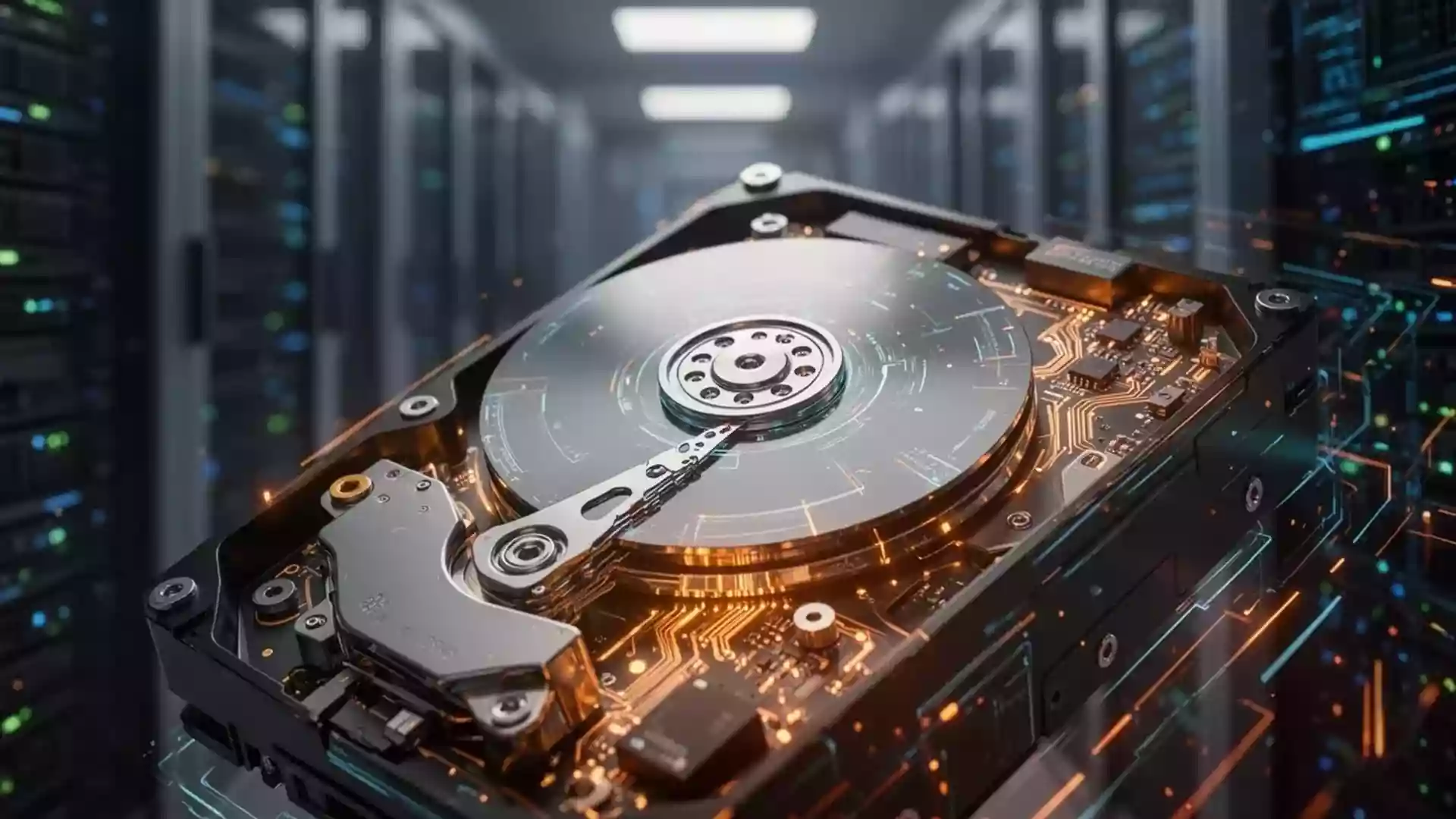
The magnetic hard drive, long dismissed as a relic of the computing past, has staged an unlikely comeback as the backbone of AI data infrastructure. Western Digital, which last year shed its flash-memory arm to become a pure-play high-capacity HDD specialist, now finds itself at the epicenter of a supply crunch that has its entire 2026 production capacity spoken for. The shift has sent the stock on a breathtaking run — up 875.81% over the past twelve months — but the recent pullback suggests the market is starting to second-guess how much of that growth is already priced in.
The transformative event came in February 2025, when activist investors forced Western Digital to spin off its NAND flash business into the independent SanDisk Corporation. What many viewed as a painful breakup turned into a strategic masterstroke. Freed from the volatile memory-chip cycle, the company refocused entirely on enterprise hard drives — exactly the technology hyperscale cloud providers need to store the massive datasets that train and run large AI models. Flash memory, while fast, remains prohibitively expensive per terabyte for these workloads, giving traditional HDDs an enduring cost advantage.
That cost edge is now driving a structural shortage. Management confirmed that production capacity is fully booked through the end of 2026, with major cloud customers — who account for 89% of Western Digital's revenue — locking in long-term contracts that stretch into 2028. The insatiable demand from AI data centers has turned the company into a critical supplier for seven of the world's largest hyperscalers.
Should investors sell immediately? Or is it worth buying Western Digital?
The financial results reflect the pivot. In the fiscal third quarter, revenue rose roughly 45% year over year to $3.34 billion, beating analyst expectations. Gross margins reached 51%, and the company guided for an even stronger fourth quarter: revenue of $3.65 billion and adjusted earnings per share of $3.25. Western Digital is also betting on its new "High Bandwidth Flash" (HBF) technology, which delivers 1.6 terabytes per second of bandwidth at a cost lower than competing HBM memory. Management sees HBF margins climbing as high as 75% as hyperscaler adoption accelerates.
Yet the stock's euphoric run has cooled sharply. After hitting a record high in June, the shares have retreated, trading at €528.40 on the latest session — a 5.58% daily decline. The pullback highlights a growing gap between institutional momentum and analyst caution. The average price target among Wall Street firms stands at €486.73, implying a discount of roughly 8% from current levels. Many analysts struggle to model Western Digital's rapid pricing power, but the consensus view is that the stock is overvalued after a near-ninefold gain in twelve months.
Bearish signals are piling up. Insider selling has accelerated, with executives offloading more than 29,000 shares in the past 90 days — a classic sign of profit-taking after a massive rally. The stock now trades 119% above its 200-day moving average, a stretched valuation that historically precedes a correction. Compounding the concern is weakness in the broader semiconductor sector: South Korean rivals like SK Hynix have suffered double-digit daily losses amid regulatory headwinds, dragging down Western Digital by association.
Volatility remains extreme, with an annualized reading of 96.01%. The next major catalyst lands on July 29, 2026, when Western Digital reports its fiscal fourth-quarter results. That report will test whether the company can deliver on its ambitious guidance in an increasingly uncertain market. If margins hold and revenue hits the $3.65 billion target, the stock may find support. But if the AI trade weakens further, the 50-day moving average near €463 — roughly 12% below current prices — could become the next floor.
Ad
Western Digital Stock: New Analysis - 1 July
Fresh Western Digital information released. What's the impact for investors? Our latest independent report examines recent figures and market trends.