
Almonty's $247 Million Share Shelf Casts a Shadow Over a Landmark Tungsten Quarter
Published on 08/16/2026 at 03:11 | Redaktion boerse-global.de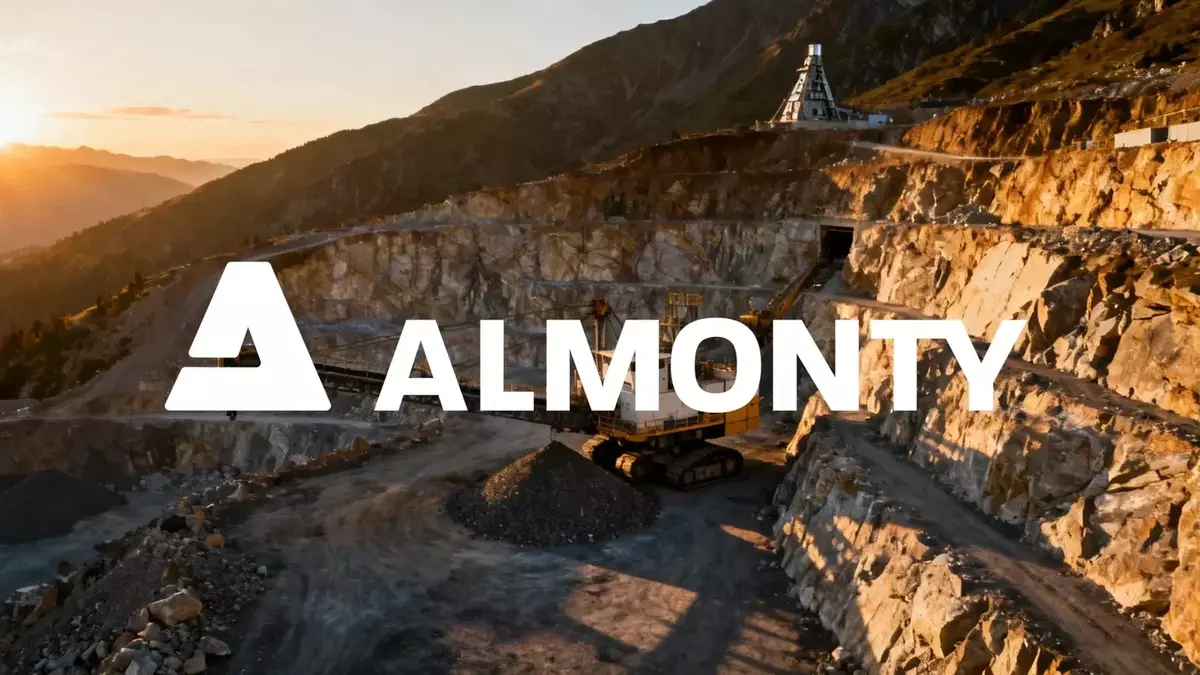
The tungsten producer's turnaround story is now a tale of two competing narratives: one of record prices and a transformed balance sheet, the other of potential dilution looming just beneath the surface.
Almonty Industries has ridden a wave of momentum in recent sessions, with the stock climbing 28.21 percent over a seven-day stretch and adding another 5.66 percent in a single trading day. The catalyst? Production has officially kicked off at the Sangdong mine in South Korea, and analysts are penciling in sharply higher earnings. Yet the shares remain 32.22 percent in the red over a 90-day horizon, a reminder that the recovery is still incomplete.
The rally, however, masks a filing that could test investor patience. Shortly before the run-up, Almonty submitted new shelf registration documents permitting the issuance of common shares worth approximately $246.79 million, including a component tied to its employee stock ownership plan.
That filing follows an updated stock option plan adopted on August 4, 2026. Management now has the flexibility to fund optimization work at Sangdong Phase I, advance a potential Phase II expansion, and prepare the neighboring molybdenum project — all while using equity incentives to keep staff aligned with shareholders. The trade-off is straightforward: every new share issued trims the value of existing holdings, and in a stock that already swings sharply, that overhang carries extra weight.
Should investors sell immediately? Or is it worth buying Almonty?
The Numbers Behind the Momentum
The recent strength rests on a genuinely improved financial foundation. On August 11, Almonty reported second-quarter revenue of $43.0 million, a 498 percent surge fueled by record tungsten prices. Net income swung to $181.8 million from a loss of $58.2 million in the year-ago period, while adjusted EBITDA flipped from negative $4.8 million to positive $17.6 million — a clear departure from the company's long history of losses.
The balance sheet has undergone an equally dramatic shift. A convertible bond offering of $800 million closed in June and was significantly oversubscribed, leaving Almonty with $1.2 billion in cash as of June 30, 2026 — up from $268.4 million at the end of December 2025. That war chest is earmarked for four parallel initiatives: the Phase II expansion at Sangdong, a tungsten oxide facility in South Korea, the Gentung project in Montana, and an expansion at Panasqueira in Portugal.
The market's response was notable. Shares jumped 8.3 percent even though the company remains operationally loss-making, according to analysts at Simply Wall St, signaling that investors are suddenly willing to pay a substantial premium for the tungsten story.
Valuation Stretch and Strategic Shifts
That enthusiasm has pushed some valuation metrics into ambitious territory. At the last close of $14.18, Almonty trades at a price-to-book ratio of 16 — a key gauge for capital-intensive mining companies. The average for the US metals and mining sector sits at 2.8, and even the direct peer group averages only 14.1. Almonty now commands a higher multiple than most of its competitors.
The stock closed Friday at $15.07 on the Nasdaq, trading 7.6 percent above its intraday low. Volume was notably subdued at 1.41 million shares versus a three-month average of 7.54 million.
Almonty is also streamlining its public market footprint. The Toronto Stock Exchange listing ended at the close on July 31, 2026, and the Australian Securities Exchange has approved a withdrawal effective September 1, 2026. Australian depositary interests will be suspended on August 28. Going forward, the shares will trade solely on the Nasdaq under the ticker "ALM" and in Frankfurt as "ALI1." Management cites the Nasdaq's far greater liquidity — the bulk of trading volume now occurs there, with Australian interests representing just 0.80 percent of outstanding shares as of July 14.
Almonty at a turning point? This analysis reveals what investors need to know now.
Sangdong at the Center
The growth narrative hinges on Sangdong, currently in commissioning and ramp-up. Phase I targets roughly 640,000 tonnes of ore per year at full capacity, with an already-approved Phase II potentially lifting that to 1.2 million tonnes. A longer and larger off-take agreement with Global Tungsten & Powders LLC adds visibility on the demand side as production scales.
The convertible bond, while bolstering liquidity, carries its own risks. If converted, it would dilute existing shareholders; if not, it creates ongoing interest obligations. The stock's trajectory reflects that tension — recent gains have only partially offset a roughly 22 percent decline over the past three months.
With listings consolidated and Sangdong ramping up, the focus now shifts to execution: how quickly the company can convert its swollen cash position into stable production volumes and sustainable margins. Whether Almonty actually taps its new shelf capacity or holds it in reserve will be a key question for shareholders in the weeks ahead.
Ad
Almonty Stock: New Analysis - 16 August
Fresh Almonty information released. What's the impact for investors? Our latest independent report examines recent figures and market trends.


