Ballard Power's Finnish Truck Trial Is a Test Case, Not Yet a Business Case
Published on 11/24/2026 at 15:21 | Editorial boerse-global.de
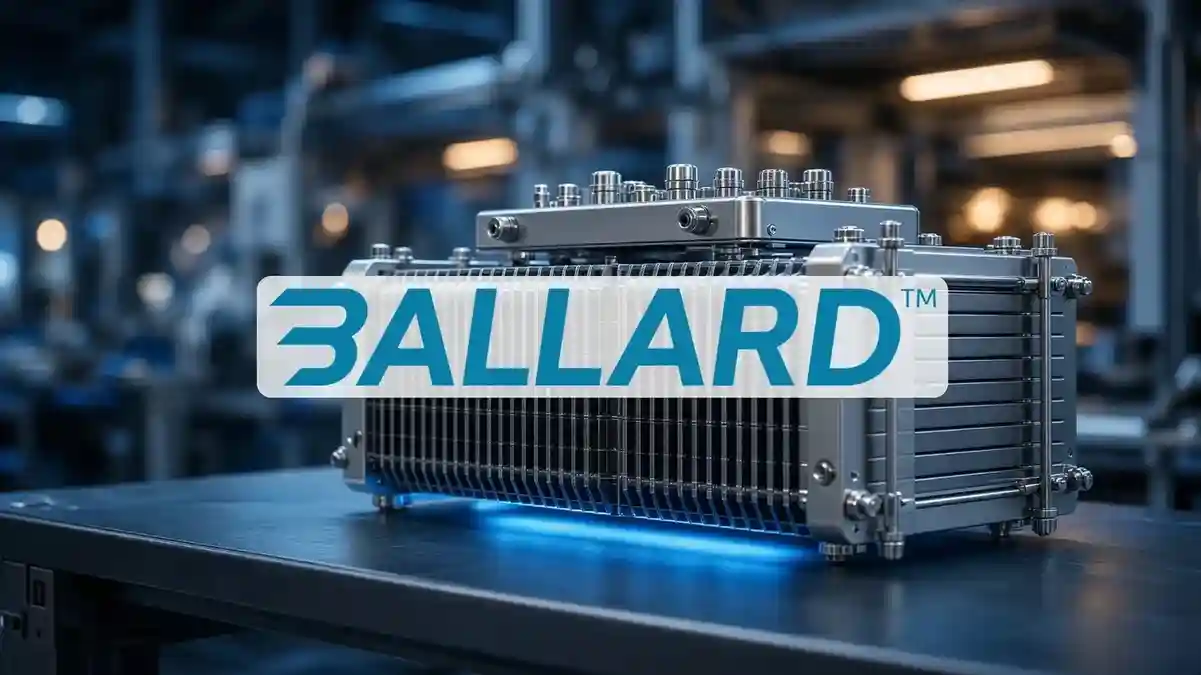
Two days of price-target cuts have framed Ballard Power's latest quarter as a story about valuation. The more instructive story may be unfolding on Finnish roads, where a hydrogen-electric SISU truck powered by the company's FCmove-XD fuel cell drive — rated at 120 kW — has begun trials under the EU-backed Escalate project. If testing goes well, the vehicle is slated to enter regular transport service by the end of 2026.
That milestone matters, but it is a waypoint rather than a destination. Proving a drivetrain works in day-to-day haulage is one thing; selling it in volumes that cover the supplier's costs is another entirely. Investors would be wise to hold Ballard's growth plans to that second standard.
What the Quarter Actually Showed
The numbers released at the start of last week make the gap between technical validation and commercial success plain. Revenue for Q3 2026 came in at US$22.5 million, down 31% year over year and short of analyst expectations. Management pinned the decline on lower equipment sales and weaker service revenue, with fuel-cell deliveries to customers pushed into 2027 and 2028.
Gross margin, however, moved in the right direction — up from 15% to 20%. That improvement on the revenue actually booked is genuine progress, yet it says nothing about whether the business volume is large enough. The bottom line bore that out: a net loss of US$21.1 million from continuing operations. Operating cash flow was negative to the tune of US$35.4 million.
Should investors sell immediately? Or is it worth buying Ballard Power?
Ballard ended the quarter with US$373.9 million in cash and cash equivalents. That cushion gives the company room to maneuver, but it does not substitute for the sales that would turn a truck trial into a broader business.
Price Targets Head South
The analyst community has been marking down its expectations. National Bank Financial cut its target to US$3.00 from US$4.50 on November 17, responding to the quarterly figures. Raymond James had already moved the day before, lowering its target to US$2.20 from US$3.50 while keeping a "Market Perform" rating, citing revised valuations among comparable companies. BMO Capital, according to media reports, trimmed its target to US$1.00 from US$1.50.
Those targets are assessments, not verdicts on how the SISU truck will perform in Finnish transport operations. By the same token, a successful trial on its own says nothing about whether Ballard will hit its financial objectives.
Two Different Yardsticks
Management is aiming for average annual revenue growth of roughly 30% across 2027 and 2028. It targets positive adjusted EBITDA in the fourth quarter of 2027 and profitability for the full year 2028. Those are distinct measures: a positive adjusted result before interest, taxes, depreciation and amortization in a single quarter is not the same as a profitable full year.
Ballard has also guided to operating expenses of US$90 million to US$100 million for 2026 — a higher spending forecast that belongs in the same calculation as the margin gain.
Ballard Power at a turning point? This analysis reveals what investors need to know now.
Shares gained 2.1% today to €0.9890, a modest bounce against the backdrop of the downgrades.
For all the noise around price targets, the real value of a project like Escalate is that it sharpens the next question. Technical progress can be demonstrated on the road. Commercially, what counts is whether further orders follow and generate enough revenue. Only when both arrive will the truck in Finland and the figures in the accounts tell the same story.
Ad
Ballard Power Stock: New Analysis - 24 November
Fresh Ballard Power information released. What's the impact for investors? Our latest independent report examines recent figures and market trends.