Bloom Energy's Growth Story Now Hinges on Permits, Not Promises
Published on 11/07/2026 at 03:31 | Editorial boerse-global.de
Bloom Energy has spent years selling investors on the technical merits of its solid-oxide fuel cells. The next chapter of its growth story will be decided somewhere far less glamorous: in planning offices, municipal hearings and the ballot box.
That shift was underscored this week when Crusoe confirmed that Google has taken over its site in southeastern Wyoming. According to Crusoe, site selection, regulatory approvals and power planning for the pre-development phase are complete. The significance for Bloom runs deeper than a single project — energy blueprints only acquire real value once they become buildable sites.
Wyoming Sets a Concrete Marker
Google announced on Thursday a long-term investment of USD 17bn for its first data center in Wyoming. The power concept includes a planned 702 MW Bloom Energy fuel cell installation with carbon capture. Google intends to bear the full electricity consumption as well as the infrastructure costs directly triggered by the build-out.
That cost commitment matters because it speaks to two of the most contested resource questions around AI infrastructure: power and water. Paired with the planned air cooling, the package is designed to blunt local objections to added strain. AEP had already pledged roughly USD 4bn on October 14 for the planned power facility, with Google set to draw the energy under a 20-year power purchase agreement. Full operation is expected by the end of 2028.
For shareholders, the appeal lies in the combination of site development, financing and long-term offtake. The expected start-up date gives the project a timeline — and Bloom's opportunity depends on its partners filling that frame with construction progress and operating infrastructure.
Should investors sell immediately? Or is it worth buying Bloom Energy?
Execution Becomes the Yardstick
The operational numbers explain why expectations run so high. Revenue reached about USD 1.24bn in the third quarter of 2026, up 138.1% year on year. Guidance for 2026 has been raised for the third time and now stands at USD 4.4–4.6bn, though management has flagged that the outcome hinges on the timing of certain deliveries toward year-end.
That is the near-term test. A reliable delivery schedule would reinforce the operating story, provided customers keep their own projects moving. Slippage would expose how much rides on individual project dates — which is why execution deserves more attention than the headline size of any new agreement.
The planned collaboration with California Resources fits that cautionary frame. The agreement covering at least 1 GW is non-binding and still requires contracts, a final investment decision and permits from the US Environmental Protection Agency. A carbon capture volume of up to 3 million tonnes per year is envisaged. The program only gains real weight in any valuation once those open conditions turn into firm commitments.
A Product Built for a Squeezed Grid
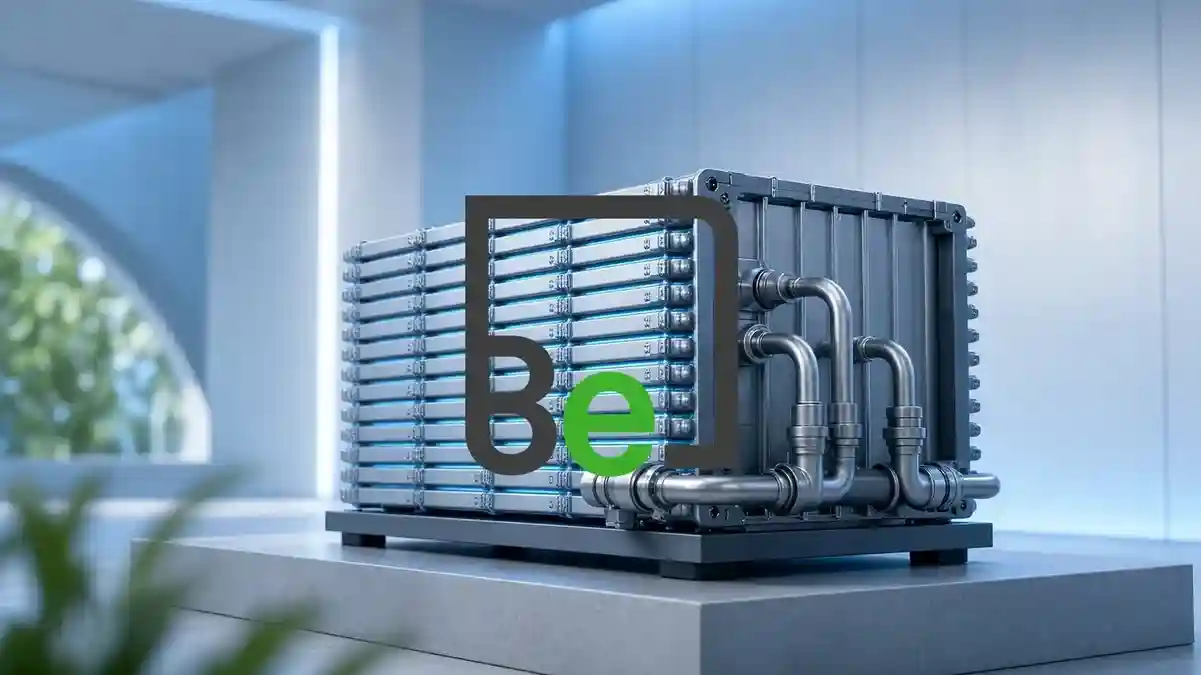
The technology itself aligns with what data center operators are short of. Bloom's fuel cells generate electricity without combustion, use little water, install modularly and run quietly — qualities that favor deployment close to consumers, assuming sites and supply concepts clear permitting. The caveat: the units currently run mostly on natural gas, though they can use hydrogen. Planned carbon capture therefore becomes central to the project logic, and its value depends on partners delivering that additional infrastructure both technically and economically.
Political headwinds are sharpening the pressure. According to CBS, at least 44 of 47 measures to restrict data centers were approved in Tuesday's elections, with some results still outstanding. UBS, meanwhile, estimates that construction pauses could put around 30% of the US data center capacity expected for 2028 at risk.
Concentration adds another layer. Bloom booked 97% of its third-quarter 2026 revenue in the United States, tying its fortunes tightly to American construction and permitting decisions. A broader customer base would be especially valuable if it also opens up different regulatory environments — large capacity pledges stay attractive only when backed by solid site, power supply and construction plans.
What Investors Should Watch
The verdict on Bloom should rest on how reliably its partners steer projects through these bottlenecks. Wyoming offers tangible progress now that pre-development is wrapped up. The CRC program adds optionality if the outstanding decisions land favorably. The structural power demand of the AI industry argues for Bloom's role — but that trend only pays off once planned installations become deliverable, operable projects.
Ad
Bloom Energy Stock: New Analysis - 7 November
Fresh Bloom Energy information released. What's the impact for investors? Our latest independent report examines recent figures and market trends.