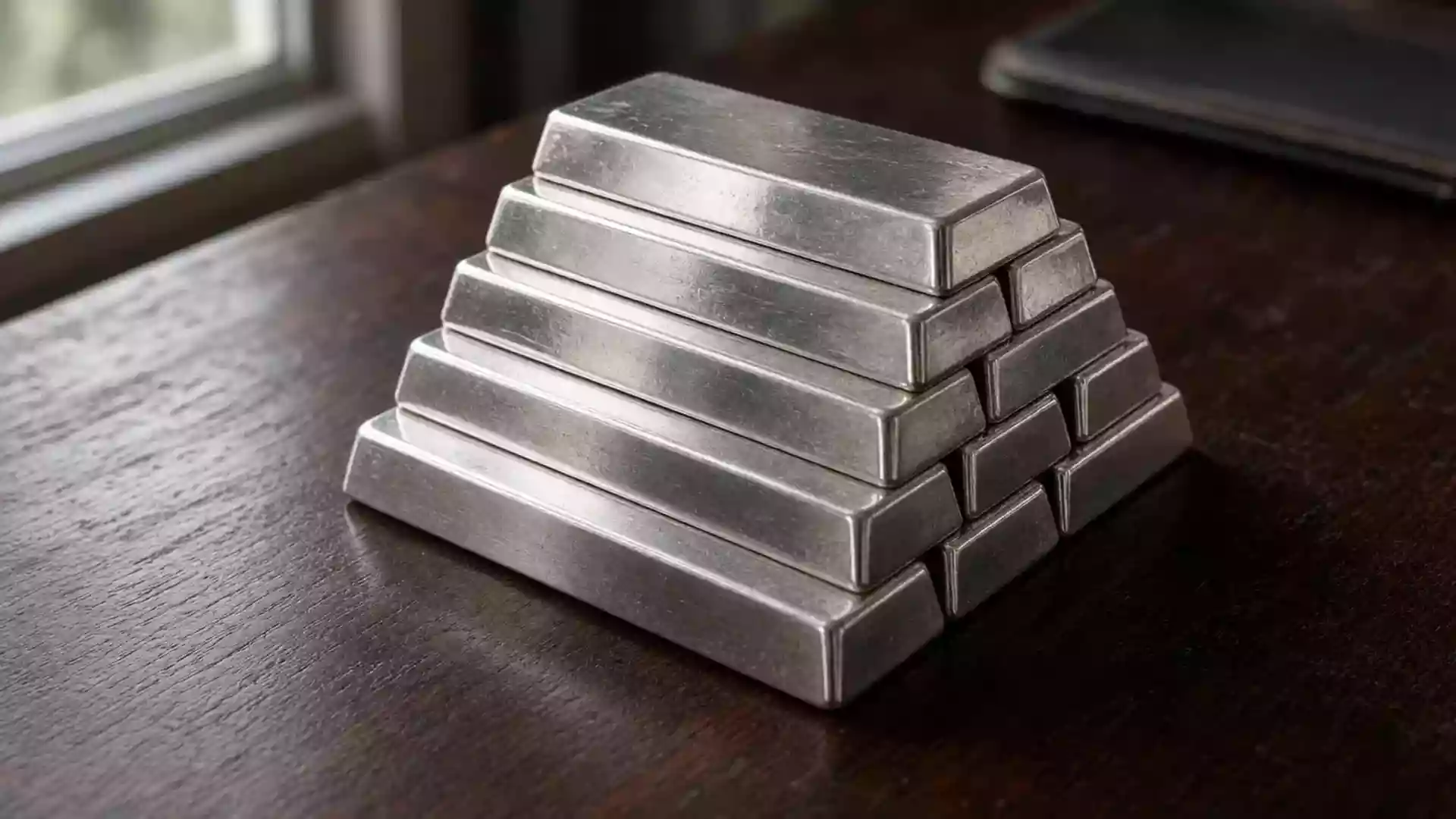
China's Silver Trade Flip and an Oil-Fuelled Inflation Scare Are Pulling Silver in Opposite Directions
Published on 10/22/2026 at 11:10 | Editorial boerse-global.de
Silver settled at USD 58.12 per troy ounce yesterday, a level that captures the metal's awkward position: caught between a tightening physical balance sheet and a macroeconomic headwind that has little to do with silver itself.
On the supply side of the ledger, China's customs data for September, released yesterday, sketched a market rerouting its flows. Exports of unprocessed silver with a purity of 99.99% came to 309.77 tonnes, down 23.7% from August. The nine-month tally reached 3,341.28 tonnes, 8.2% below the same stretch a year earlier. Imports moved the other way entirely, climbing 73.5% month on month to 114.93 tonnes.
Read together, the two figures describe a shift in how silver crosses China's borders — nothing more. Whether the change reflects extra consumption, restocking or simple trade decisions cannot be teased out of customs forms, and treating the numbers as a price call would be a stretch. The statistics cover one specific form of unprocessed metal, not the whole universe of silver products or the global market.
The bigger picture: a sixth straight shortfall
What gives those flows their weight is the annual forecast from the Silver Institute and Metals Focus, which projects a global supply deficit of 46.3 million ounces for 2026 — the sixth consecutive yearly shortfall. That gap is a projection, not a settled balance sheet, and Chinese monthly trade figures alone cannot confirm how large any shortfall will prove.
Should investors sell immediately? Or is it worth buying Silber Preis?
Demand from photovoltaics, meanwhile, is expected to slip to roughly 151 million ounces in 2026 from 186.6 million ounces a year earlier. The solar sector's outsized role in silver consumption, in other words, does not guarantee rising offtake — a nuance that cuts against any simple bullish reading of the supply gap.
When oil does the talking
The more immediate pressure comes from energy markets. Drone strikes on Saudi and Russian oil infrastructure have stoked fears of persistent inflation, and among the targets was Saudi Aramco's Shaybah oilfield, where two people were killed. Washington ordered the departure of non-essential government personnel and their families from Saudi Arabia.
Rising crude prices feed expectations of stubborn price growth, pushing US Treasury yields higher and weighing on metals that pay no coupon. Reuters reported today that silver was easing on exactly this combination of oil-driven inflation and rate worries. The transmission channel runs from energy to rate expectations to precious metals — and geopolitical uncertainty on its own has not been enough to offset that drag. Silver's dual identity as both a haven and an industrial input offers no easy counterweight.
The Fed calendar is the next catalyst
Rate expectations now carry the argument. CME FedWatch puts the probability of unchanged rates at the next Fed meeting at 84%, while the priced odds of a hike in December sit near 90% — market bets, not decisions. The near-term strain stems less from any imminent move than from the prospect of rates staying high for longer, an expectation that costlier oil only reinforces.
Silber Preis at a turning point? This analysis reveals what investors need to know now.
The Fed meets on 27–28 October 2026, with US PCE inflation data following on 29 October 2026. Those two dates should clarify whether the monetary headwind is fading or continues to overshadow the projected supply shortfall.
For investors, the signals point in different directions: China is exporting less silver while a key demand segment is forecast to shrink. The trade data are a relevant input for judging prices — but not enough on their own to call a turning point.
Ad
Silber Preis Stock: New Analysis - 22 October
Fresh Silber Preis information released. What's the impact for investors? Our latest independent report examines recent figures and market trends.