Deutsche Telekom's Fibre Bet Meets a Sold-Out AI Campus and a Lowered Price Target
Published on 11/13/2026 at 13:31 | Editorial boerse-global.de
Deutsche Telekom is pressing ahead on two infrastructure fronts at once, and the yardstick investors are applying to both is the same: whether new capacity can be turned into paying demand.
In Ollarzried, part of the Bavarian town of Ottobeuren, the company has begun subsidised fibre rollout that will reach 590 households and businesses, with just under 130 kilometres of cable to be laid by spring 2028. A separate award handed to the group covers Oberschönegg and Weinried, where 186 homes and firms plus more than 40 kilometres of fibre are in scope — though that project is only at the contract stage, a reminder that the announcements span very different points in the build cycle.
The previous day brought the start of a commercially funded rollout in Worms-West, targeting roughly 10,000 households and companies. Unlike the subsidised schemes, this one rests on the company's own balance sheet, and the distinction matters because the financing models differ. A further subsidised build kicked off in Wismar, covering 2,406 households and businesses, with completion expected by October 2029.
Demand Signal From Munich
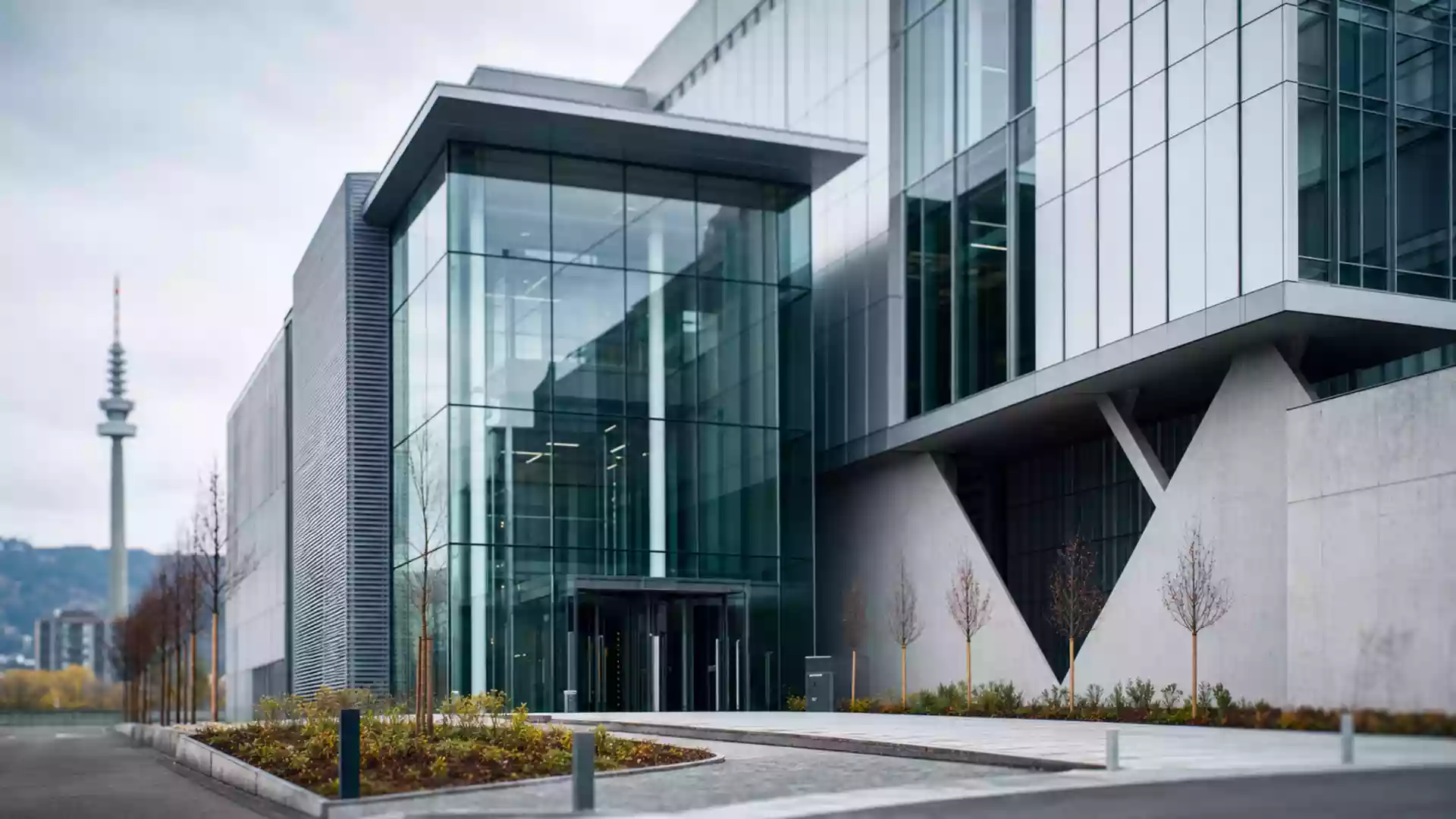
A clearer read on appetite comes from the AI side. On Monday the group announced an additional investment of just under a quarter of a billion euros in its AI factory in Munich's Tucherpark, lifting capacity to 20 megawatts after the first expansion stage sold out. That utilisation is a tangible vote of confidence in the investment programme — provided demand holds up for the extra capacity as well.
Should investors sell immediately? Or is it worth buying Deutsche Telekom?
The existing business supplies the financial footing. Third-quarter 2026 figures, reported on 5 November, showed group revenue of EUR 31.1 billion and adjusted EBITDA AL of EUR 12.2 billion. Organic growth came in at 5.5% for revenue and 8.0% for the adjusted EBITDA AL measure, while adjusted net profit reached EUR 3.0 billion, up 12.7% on the company's own accounting.
Analysts are nonetheless fine-tuning their models. Goldman Sachs cut its price target to EUR 36 from EUR 38 on 6 November, keeping its buy rating intact. According to dpa-AFX, analyst Andrew Lee aligned his estimates with the quarterly report, his forecasts for T-Mobile US and recent currency moves.
The Cost Side of the Ledger
Weighing against the expansion is a regulatory cost risk. A full ban has not yet been decided, but an industry association estimate puts the potential bill for the European telecoms sector at up to EUR 40 billion. For Deutsche Telekom, the exposure would depend on the scope of any decision and the replacement obligations that follow. A widening of the Huawei ban could sharpen that pressure — and it would bite hardest if extra retrofit costs collided with heavy fibre and AI spending, particularly if new capacity were monetised more slowly than hoped.
Alongside the hardware build, T-Systems and Sparxity agreed on 3 November to cooperate on energy-efficient AI chips and computing systems, with Sparxity's equipment to be integrated and validated in Telekom data centres. The two signed a letter of intent at the German government's digital summit.
On the consumer front, the group extended its Magenta Moments loyalty programme on Wednesday with a weekly "Magenta Mittwoch" format offering deals, promotions and prize draws. Its mobile network also collected a trophy: IMTEST and zafaco named Deutsche Telekom the winner of the 2026 mobile network test on 7 November, with an overall grade of "sehr gut" and a score of 1.24.
Deutsche Telekom at a turning point? This analysis reveals what investors need to know now.
What to Watch
The favourable case rests on two conditions holding together: the core business keeps generating high operating results, and new infrastructure meets viable demand. On that reading, the build-out broadens the future revenue base rather than loading one side of the balance sheet. Should monetisation stall, the funding burden grows instead.
Concrete dates now serve as checkpoints — spring 2028 for Ollarzried's cable work, October 2029 for Wismar — while the next possible regulatory catalyst is a decision on extending the Huawei ban. Execution on the ground and take-up of the new connections will be the tests that matter.
Ad
Deutsche Telekom Stock: New Analysis - 13 November
Fresh Deutsche Telekom information released. What's the impact for investors? Our latest independent report examines recent figures and market trends.