Gold's Fragile Ceiling: A Hawkish Fed, a Weakening Dollar, and the $4,094 Barrier
Published on 07/31/2026 at 17:51 | Redaktion boerse-global.de
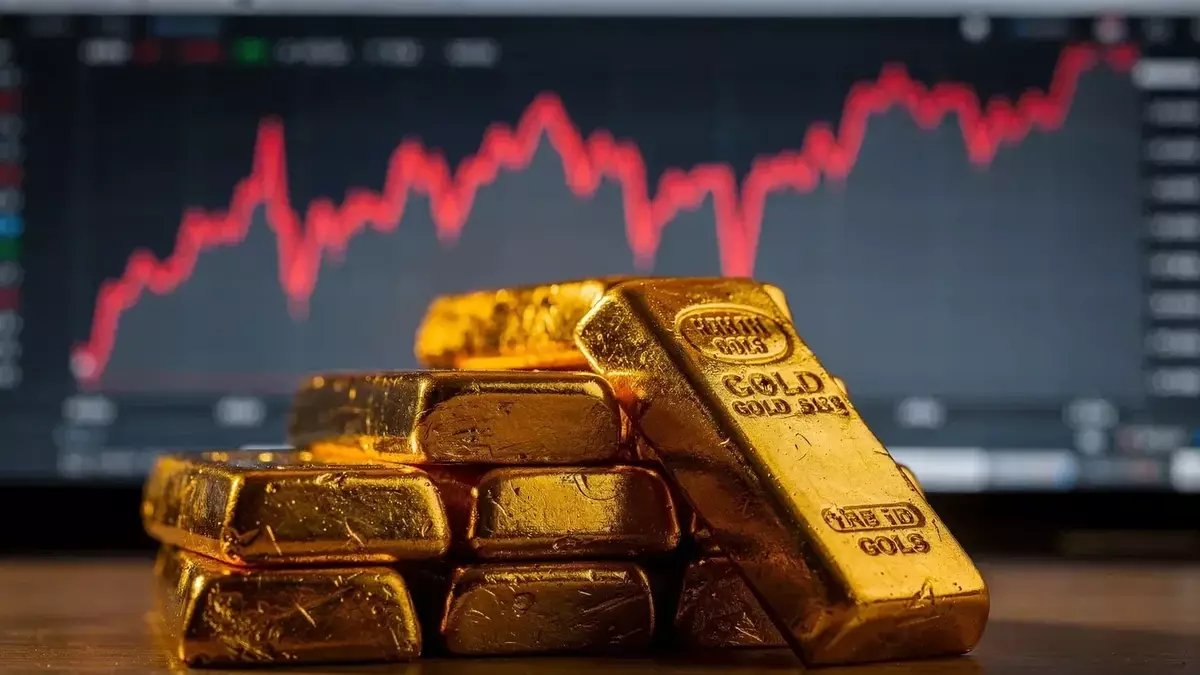
Gold enters the final stretch of July locked in a technical tug-of-war, with buyers struggling to convert geopolitical tailwinds into a decisive breakout. The precious metal was changing hands near $4,086–$4,106 on Friday, having slipped roughly 1.4% on the day after a two-session winning streak ran out of steam. Yet beneath the daily noise, a more meaningful shift is taking shape: the metal is on track for its first monthly gain in five months, up about 1.4% in July and 21.5% higher year-on-year.
A Narrowing Triangle Points to a Move
Chartists see the price action coalescing into a symmetrical consolidation triangle on the daily timeframe. Buyers managed to reclaim a long-term downtrend line this week—one that traces back to the March record high above $5,400—but a sustained push through the $4,094 resistance level has so far proved elusive. With the trading range visibly compressing, market participants expect a resolution in the coming sessions.
Upside targets sit at $4,159 and $4,202 if the breakout materializes, while the $3,960 zone forms the key floor on the downside. The technical picture is otherwise mixed: gold trades roughly 2.2% below its 50-day moving average of $4,199.99, and the relative strength index sits at a neutral 49.1, offering little directional conviction.
The Dollar's Quiet Tailwind
The most immediate catalyst for gold's recent bounce has been currency markets. Suspected Japanese intervention to shore up the yen has pushed the dollar lower, making bullion cheaper for overseas buyers and providing an automatic bid for the metal. That dollar weakness helped gold post back-to-back daily gains earlier this week and underpins the monthly advance.
Should investors sell immediately? Or is it worth buying Gold?
The Federal Reserve added a second layer of support. Policymakers left the benchmark rate unchanged at 3.50%–3.75% on Wednesday, but the accompanying tone was decidedly hawkish. Three members of the Federal Open Market Committee voted for an immediate hike, and futures markets now assign roughly a 63% probability to a September increase. Fed Chair Kevin Warsh reiterated the central bank's commitment to bringing inflation down, even as geopolitical tensions threaten to reignite price pressures.
Geopolitics Cuts Both Ways
The military standoff between the US and Iran continues to escalate, with American forces striking Iranian targets in response to attacks on US assets in the region. A quick diplomatic resolution appears increasingly unlikely, and the conflict has spilled into energy markets: Brent crude has climbed back above $100 a barrel following mutual strikes and the threat of a naval blockade in the Red Sea.
For gold, the geopolitical backdrop is a double-edged sword. Safe-haven demand provides a structural bid, but rising oil prices fan inflation fears that could force the Fed's hand. The yield on ten-year US Treasuries has drifted toward 4.7%, raising the opportunity cost of holding the non-yielding metal and capping any rally attempts.
Central Banks Fill the Void as Jewelry Demand Fades
The World Gold Council delivered a supportive data point on Thursday: central banks purchased a net 289 tonnes of gold in the second quarter, a record for that period. Poland and China led the accumulation, continuing their efforts to diversify reserves.
Gold at a turning point? This analysis reveals what investors need to know now.
The official sector's appetite stands in stark contrast to consumer behavior. Global jewelry demand fell 17% to 278 tonnes, with India—the world's second-largest consumer—particularly hard hit. A 15% import duty hike in May has pushed legal purchases down and, according to the WGC, is fueling smuggling and shifting demand to the gray market. Asian physical buying nonetheless remains a structural counterweight, absorbing some of the outflows from Western gold ETFs.
A Market Awaiting Its Catalyst
Gold enters August at an impasse. The Fed's internal divisions argue for caution, while escalating Middle East tensions and a softer dollar argue for patience. Whether the consolidation above $4,000 holds or gives way to a fresh wave of selling will likely hinge on which of those forces gains the upper hand in the weeks ahead.
Ad
Gold Stock: New Analysis - 31 July
Fresh Gold information released. What's the impact for investors? Our latest independent report examines recent figures and market trends.
Disclaimer regarding our articles: No investment advice, no buy or sell recommendation. Information on prices, companies, and markets is provided without guarantee; changes are possible at any time. Stock market transactions can lead to substantial losses. Our articles are created and reviewed in whole or in part automatically with the support of AI.