Gold's Quiet Accumulation: Central Bank Buying Spree Masks a Market in Flux
Published on 08/03/2026 at 22:21 | Redaktion boerse-global.de
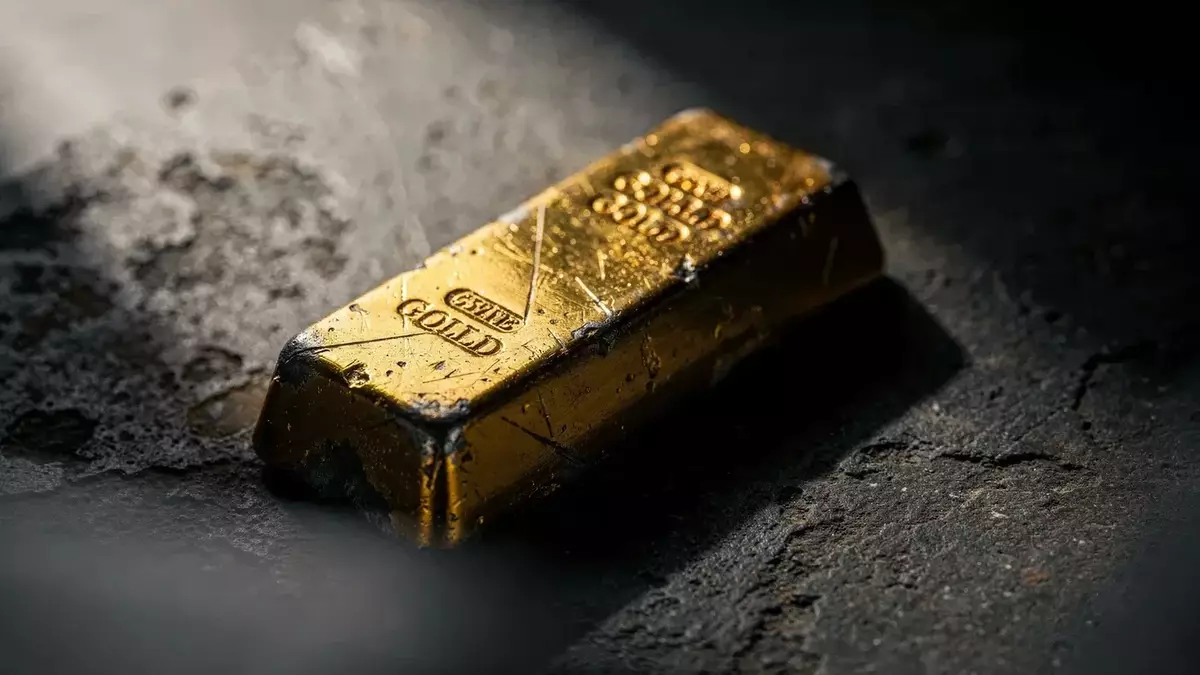
Gold is treading water at roughly $4,090 per ounce, but beneath the surface of a seemingly calm Monday session lies a market being pulled in opposite directions by geopolitical thaw, currency intervention, and an unprecedented wave of official-sector accumulation.
The metal slipped about 0.2 percent on the day to $4,090.30, having closed Friday at $4,098.60. That leaves it up a modest 0.33 percent on the week — a far cry from the record high of $5,626.80 struck in late January, which now sits more than 27 percent above current levels. The distance underscores just how deep the correction of recent months has run.
A Geopolitical Pivot Leaves Gold Unmoved
The muted price action owes much to a confusing geopolitical picture. President Trump called off a planned strike on Iran and announced talks for Monday afternoon, sending oil prices tumbling and unleashing risk appetite across equity markets — the DAX pushed above 26,000 points. Iran, however, denied via Reuters that negotiations with Washington were in the works, pointing instead to discussions with Oman over a new route through the Strait of Hormuz.
Yet gold barely reacted to the easing of geopolitical tensions. The reason: a coordinated US-Japanese intervention supporting the yen knocked the dollar to its weakest level since mid-June. A softer greenback makes bullion cheaper for overseas buyers, providing a floor even as safe-haven demand fades. UBS analyst Giovanni Staunovo noted that lower oil prices also dampen expectations for further Federal Reserve rate hikes, which in turn lends support to the non-yielding metal.
Should investors sell immediately? Or is it worth buying Gold?
Central Banks Rewrite the Demand Picture
The real story for the gold market, however, comes from the World Gold Council's second-quarter demand report. Total global demand held steady at 1,268.9 tonnes year-on-year, but the composition shifted dramatically. Central banks ramped up purchases to 288.9 tonnes — a 62.4 percent jump from a year earlier and the strongest quarterly haul since the fourth quarter of 2024. The average LBMA gold price for the quarter came in at $4,506 per ounce, eight percent below the prior quarter.
Poland led the buyer list with 51 tonnes in the quarter, bringing its year-to-date purchases to 82 tonnes and total reserves to 632 tonnes against a stated target of 700 tonnes. China added 33 tonnes, lifting its holdings to 2,346 tonnes, while Uzbekistan and Kazakhstan chipped in with 16 and 15 tonnes respectively. Russia stood out on the sell side, offloading 22 tonnes, with Turkey shedding a further 4 tonnes.
Standard Chartered analyst Suki Cooper sees a clear pattern in the official-sector behavior: price dips are now being deliberately used as buying opportunities. While futures positioning remains cautious and short interest in gold ETFs has grown, the central bank bid shows no signs of wavering.
Retail and institutional investors tell a different story. Gold ETFs saw outflows of 44.8 tonnes, and jewelry demand collapsed by 17 percent. Mine production edged up two percent to 966 tonnes. Despite the weak spots, the total value of global demand hit a record $380 billion in the first half.
A Stablecoin Player Joins the Official Club
The appetite for bullion now extends well beyond traditional central banks. Tether, the stablecoin issuer, added 14 tonnes of gold in the second quarter, bringing its total holdings to 146 tonnes — worth roughly $18.8 billion and representing about 10 percent of the company's $187.8 billion in reserves. Tether reported an operating net profit of $1.5 billion. Its quarterly purchase equates to roughly five percent of all official-sector buying in the period, a sign that the demand base for gold has broadened considerably.
Divergent Views on the Path Ahead
Forecasts for where gold heads next vary widely. Deutsche Bank Research declares the correction over, targeting $4,600 per ounce by the fourth quarter and pegging fair value at $4,700. The bank points to July's first monthly gain in five months as evidence of a bottom forming. Yet an in-house warning model still flags the possibility of a pullback to $2,600, while another internal approach sees the floor already established near $3,900.
Gold at a turning point? This analysis reveals what investors need to know now.
Near-term trading ranges suggested by other observers span roughly $3,900 to $4,350, with upside beyond $5,000 should Middle East tensions genuinely ease. One institutional investor from the crypto sphere has opened a $23 million long position on rising gold prices.
For now, the technical picture remains tentative. The metal trades about 2.41 percent below its 50-day moving average of $4,191.18, signaling that stabilization is not yet complete. At $3,901.30, the 52-week low from October 28, 2025 sits just 4.84 percent below — a reminder of how close the market remains to its recent troughs.
The coming days bring US labor market data, including the ADP report and official non-farm payrolls, which will shape expectations for the Fed's rate path and the dollar's trajectory. For gold, the tension is clear: fading geopolitical risk weighs on short-term haven demand, while relentless central bank accumulation and a wobbly dollar continue to provide underlying support. The official sector, it seems, is buying through the noise — and that may be the most durable signal of all.
Ad
Gold Stock: New Analysis - 3 August
Fresh Gold information released. What's the impact for investors? Our latest independent report examines recent figures and market trends.
Disclaimer regarding our articles: No investment advice, no buy or sell recommendation. Information on prices, companies, and markets is provided without guarantee; changes are possible at any time. Stock market transactions can lead to substantial losses. Our articles are created and reviewed in whole or in part automatically with the support of AI.