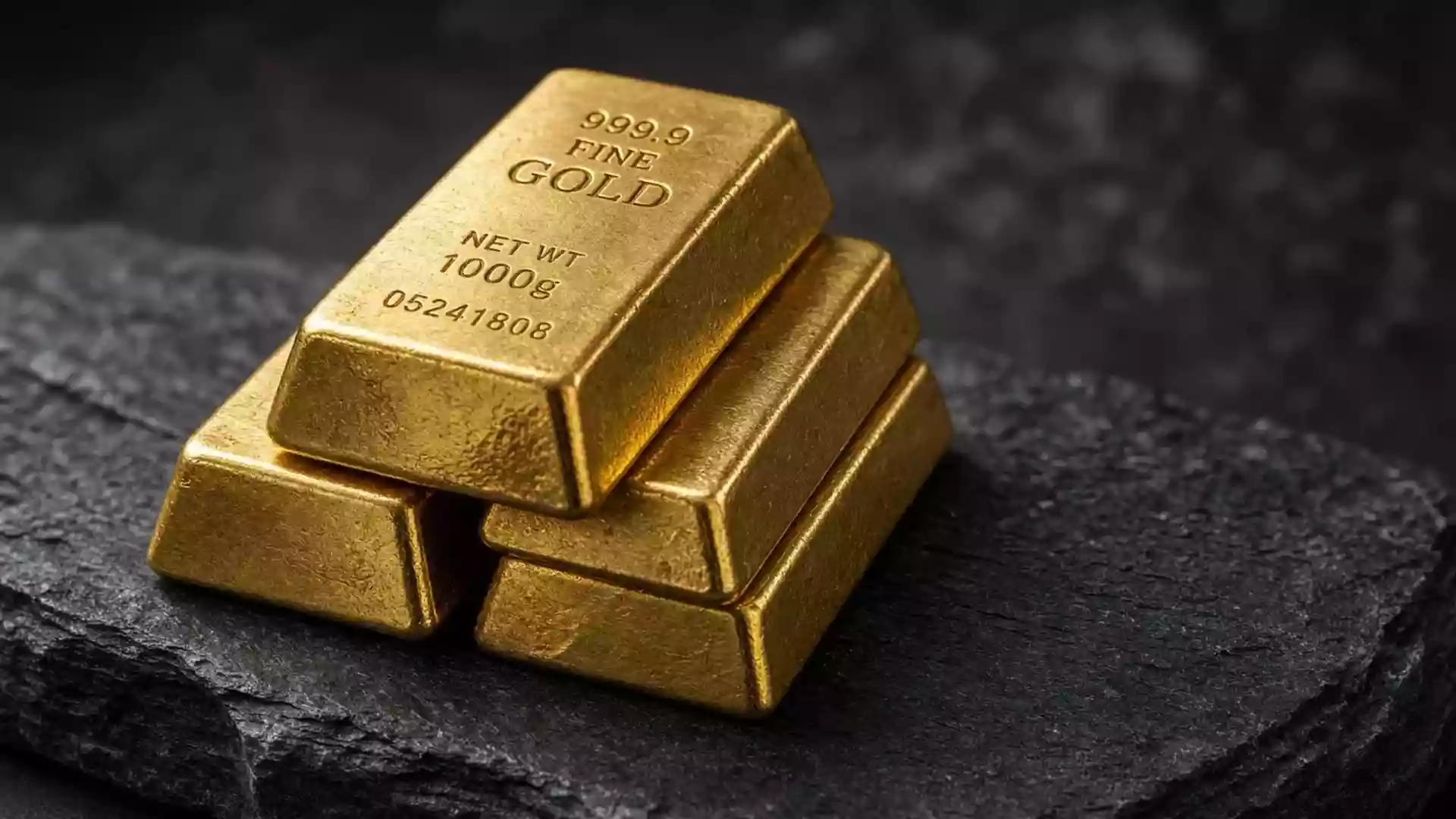
Gold's Squeeze Has Two Fathers: Margin Calls and the Rate Trap
Published on 11/04/2026 at 06:01 | Editorial boerse-global.de
Gold's latest slide is not a simple verdict on the metal's merits. Two distinct forces are pressing on the price at once — forced liquidation by traders scrambling to cover losses elsewhere, and the stubborn prospect of US interest rates staying higher for longer — and untangling them matters for anyone trying to read the market.
Spot gold settled at $3,927.80 an ounce yesterday, with Reuters reporting that selling to offset losses in technology stocks fed the decline. Margin calls were named as the trigger for additional selling. That distinction is crucial: short-term liquidity needs can weigh on a price without reflecting any change in an investor's longer-term view of bullion.
When Collateral Calls the Tune
Reuters had already pinned Monday's earlier selloff on turmoil in tech shares and the margin calls it set off. Market participants also pointed to technical selling and liquidity concerns. Gold, in other words, was sold to meet obligations stemming from losses booked elsewhere.
That explains part of the pressure as something originating outside the gold market itself. Someone who must post additional collateral does not necessarily sell because their long-term assessment of the metal has soured — an argument against reading the recent move as purely fundamental. Monday's countermove showed other forces still at work, too: according to Reuters, falling oil prices helped ease inflation and rate worries, though that relief landed in a market still shaped by liquidity questions and technical selling.
Should investors sell immediately? Or is it worth buying Gold?
The Rate Headwind Refuses to Die
Sucden Financial framed Friday's downward pressure chiefly through the oil price. Costly energy stokes inflation fears and expectations of prolonged high US rates, lifting the opportunity cost of holding gold. Demand for a safe haven played only a secondary role in the firm's assessment. Sucden expected pressure on gold through December, tying any subsequent stabilisation to the condition that the Federal Reserve moves closer to the end of its tightening — explicitly not an unconditional recovery signal.
The Fed left its benchmark rate unchanged on Thursday, and Reuters reported that gold investors weighed the policy signals afterward while awaiting US inflation data. The hold did not clear up uncertainty over the path ahead. Fresh clues could come from today's US ISM services index for October and the US jobs report on 6 November — both relevant for gold.
The Reuters poll of 27 October had already captured the strain. The median forecast for gold in 2026 stood at $4,495 an ounce, down from $4,509 three months earlier. Analysts and traders cited high US yields, a strong dollar and extended rate stays as headwinds — a downgrade that spoke less to any single demand segment than to tighter financial conditions overall.
Official Buyers Build a Floor
Against that backdrop, the World Gold Council's demand report published today lays out stark divergences between buyer groups. Central banks and other official institutions added a net 321 tonnes to reserves — 42% more than in the year-earlier quarter — bringing purchases since January to 675 tonnes. That official appetite offsets weakening demand elsewhere, though it hardly amounts to uniform buying strength across the whole market.
The WGC cut its 2026 growth forecast for gold investment demand to 200 tonnes from 400, with Reuters attributing the reduction to softer bar and coin demand in the second half of the year. At the same time, the council raised its estimate for central bank purchases. The split runs inside investment demand as well: physical products drew less interest, while exchange-traded gold funds took in further money. Gold ETFs recorded net inflows of 211 tonnes, with holdings hitting a record 4,256 tonnes, even as bar and coin demand dropped 19%.
Gold at a turning point? This analysis reveals what investors need to know now.
Two Brakes, Not One
What investors face, then, is a market caught between institutional demand and monetary-policy headwinds — with the metal at $3,922.22 an ounce, a figure that sits squarely in that tension. Strong buying by particular groups neither disproves the weakness in bars and coins nor neutralises the drag from higher rate expectations.
The same logic applies to the forced selling. Any easing of margin calls would defuse only one of the two brakes on prices. Whether a durable recovery takes hold also hinges on which way rate expectations swing after the coming US data.
Ad
Gold Stock: New Analysis - 4 November
Fresh Gold information released. What's the impact for investors? Our latest independent report examines recent figures and market trends.