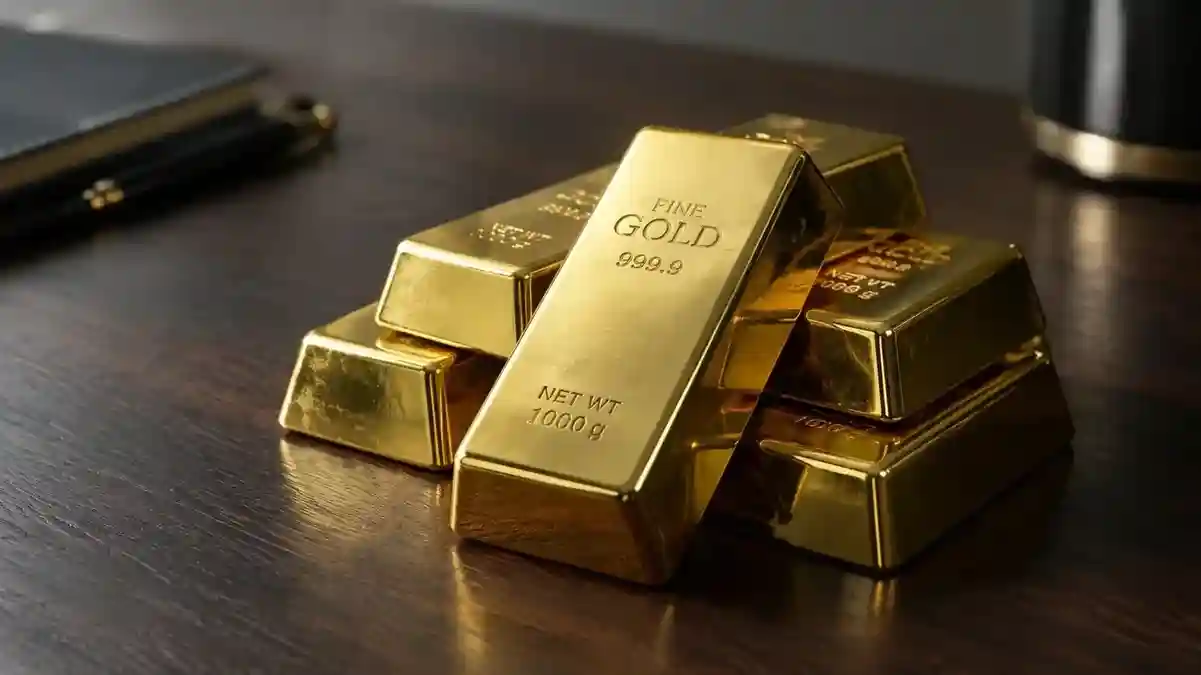
Gold Slips as Fed Bets Weigh, but Central Bank Buying and Asian Demand Offer a Floor
Published on 11/24/2026 at 15:51 | Editorial boerse-global.de
Gold is back under pressure. After clawing back ground in the previous session, the metal was quoted at $3,616.93 an ounce, giving up part of the prior day's advance as investors position themselves ahead of US inflation figures that could shape the Federal Reserve's next move.
The pullback follows a 3.2% jump on the previous day, when gold settled at $3,636.26 an ounce and recovered a slice of the losses suffered in the prior week. That bounce was driven less by a change in the rate outlook than by bargain hunters stepping in after prices hit a 14-month low. Physical demand in India and China had already picked up during the preceding week, a sign that cheaper prices were drawing buyers back into the market — though not evidence of a broad-based recovery.
Futures traders turned cautious before the rebound
Large speculators had already turned defensive before the recent trough. In the week to November 17, bullish positions held by these traders fell by 16,183 contracts, according to the US Commodity Futures Trading Commission, while bearish bets were built out by 7,792 contracts. That snapshot captures positioning before the previous day's recovery, not the reaction to it.
The pressure on prices had been building for weeks. A firmer dollar and mounting expectations of a December rate hike weighed on the metal, and the minutes of the Federal Reserve's November 18 meeting reinforced those expectations, according to media reports. A stronger dollar and December rate-hike bets were also cited by Reuters on November 20 as the drivers behind the selloff.
Should investors sell immediately? Or is it worth buying Gold?
Official-sector buying keeps running
Away from the futures market, the picture in China is mixed. The People's Bank of China reported purchases of 26 tonnes for October, its largest monthly increase since October 2023, taking its holdings to 2,435 tonnes according to the World Gold Council.
Chinese gold funds, by contrast, lost momentum. Exchange-traded gold funds in the country drew inflows of 6.3 tonnes in October and ended the month at a record 310 tonnes. In November, outflows set in, the World Gold Council reported.
Indian demand told a similar story of festive strength. The industry association reported broad buying during the Dhanteras and Diwali holidays, with gold imports recovering to an estimated 70 tonnes in October — still below year-earlier levels. Indian gold funds also recorded net inflows for the month.
Central banks more broadly were net buyers in the third quarter of 2026, with the World Gold Council estimating net purchases of 321 tonnes. Those flows describe official-sector demand over the quarter and are separate from the recent pickup in India and China, which unfolded over a different window.
Gold at a turning point? This analysis reveals what investors need to know now.
Swiss export data predates the selloff
Swiss customs figures add another layer. Gold exports fell 34% in October from September to 109.7 tonnes, even as shipments to China and India increased. The data cover the period before the latest selloff and therefore do not capture the bargain hunting Reuters described in the past week.
Taken together, the defensive futures positioning sits opposite purchases by China's central bank and demand from India. For the near-term price, however, the decisive question remains whether US inflation data reinforce expectations of further rate increases. The US Bureau of Economic Analysis is due to publish the core PCE price index for October on Wednesday — a report that matters to gold investors because the Fed uses the index as its inflation gauge. While the bargain buying explains why prices steadied after the selloff, the inflation print will offer the clearest signal on whether rate pressure on bullion is set to ease.
Ad
Gold Stock: New Analysis - 24 November
Fresh Gold information released. What's the impact for investors? Our latest independent report examines recent figures and market trends.