Infineon's AI Ambitions Rest on Labs, Fabs and Fine Print, Not Announcements Alone
Published on 11/05/2026 at 03:02 | Editorial boerse-global.de
A three-year supply agreement with Vertiv, a EUR 1.1 billion fab expansion in Villach and a fresh laboratory in Warstein may look like separate stories. For Infineon, they are pieces of a single question investors keep circling: how much industrial substance actually sits behind the company's AI narrative?
The Vertiv deal, disclosed yesterday, is the most concrete answer so far. The agreement covers silicon and silicon-carbide power semiconductors, which will feed into Vertiv's 800-VDC systems for AI infrastructure. What matters here is not the AI label but the link between components and a named application — a customer has written Infineon into its supply chain for multiple years. That is sturdier ground than a generic growth promise, though it stops well short of a profit statement. A supply agreement's economic value depends on how the committed volumes eventually show up in the business.
Mr Market Shrugs at Good News
The stock did not celebrate. Shares fell 2.8% yesterday, a move that sits awkwardly beside the positive corporate headline. Neither a failed contract nor a clean explanation for the decline can be read into that single session.
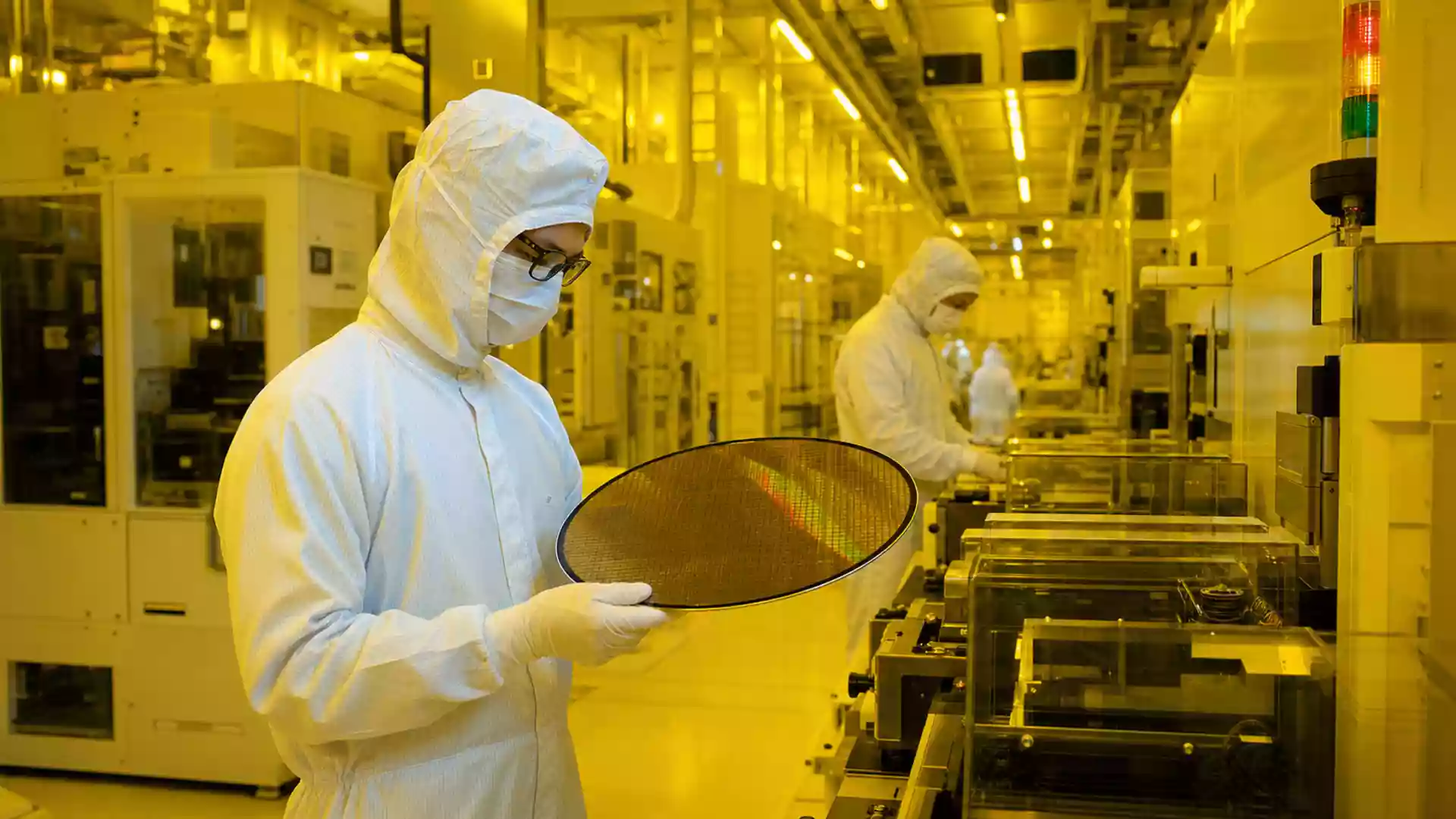
The Warstein project, inaugurated on 28 October, offers the unglamorous counterpart to the AI headlines. Around 350 employees will work in the new office and laboratory building, where roughly 1,200 square metres of lab space support the development of power semiconductor modules. No revenue forecast attaches to it, and it proves nothing about additional demand. It does, however, expand the development infrastructure that technical projects need before they become products.
Should investors sell immediately? Or is it worth buying Infineon?
That distinction runs through the whole Infineon story. A new platform generates attention; a laboratory generates the conditions for turning ideas into hardware. The more useful test is whether the individual steps fit together — development capacity, industrial manufacturing and partnerships aimed at specific applications. The scope stretches from software-defined vehicles to the power supply of AI data centres, which makes the story broader than any single product launch, and harder to prove.
Villach: Scale, Subsidy and a 2027 Anchor
The 27 October announcement out of Villach shows the size of the industrial bet. Infineon plans to invest around EUR 1.1 billion there through 2034, building Europe's first high-volume production line for gallium-nitride power semiconductors on 300-millimetre wafers. A subsidy of EUR 319 million is earmarked under the European Chips Act.
That funding belongs to the announced financing package, not to a completed project, and the investment sum should not be translated automatically into future revenue growth. Media reports suggest the plan will not create new jobs directly; instead, it is meant to secure existing positions at the site. A large investment, in other words, does not automatically mean a large hiring push — part of the purpose here is explicitly defensive. Investors who hunt only for short-term growth signals will miss that defensive element, while those who see nothing but site preservation will underestimate the technological ambition of the planned line. Both belong in the same assessment.
Production is scheduled to start by the end of 2027, a time anchor that makes clear the new capacity cannot prove itself in current results.
The GaN Thread Running Through the Portfolio
Infineon's link to AI infrastructure is spelled out most directly in its 21 October cooperation with NVIDIA on gallium-nitride-based power conversion systems for 800-volt AI data centres. The partnership targets the power supply side rather than AI computing itself — a more interesting angle than a label stuck onto a product release. The NVIDIA collaboration and the Villach plan both involve gallium-nitride power semiconductors, which reveals a technical connection but no specific order intake or earnings contribution.
Supply security forms another strand. On 15 October the company signed a supply agreement with Wolfspeed for 200-millimetre silicon-carbide wafers, intended, according to the company, to strengthen the resilience of its supply chain. New applications and secured sourcing sit side by side on the agenda.
Infineon at a turning point? This analysis reveals what investors need to know now.
The AURIX-RC1 platform, unveiled yesterday, rounds out the technological picture. Aimed at software-defined vehicles and physical-AI applications, it is due to deliver first samples in the first half of 2027. A product launch and the planned availability of samples are different stages of development from a strategic supply agreement, and these announcements should not simply be added up into one success story. Where each item stands in execution matters more than a shared proximity to the AI theme.
What November Must Deliver
The next financial checkpoint arrives on 10 November, the provisional date in the financial calendar for results covering the fourth quarter and fiscal year 2026. Product premieres supply possibilities; investments demonstrate commitment. The business figures will have to show whether customer commitments and technology convert into economic results.
The verdict, then, is constructive but deliberately sober. The Vertiv agreement strengthens Infineon's industrial credibility in the AI arena, while the planned capacity expansion raises the bar for execution. What convinces is not the volume of announcements but the transition from customer ties and technology to hard numbers — and that is exactly where the next assessment should begin.
Ad
Infineon Stock: New Analysis - 5 November
Fresh Infineon information released. What's the impact for investors? Our latest independent report examines recent figures and market trends.