Infineon's Buy Case Survives a Round of Target Cuts — the Question Is Whether the Margin Story Does
Published on 11/16/2026 at 07:11 | Editorial boerse-global.de
Infineon shares fell 2.1% on Friday as a fresh wave of unease swept through the chip sector. Reuters tied the pressure to the resignation of Nvidia chief Jensen Huang, which weighed on European semiconductor names broadly. Dow Jones Newswires added that soft Wall Street leads and mounting expectations of a US rate hike in December contributed to the drag, alongside looming tests for the AI industry that hit technology stocks.
The selloff frames a sharper question for investors: does the lower sector valuation already discount sufficiently cautious expectations, or is it pricing in more pain ahead? Several analyst houses have trimmed their price targets while keeping their largely positive ratings — a combination that matters. A lower target does not automatically signal a dimmer view of the company itself; it first reflects the market valuing comparable business prospects at a cheaper level.
Separating a sector re-rating from a change in the business outlook
For a forward-looking read, investors need to distinguish two things: a shift in how the semiconductor sector is valued, and any change in operating expectations for Infineon. As long as the compression is mainly about valuation, the calculus differs from a scenario where the business outlook also deteriorates.
The central operating yardstick is Infineon's expected profitability. For fiscal 2027 the company projects roughly EUR 20 billion in revenue and a segment result margin in the mid-20% range. That is a forecast, not a result already booked. If the margin trajectory holds, a key plank of the operating case stays intact. A continued sector de-rating could still weigh on the stock — but it would be a different matter from a company-side downgrade.
Should investors sell immediately? Or is it worth buying Infineon?
How much the sector re-rating is already feeding into estimates is visible in Deutsche Bank Research's move. The house cut its target to EUR 75 from EUR 85 on Thursday while keeping its Buy rating. Analyst Johannes Schaller attributed the adjustment to the lower sector valuation. The message is two-part: the positive rating stands, but the valuation framework the bank is willing to grant has narrowed. A recovery would not necessarily require a higher company forecast — a stabilization of valuation benchmarks could help on its own, provided the operating picture holds.
A cluster of cuts, but ratings stay put
Deutsche Bank is not alone. Bank of America lowered its target to EUR 80 from EUR 88 on Wednesday, maintaining its Buy rating and citing concerns over the financing and monetization of AI investments as well as tighter approvals for data centers. Bernstein Research cut its target to EUR 82 from EUR 102 the same day and reaffirmed Outperform; analyst David Dai pointed to uncertainty over the pace of AI data-center buildout in the US. According to media reports, two further houses reduced their targets on Wednesday and Thursday into a EUR 74 to EUR 75 range, both sticking with buy recommendations — one of them citing the recent de-rating of the semiconductor sector.
JPMorgan also trimmed its target, to EUR 80 from EUR 96 on Wednesday, while keeping its Overweight rating. The bank pointed to lower sector valuation multiples and doubts about the duration and sustainability of the AI cycle. That crystallizes the risk: a positive analyst rating offers no protection against further target reductions. If doubts about the sector intensify, the valuation framework could tighten again — and should weaker operating expectations pile on top, the two pressures would compound, a far more serious prospect for investors than an isolated knock to sentiment.
Buyback and a technical milestone, with caveats
Running in parallel since Wednesday is a share buyback for employee participation programs. Infineon intends to acquire up to 7 million of its own shares for a maximum of EUR 450 million, with completion scheduled no later than November 27. The stated purpose belongs in the assessment: the program serves employee participation. For the bullish case, what matters most is that Infineon executes the announced measure; a lasting re-rating cannot be derived from the buyback alone.
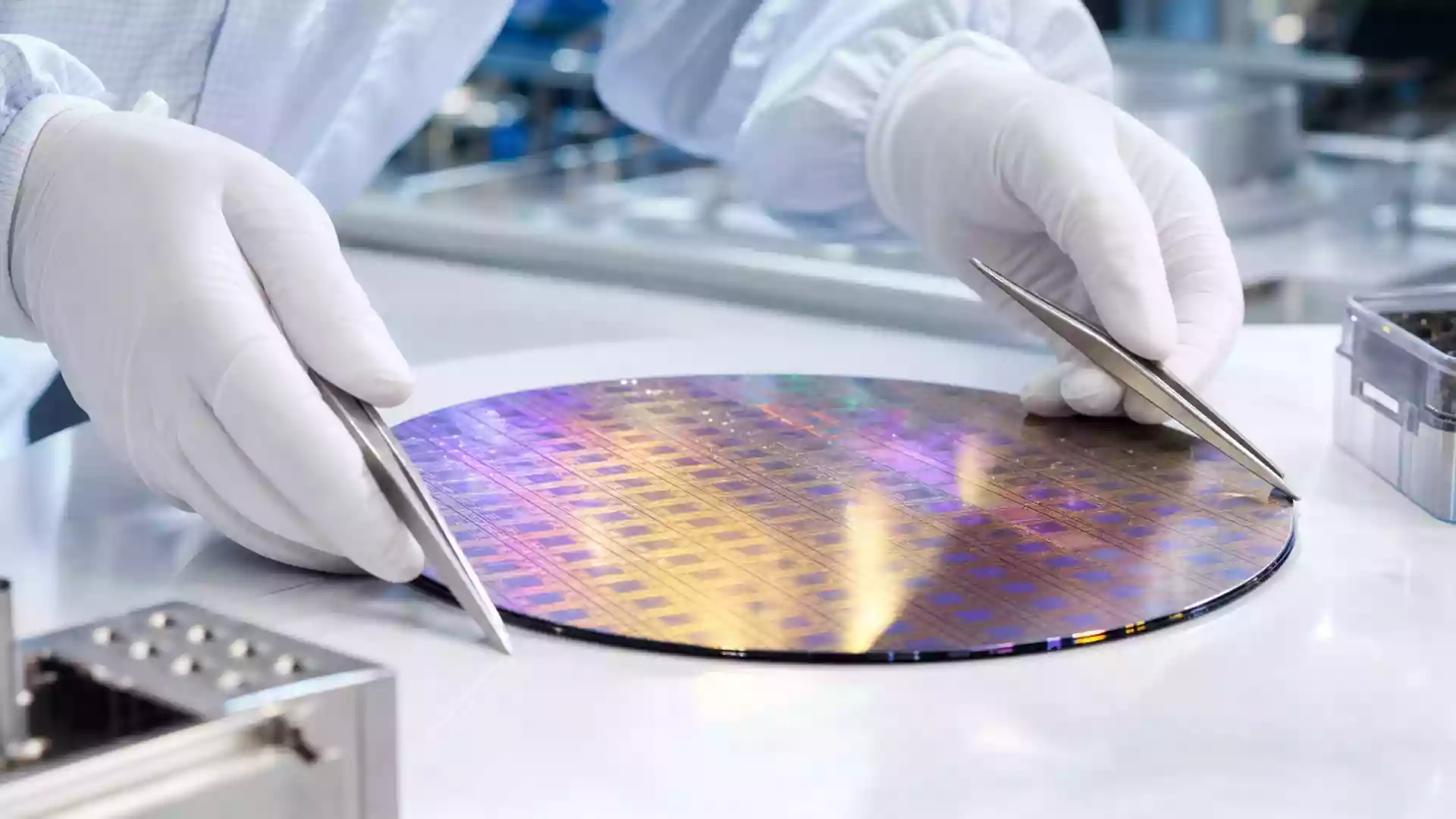
Technical progress offers a company-specific hook as well. On November 9, Infineon reported functional power devices on 300-millimeter silicon carbide wafers from Villach, which the company described as the world's first such demonstration under real production conditions. That can support the technological narrative, though it would need to translate into commercially convincing development to matter for valuation. Manufacturing progress is no substitute for scrutiny of revenue and margin expectations.
Infineon at a turning point? This analysis reveals what investors need to know now.
The next checkpoint
The favorable scenario hinges first on valuation pressure easing. If the debate over the AI cycle calms and Infineon confirms its expectations, attention could swing back toward the company's development — a possible path, not a guaranteed consequence of the recent markdowns. Should confidence in the operating trajectory tip instead, a key support for the thesis would fall away. The decisive observation is therefore not the next share-price move alone, but the relationship between business expectations and the valuation investors are willing to pay.
The next concrete communication event is Infineon's announced participation in the JP Morgan APAC Technology, Innovation & Growth Conference in Hong Kong on November 17 and 18. Investors can watch for comments on business development there; new guidance is not promised.
Ad
Infineon Stock: New Analysis - 16 November
Fresh Infineon information released. What's the impact for investors? Our latest independent report examines recent figures and market trends.