
Intel's 14A Roadmap Narrows the Gap With TSMC, But Foundry Economics Remain the Real Test
Published on 09/26/2026 at 14:11 | Editorial boerse-global.de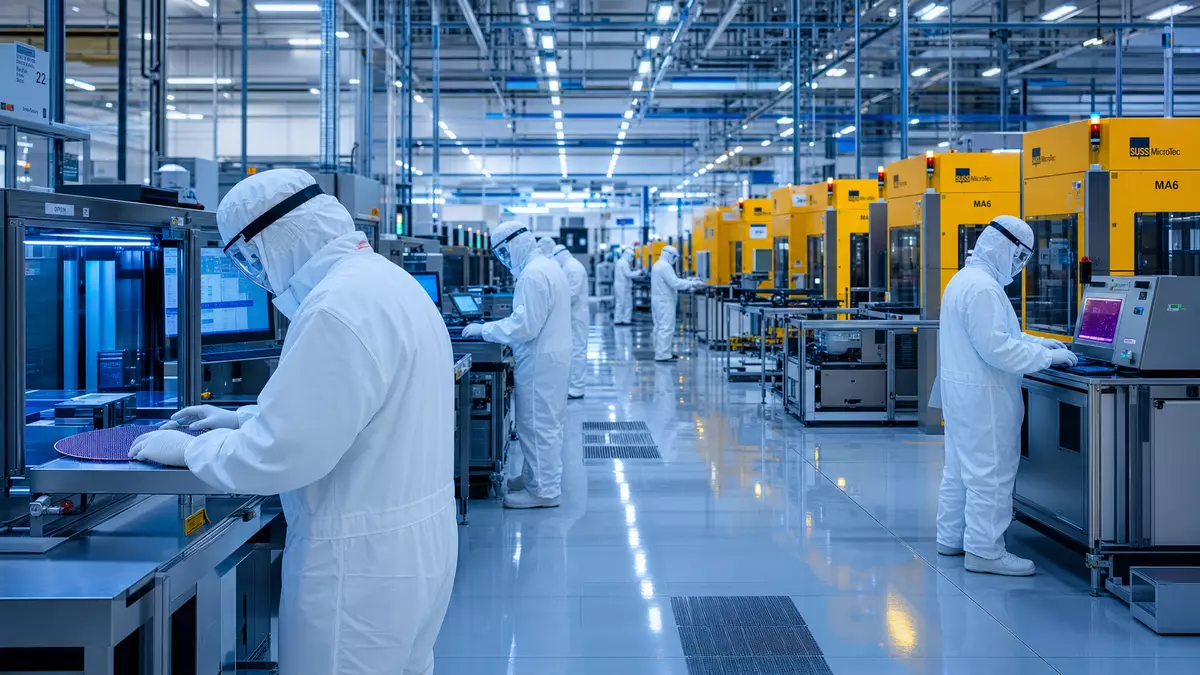
Intel closed Friday's session at EUR 107.90, down 3.6%, capping a week in which the broader semiconductor complex came under pressure. The PHLX Semiconductor Index had already shed roughly 2% on Wednesday as traders booked profits on earlier gains and adopted a wait-and-see stance ahead of the Trump-Xi meeting. No single company-specific catalyst explained the stock's Friday retreat.
The pullback does little to dim what has been an extraordinary run. Since the start of the year, Intel shares have climbed 244%.
A Foundry Roadmap With a Number Attached
At the heart of the bull case is the company's contract manufacturing push. Intel Foundry chief Naga Chandrasekaran has indicated that the upcoming node codenamed 14A should come within 5% of TSMC's competing A14 process on raw compute speed. Versus its predecessor, 14A promises as much as a 20% speed gain at equivalent power draw — or, alternatively, a reduction in power consumption of nearly one-third at matching clock speeds.
Delivering those figures requires High-NA EUV lithography equipment, with each system carrying a price tag of roughly $380 million. Intel is moving on this tooling earlier than TSMC, which does not plan to deploy the technology until late in the decade. The bet is that an equipment lead can translate into reclaimed ground in semiconductor manufacturing. Financing that buildout, however, consumes enormous capital and ratchets up the pressure on management to show results.
Should investors sell immediately? Or is it worth buying Intel?
The Customer Question Hangs Over Everything
Analysis firm Piper Sandler notes that corporate giants including Amazon and Microsoft are evaluating the new process technology, though no binding orders have materialized. In the analysts' view, Intel needs to land a major customer by early 2027 to underpin the launch targeted for 2028. Piper Sandler pegs the cost of a corresponding fab at around $10 billion.
CEO Lip-Bu Tan has already signaled that Intel could reconsider the development of future process steps absent large-scale orders. Outside chip designers are essential to the long-term profitability of these plants; without a broad customer base, the new facilities risk becoming a persistent drag on the balance sheet.
A Window Opening Through Rival Constraints
Help could arrive from an unexpected direction. Reuters reports that Apple has held preliminary discussions about manufacturing in the United States, as TSMC's leading-edge capacity may remain tight for several years. No concrete orders have been placed, and industry observers see any potential agreement as still a long way off.
Wall Street Sends Mixed Signals
Analyst sentiment reflects the ambiguity. On Thursday, TD Cowen reiterated a neutral "Hold" rating with a $115 price target. Days earlier, Tigress Financial had taken a more constructive view, lifting its Intel target from $118 to $145 on September 15 while keeping a buy recommendation, citing the chipmaker's operational positioning in a fast-moving market.
Intel at a turning point? This analysis reveals what investors need to know now.
Product Moves Beyond the Foundry Story
Away from the share-price swings, Intel has logged progress on several fronts. Google launched new Googlebook laptops on September 21 featuring Intel processors alongside Qualcomm components — a win that shores up the company's position in portable computing. Separately, media reports indicate Intel has revised plans for its Nova Lake-S desktop generation, dropping the originally planned 12 Xe3P graphics unit and deferring it to the subsequent Razor Lake-S lineup. On the software side, targeted optimizations — achieved without hardware changes — produced improved AI inference results in the MLPerf v6.1 industry benchmark, according to company statements.
For investors, the planned catch-up remains a balancing act between technological ambition and financial discipline. Intel is visibly closing the performance gap with its rivals. Until binding, large-scale orders from third-party customers are signed, though, the foundry unit's success carries meaningful risk.
Ad
Intel Stock: New Analysis - 26 September
Fresh Intel information released. What's the impact for investors? Our latest independent report examines recent figures and market trends.


