Nvidia's Next Scorecard: From Announcements to Availability
Published on 10/23/2026 at 14:11 | Editorial boerse-global.de
Nvidia investors are being handed a series of dates against which the company's AI promises can finally be measured. The most immediate is November, when Google Cloud plans general availability for its A5X instances built on Nvidia's Vera Rubin NVL72 platform — a joint announcement made on Wednesday that also flags an expansion of the offering into Europe. That calendar entry matters less as a product launch than as a test: can Nvidia convert a pipeline of announcements into capacity that customers can actually switch on?
The question carries extra weight after the stock posted a 4.2% decline in a single session, caught up in a worldwide selloff of AI shares. AP traced the retreat to renewed doubts about the scale of artificial-intelligence spending, compounded by worries over how data centers and AI chips will be financed. The pressure was therefore part of a sector-wide reassessment rather than a direct verdict on any single Nvidia headline.
Orders Are Not Revenue
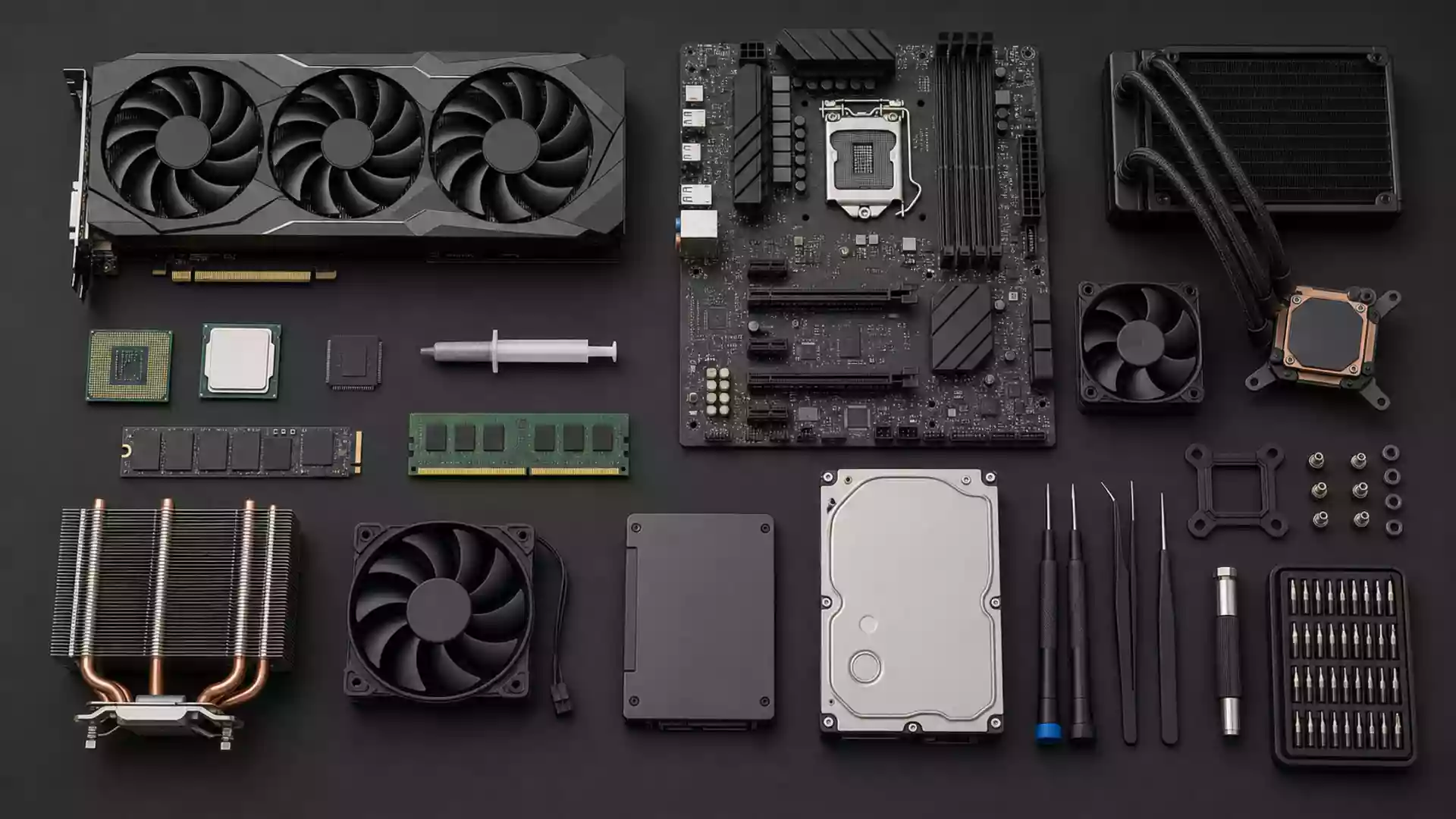
How wide the gap between demand and planned output can run was laid out in a Reuters report on Tuesday. ByteDance, Alibaba and Tencent together ordered more than 3 million Nvidia RTX PRO 5500 graphics cards, a combined list value above $35 billion. According to Reuters, Nvidia could not guarantee fulfillment because demand outstripped planned production.
That distinction is the one investors should hold onto. A list value is not booked revenue, and an order volume says nothing about when shipments might land. The report reinforces the picture of runaway demand while simultaneously flagging a concrete limit on how much of it can be turned into business.
Against that, Nvidia on Wednesday unveiled expansion plans with six supply-chain partners spanning substrates, advanced packaging, testing and optical components. The plans touch several stages of production at once. As announcements, though, they do not yet prove that capacity has been added — and they do not by themselves resolve the delivery uncertainty Reuters described.
Should investors sell immediately? Or is it worth buying Nvidia?
A Broader Base, Measured in Milestones
The bull case rests on Nvidia bringing announced offerings to market on schedule while serving additional demand. A timely Google Cloud rollout would be one tangible marker, showing that a collaboration has become a live product. It would not, however, demonstrate delivery capability for the separately ordered graphics cards.
Other engagements point to a widening set of use cases. Reuters reported Monday that Nvidia won an order for central processing units from AI cloud startup Modal, which intends to run AI agents on Nvidia's Vera CPU — a different product category from the graphics-card orders. In mobility, Nvidia said Volvo Cars will adopt its Hyperion platform and Alpamayo Stack for automated driving, while Bolt has selected Alpamayo Stack for its European robotaxi program. Neither announcement allows a financial contribution to be quantified.
Telecom is further along. Nvidia disclosed projects and trials with Nokia and several carriers — T-Mobile, Deutsche Telekom, Elisa and BT — and said T-Mobile completed the world's first AI-RAN call on a live network. That is a genuine implementation step rather than a statement of intent, but a single successful call is a long way from a full-scale rollout. The same yardstick applies elsewhere: the number of partners signals interest, while what matters is how consistently those partners fold Nvidia technology into their own offerings.
Healthcare and life sciences round out the list, including an open protein-design model developed with the University of Washington's Institute for Protein Design and work with Siemens Healthineers on adaptive radiation therapy. A favorable scenario would see demand spread across networks, vehicles and medicine, giving investors multiple footholds for future spending. That remains a prospect, not a result.
The Checkbook Behind the Chip
The bear case does not begin with customers losing interest in Nvidia products. A persistent mismatch between orders and deliverable supply could slow the conversion of expected business on its own — which is why reading blockbuster order figures without their production caveats falls short. Extra capacity only helps once it becomes usable.
Customer financing adds a second constraint. Reuters reported Tuesday that chief executive Jensen Huang defended demand from specialized AI cloud providers, responding to investor anxiety over debt-funded data-center build-outs. Huang's pushback challenges the doubt without eliminating the risk.
Nvidia at a turning point? This analysis reveals what investors need to know now.
Two conditions therefore have to hold at once: Nvidia must be able to ship, and its customers must be able to fund and execute their expansions. If either comes under strain, headline demand figures lose some of their persuasive power — particularly if delivery snags and more cautious capital spending arrive together. The scenarios diverge less over appetite for AI than over how much of it reaches the real economy.
What November Will and Won't Settle
Project timelines vary, and that calls for a sober read. Bolt's data collection in Madrid is scheduled for 2027 and remains subject to regulatory approval — a single step inside the robotaxi program, not proof of full operation. Selection of a technology, piloting and broad deployment are distinct stages, and Nvidia reported both live deployments and trials among its telecom partners.
Should partners keep advancing and tests graduate into wider use, a constructive reading stays justified. If investment appetite or customer financing falters, the market will likely grade announcements more strictly against delivery. In the unfavorable version, the list of partnerships grows faster than their practical rollout, and fresh announcements carry less conviction while funding worries persist. Wednesday's slide showed that upbeat company news cannot by itself offset a shift in sector mood.
The near-term anchor is November's planned general availability of Google Cloud's A5X instances, a bounded step investors can assess. An on-time launch would be a positive operational signal; it would not settle the outstanding questions on supply or financing. For Nvidia, what increasingly counts is which announcements actually turn into offerings customers can use.
Ad
Nvidia Stock: New Analysis - 23 October
Fresh Nvidia information released. What's the impact for investors? Our latest independent report examines recent figures and market trends.