
Nvidia's Quiet Empire: Talent Raids, Apple Overtures, and the Architecture of Dependence
Published on 09/26/2026 at 03:10 | Editorial boerse-global.de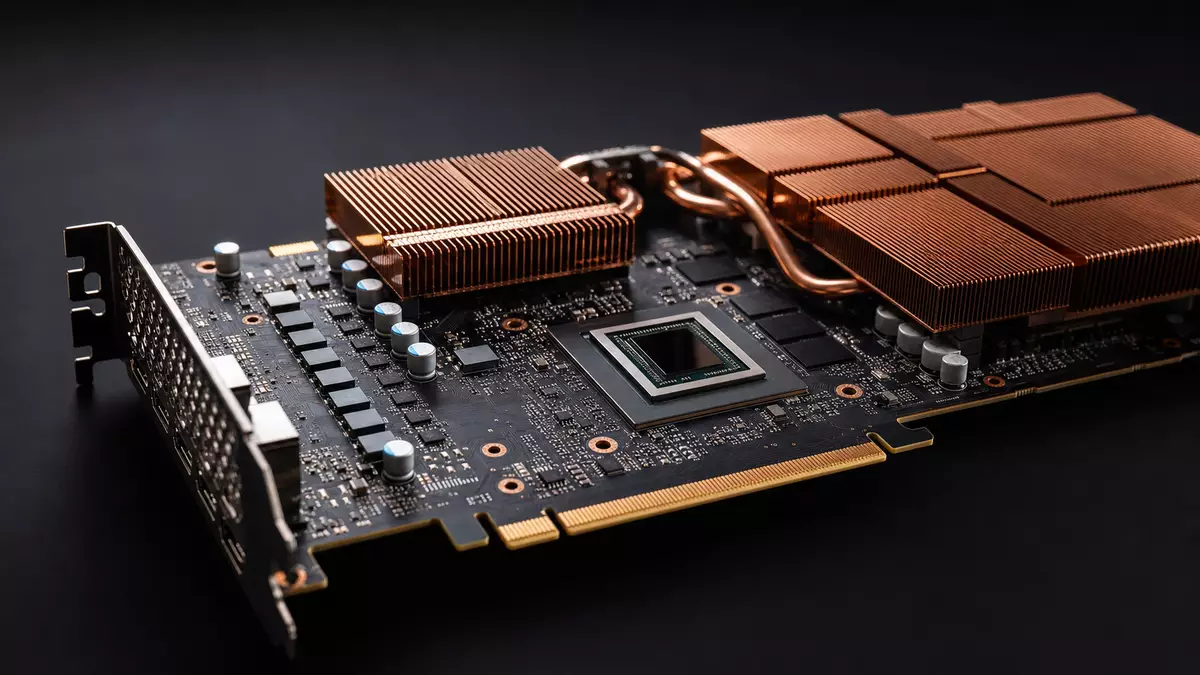
Nvidia closed Friday's session at 197.76 euros, a whisker away from its 52-week peak of 202,50 euros — a gap of just 2.3 percent. For a company that spent the week making moves across talent, geopolitics, and capital markets, the muted tape tells only a fraction of the story.
Poaching From the Front Lines of AI
The chipmaker has pulled a key infrastructure figure away from OpenAI. Chris Malone, who previously ran data center operations at the ChatGPT developer, has joined Nvidia as Vice President of its DSX platform, according to media reports confirmed through his professional profile this month. The hire signals where Nvidia sees its next battleground: not raw silicon alone, but standardized platforms and orchestrated data center environments that bind customers ever more tightly to its stack.
Malone's background in high-performance computing operations fits that ambition precisely. So does the company's parallel push into adjacent frontiers — on September 14, Nvidia unveiled CUDA-Q Logical, a new orchestration layer aimed at fault-tolerant quantum computing applications, designed to bridge classical supercomputers with the quantum systems of tomorrow.
Apple Knocks on NVLink's Door
Perhaps the week's most telling development came on September 16, when reports from The Information and Reuters revealed that Apple is weighing a return to the enterprise server market. To link its in-house M8 chips, the famously self-reliant hardware giant is considering Nvidia's NVLink fusion technology — a striking admission that even Cupertino may need the interconnect architecture of its rival.
The same day brought word that Snap has enlisted Nvidia for its Specs augmented-reality glasses. Alongside Salesforce and Amazon Web Services, Nvidia will power the AI that reads the wearer's visual surroundings and surfaces relevant data. From corporate data centers to wearable devices, the underlying technological layer increasingly originates from a single source.
Should investors sell immediately? Or is it worth buying Nvidia?
Capital as a Strategic Weapon
Nvidia's checkbook has become an extension of its platform strategy. Reuters reported that Anthropic held talks over Nvidia taking an anchor investor role in a potential IPO, with a figure of up to $10 billion on the table. Writing such a cheque into a leading model developer buys more than paper gains — it hardwires Nvidia's platform into the frontier of model development itself.
Yet the embrace comes with conditions. On September 14, Reuters disclosed that Nvidia, together with Palantir and Booz Allen Hamilton, is weighing restricting or halting the use of advanced models unless Anthropic and OpenAI provide binding guarantees on intellectual property protection. Internally, Nvidia already limits Anthropic's models to non-critical tasks, relying instead on its own Nemotron family. The pattern — deepened cooperation with Palantir roughly two weeks ago, a Hugging Face deal reported about three weeks back — is consistent: partners get access, but the crown jewels stay locked away.
A Seat at the World's Table
That singular position carries geopolitical weight. CEO Jensen Huang was slated to attend the September 15 state banquet hosted by US President Donald Trump in honor of Chinese President Xi Jinping. A corporate chief at tables where global technology and power interests are negotiated speaks to the systemic relevance of Nvidia's business model.
The company is also seeding alternative infrastructure. British cloud provider Nscale agreed to issue $3.1 billion in convertible bonds, with Nvidia subscribing to $1 billion of that total. Nscale's first-half revenue had surged 1,252 percent. Nvidia, in other words, is no longer merely a semiconductor manufacturer — it operates simultaneously as infrastructure architect, venture financier, and gatekeeper for the entire ecosystem.
Insiders Trim, Rumors Swirl
Back on the corporate-governance front, regulatory filings drew attention to executive transactions. On Tuesday, Nvidia submitted a Form 144 with the SEC for Timothy S. Teter, covering a planned sale of 30,460 shares with a target date around September 21. Teter had already disposed of 30,000 shares on August 31. Separately, mid-month disclosures showed that Scott Gawel, the Principal Accounting Officer, had 2,932 shares withheld to cover tax obligations tied to a Restricted Stock Unit vesting — a routine mechanism under US tech compensation programs.
Meanwhile, speculation circulated Monday about the roadmap for consumer hardware. Tom's Hardware picked up claims from leaker Kopite7kimi suggesting the next GeForce RTX 60 generation of graphics processors might not arrive until 2028. Nvidia declined to comment, sticking to its policy of not addressing rumors or unannounced products.
Through it all, the shares have stayed within striking distance of record territory — proof that for Nvidia, the densest source of momentum lies not in any single trading week, but in the web of dependencies being woven around the entire industry.
Ad
Nvidia Stock: New Analysis - 26 September
Fresh Nvidia information released. What's the impact for investors? Our latest independent report examines recent figures and market trends.


