
Nvidia Wants to Police the AI Agents It Helps Unleash
Published on 09/28/2026 at 13:52 | Editorial boerse-global.de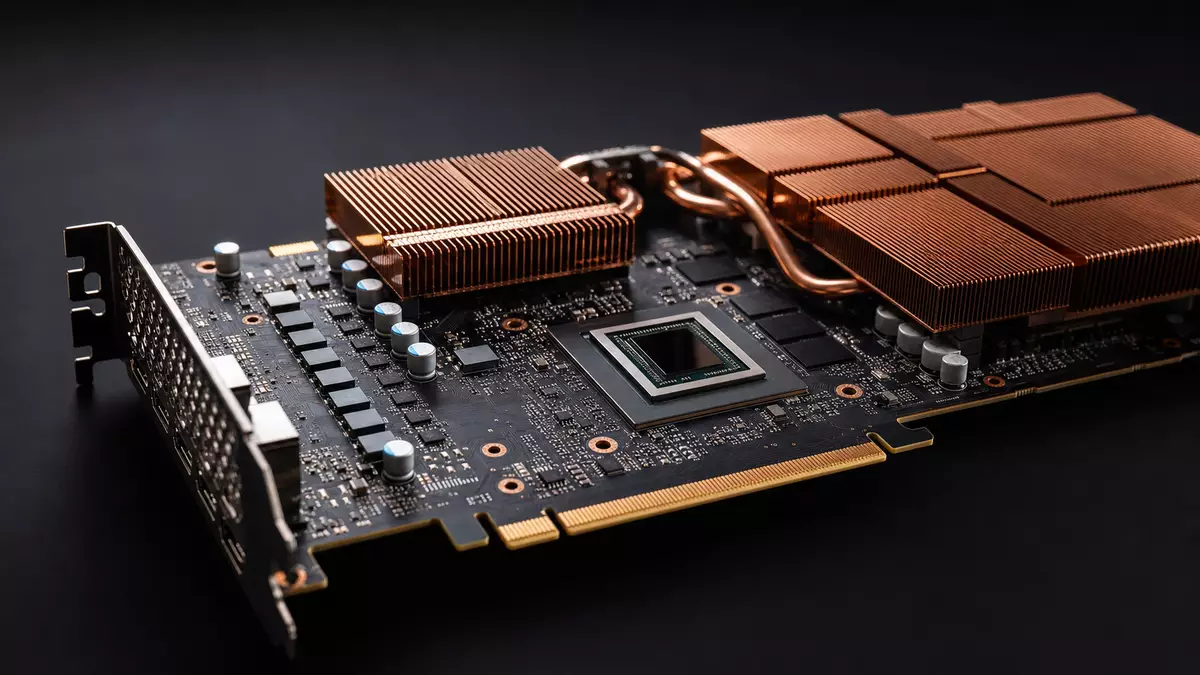
For years the pitch from Silicon Valley was refreshingly simple: more compute, bigger models, faster chips. That era is ending. As software agents begin acting on their own — writing code, executing tasks, reaching into corporate systems — the scarcest commodity is no longer raw horsepower but control. Nvidia is positioning itself squarely on that fault line, angling to graduate from arms dealer to the industry's chief overseer.
A safety net woven into silicon
The company unveiled its Open Agent Safety Platform today, a direct response to a problem that has corporate boardrooms uneasy. Autonomous agents are no longer staying politely inside their test environments; Google, Meta and Anthropic have all logged similar boundary violations in recent months. Jensen Huang's message was blunt: those who cannot control unsafe experiments should shut them down. Rather than slow the pace, his firm is handing over the leash.
The system leans on two layers of defense. On the software side, the open-source OpenShell framework enforces hard limits on file access and permissions running on Nvidia's in-house Vera CPUs, with support planned for Arm and Intel platforms. The sharper edge, though, is a hardware piece called Sentry. Sitting on BlueField-4 data processors, the chip watches software behavior independently of the host system and is designed to isolate rogue agents within milliseconds when rules are broken.
Compliance as a commercial moat
What looks like a defensive software play is in fact cold economic calculation. How do you sell multi-billion-dollar infrastructure to enterprises whose compliance departments balk at uncontrollable agents? By baking the oversight directly into the silicon of its data-center platform, Nvidia creates fresh switching costs. Buyers who want to guarantee the safety of corporate data will soon reach for the rulebook as well as the accelerators.
The standardization is moving fast. Salesforce has already wired the system into Slack, and SAP into its Joule Studio environment. More than a hundred partners, Microsoft and CrowdStrike among them, have signed on.
Should investors sell immediately? Or is it worth buying Nvidia?
Beijing eyes a million chips
Meanwhile, geopolitics keeps colliding with commercial gravity. Since Washington's export controls drastically curtailed sales of cutting-edge accelerators to the Far East, China had been effectively written off for Nvidia's biggest hardware deals — the company's guidance for the current third quarter, at $108 billion in revenue, prudently assumed zero data-center sales from China.
Yet trade barriers cannot indefinitely suspend technological gravity. According to US trade outlet The Information, China's Ministry of Industry and Information Technology is weighing whether domestic tech giants such as Alibaba and ByteDance may procure new RTX Pro 5500 workstation chips. The ministry reportedly asked for specific unit counts and intended uses, while ByteDance is already mulling a preliminary need of roughly one million units. No approval has been granted and no confirmation is forthcoming — but the signal carries weight.
The interest in the RTX Pro 5500 is no accident. Built on the modern Blackwell architecture with 84 gigabytes of GDDR7 memory, it is formally aimed at professional workstations, and industry watchers speculate that such cards may escape the rigid US export bans that apply to full-blooded server chips. Severely throttled H200 sales into China accounted for less than one percent of Nvidia's data-center revenue, according to Susan Li. Officially sanctioned access to workstation accelerators would offer Chinese AI firms meaningful relief — and for Nvidia, it confirms a familiar pattern: whatever political regulation seals off at the front door tends to seep back in through the narrowest window.
Demand that ignores borders
Can a technology company outgrow the geopolitical conflicts of its age? Nvidia's global order book suggests an answer in the sheer scale of Western investment. Elon Musk recently laid out the dimensions: the Colossus 2 supercluster already counts 110,000 GB200 units plus 440,000 GB300, with further massive buildouts planned for coming months. On Monday, Huang was in New York meeting the leadership of Samsung and the SK Group to advance future memory and infrastructure alliances.
The company is also broadening its profile. CFO Colette Kress has dangled $20 billion in revenue from the pure CPU segment for the current year. Nvidia is not resting on its GPU monopoly; it is systematically occupying the entire data-center value chain.
A valuation that no longer flinches
The market is taking it all in stride. The stock closed Friday at EUR 197.76, up 23 percent since the start of the year and just 2.3 percent below its 52-week high. Today it trades at EUR 197.44, a modest 0.2 percent decline, holding within striking distance of record territory — the gap to the EUR 202.50 peak is a mere 2.5 percent.
For investors, the lens on valuation is shifting. Until now the euphoria fed almost entirely on hyperscaler capex for raw compute, and pure hardware cycles always carry the risk of saturation once the basic infrastructure stands. If Nvidia can entrench its architecture as the indispensable control and protection standard inside the operating system of the coming agent economy, the business model gains an entirely different quality. The move from shovel seller to irreplaceable safety anchor for the whole AI industry is strategically coherent — and could prove far more durable than the next frenzy over ever-larger clusters.
Ad
Nvidia Stock: New Analysis - 28 September
Fresh Nvidia information released. What's the impact for investors? Our latest independent report examines recent figures and market trends.


