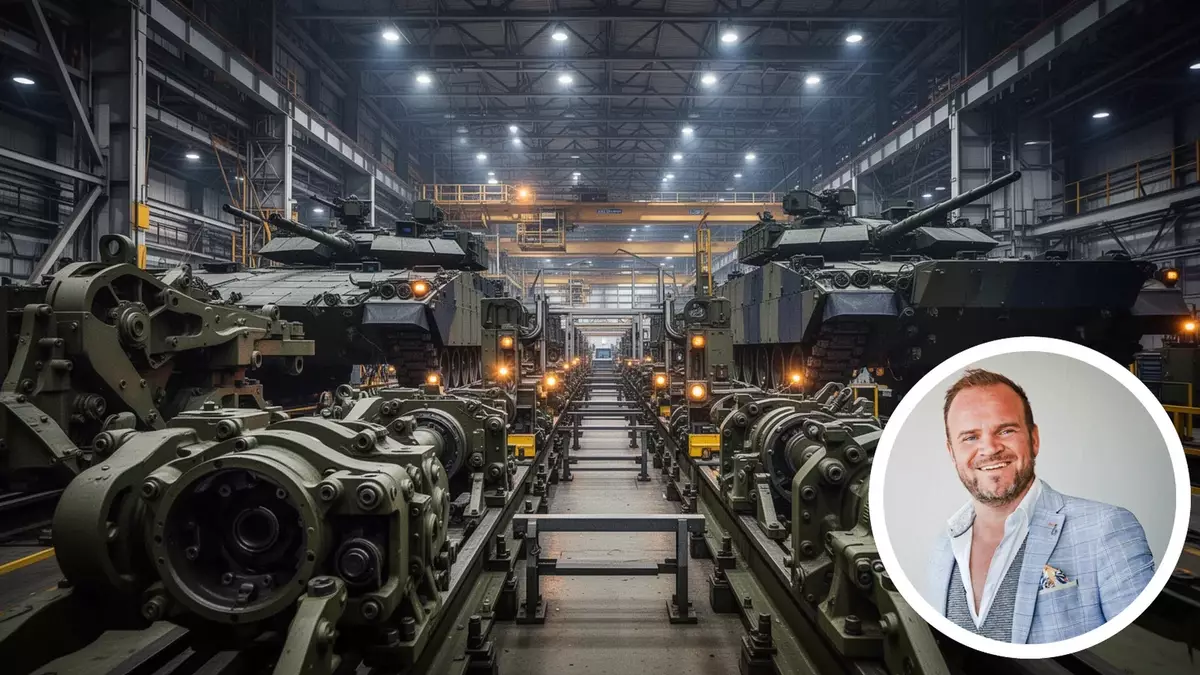
Rheinmetall’s €1.5 Billion Bet on the Navy: Can It Offset a €1.4 Billion Budget Squeeze?
Published on 07/30/2026 at 18:52 | Redaktion boerse-global.de
The German defence giant is navigating a paradox. Its order book has never been fatter, yet its share price sits nearly 44 percent below the all-time high of €2,007. The tension between record operational momentum and mounting political headwinds has turned Rheinmetall into one of Europe’s most volatile large-cap stocks, with 30-day annualised volatility hovering close to 70 percent.
On Thursday, the stock slipped 2.24 percent to €1,127.20, a move that masked a significant strategic validation. Rheinmetall won a contract to modernise the frigate “Bayern” of the F123 class, a deal valued in the mid-triple-digit millions of euros. The award is the first tangible proof that the company’s €1.5 billion acquisition of Lürssen’s NVL naval yard subsidiary, completed in April 2026, is bearing fruit. That takeover looked exposed in June when the defence ministry scrapped the larger F126 warship project, sending the stock down 19 percent in a single session. The Bayern contract, running through 2029 and extending the frigate’s service life to 2035, signals that Rheinmetall is gaining traction in Wilhelmshaven faster than sceptics anticipated.
The naval pivot is part of a broader diversification away from the company’s traditional heavy armour and artillery core. And that shift is happening just as the German government’s 2027 budget draft threatens to squeeze the very products that built Rheinmetall’s reputation. Berlin plans to cut ammunition spending from €11 billion this year to €9.6 billion in 2027, while the overall defence budget rises modestly to €109.7 billion — roughly €1.5 billion more than the current year. The headline increase masks a reallocation that Bloomberg has flagged: procurement priorities are tilting from tanks, artillery and shells toward drone technology, an area where Rheinmetall has yet to establish the same dominance.
Should investors sell immediately? Or is it worth buying Rheinmetall?
The company’s second-quarter numbers, however, show no sign of operational weakness. Preliminary results revealed a 69 percent revenue surge to €3.289 billion, while operating profit of €562 million comfortably beat market expectations. The order backlog now exceeds €80 billion, providing multi-year visibility. Yet beneath those headline figures lies a cash flow strain that investors are watching closely. Rheinmetall expects a negative operating free cash flow for the first half, as heavy capital expenditure consumes cash before customer payments arrive. The expansion of the powder plant in Aschau am Inn alone is costing up to €500 million, with annual capacity set to more than double from roughly 1,700 tonnes to around 4,200 tonnes.
Technically, the stock is attempting to stabilise. At €1,139.60, it trades 2.7 percent above its 50-day moving average of €1,109.24, and has recovered 12.5 percent from its 52-week low of €902.50 over the past 30 days. The relative strength index sits at 61.6, neutral to mildly bullish and far from overbought territory. But the longer-term picture remains fragile: the share price still languishes 22.88 percent below its 200-day moving average, and the year-to-date decline stands at 26.6 percent.
Two catalysts will determine whether the recovery has legs. The first is the parliamentary budget process for 2027, where the current draft numbers remain provisional and subject to revision. The second is the full second-quarter report, which the company is expected to use to assess how much the shifting budget priorities will weigh on its full-year guidance. For now, the Bayern contract offers a narrative counterweight: Rheinmetall is no longer just a tank maker betting on munitions, but a diversified defence platform whose naval ambitions are beginning to match its rhetoric. Whether that is enough to offset a €1.4 billion hole in its core ammunition market is the question the market is still pricing in.
Ad
Rheinmetall Stock: New Analysis - 30 July
Fresh Rheinmetall information released. What's the impact for investors? Our latest independent report examines recent figures and market trends.
Disclaimer regarding our articles: No investment advice, no buy or sell recommendation. Information on prices, companies, and markets is provided without guarantee; changes are possible at any time. Stock market transactions can lead to substantial losses. Our articles are created and reviewed in whole or in part automatically with the support of AI.