
Siemens Energy Wins C$1.3 Billion Pickering Deal as Wind Sector Strains Test the Turnaround
Published on 09/25/2026 at 19:51 | Editorial boerse-global.de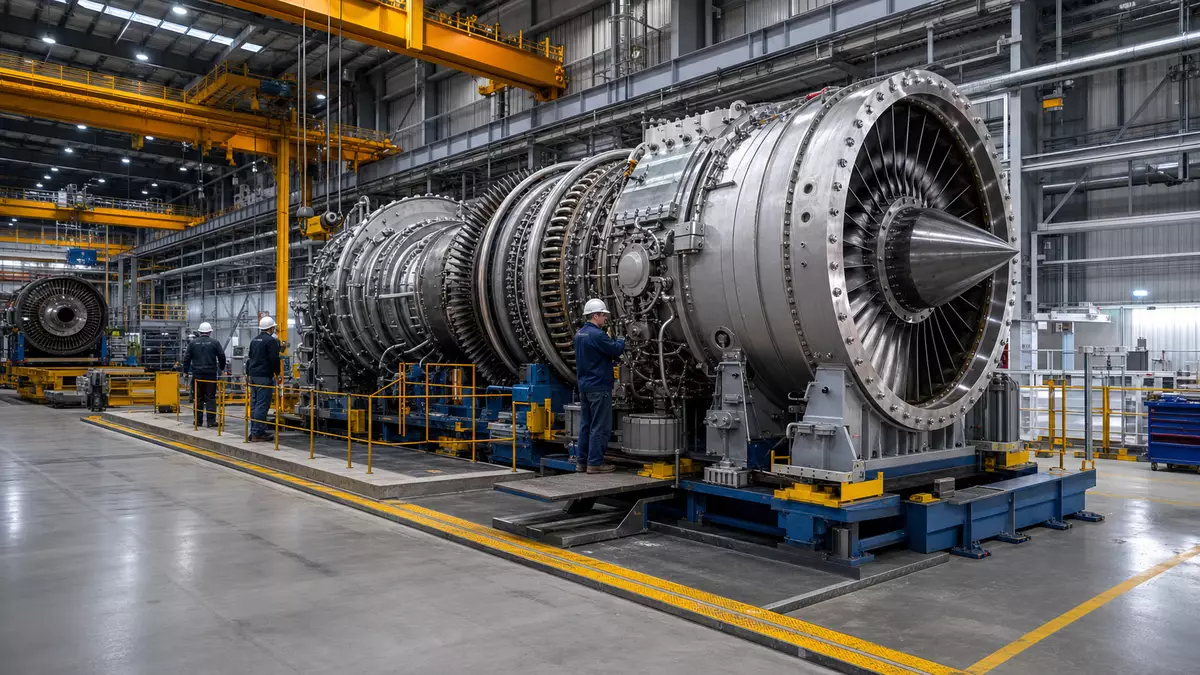
A consortium pairing Aecon with Siemens Energy Canada has landed a major North American contract: the replacement of turbine generators at Ontario's Pickering nuclear station. Announced Monday, the project carries a total volume of C$1.3 billion and reinforces the persistently strong demand the energy technology group is seeing for power infrastructure work.
The stock changed hands at EUR 143.56, putting it up 19 percent since the start of the year.
A solid operating base beneath the headline win
The Canadian award slots neatly into a robust fiscal year. Revenue climbed to EUR 11.45 billion in the third quarter of 2026, a gain of 17.47 percent versus the prior-year period, while earnings per share improved from EUR 0.71 to EUR 1.28 over the same stretch.
That momentum prompted management to lift its full-year 2026 guidance. The company is now targeting comparable revenue growth of 14 to 16 percent and an adjusted earnings margin of 10 to 12 percent. More detail on the financial picture arrives on November 11, 2026, when fourth-quarter results are due.
Renewables are advancing alongside conventional plant components. Siemens Energy secured an order for high-voltage equipment tied to the offshore converter stations of 50Hertz's North Sea Connector 2 project, a program with a total volume of roughly EUR 2.5 billion.
Should investors sell immediately? Or is it worth buying Siemens Energy?
Restructuring and savings take shape
While operations expand, management is redrawing the group's structure. About a month ago, the supervisory board approved the spin-off of the "Transformation of Industry" division, which houses the steam turbine and hydrogen business and accounts for some 17,000 employees and roughly EUR 5.7 billion in revenue.
The company is also steadily loosening old ties to its former parent. A planned rebrand to "Omterra" from the end of 2026 is expected to save around EUR 300 million a year in licensing fees.
Personnel changes are coming too. Matthias Rebellius leaves the supervisory board on September 30, 2026. Former Nokia chief Pekka Lundmark has been appointed as his successor effective October 1, with formal election slated for the annual general meeting on February 25, 2027.
The wind business remains the wild card
For all the order flow, the wind turbine unit Siemens Gamesa is still working its way toward breakeven after years of deep operational crises — and the latest warnings from CEO Christian Bruch make clear the sector remains a minefield of political and regulatory uncertainty. Anyone who assumed the operational clean-up had neutralized the biggest risks needs to think again.
German offshore wind sits at the center of the problem. According to the German Offshore Wind Energy Association (BWO), projects worth a combined EUR 50 billion are currently hanging in the balance, weighed down by higher construction costs, expensive financing and eroded economics. Operators such as TotalEnergies want to hand back licenses, while BP is reviewing its next move. Berlin's WindSeeG amendment, passed in early September, has so far failed to produce a workable framework for license returns, and the Federal Network Agency may not be able to revoke awards before autumn 2027.
Bruch's call to get stalled projects moving again is well founded. Factories are waiting on firm orders, and suppliers are shelving urgently needed investment decisions. Turbines feeding 10.8 gigawatts of capacity currently supply power off the German coast, yet the ambitious build-out targets risk running aground where market and regulation meet. For Siemens Energy, the stakes are considerable: multi-billion-euro turbine and service contracts are the lifeline for the planned consolidation of Siemens Gamesa, and if operators keep delaying final investment decisions, the turnaround stalls in the queue.
Siemens Energy at a turning point? This analysis reveals what investors need to know now.
Long-term service deals underpin the story
Away from Berlin's legislative wrangling, Siemens Gamesa is showing growing stability in day-to-day business. A recent agreement with Fred. Olsen Windcarrier is a case in point: the firm ten-year contract for offshore maintenance services, set to begin in the first quarter of 2028, secures the deployment of modern installation vessels for turbines up to 15 megawatts. Such long-dated contracts underscore that service and maintenance form the dependable earnings base the company badly needs.
The group is also gaining independence on the governance front. With the departure of the last representative of former parent Siemens from the supervisory board and the arrival of Pekka Lundmark, the oversight body picks up valuable industrial and technology policy expertise — sharpening the profile of a standalone energy technology heavyweight.
What it means for investors
The market is reflecting this mix with a cautious but constructive stance. The shares trade at EUR 146.50, a daily gain of 2.1 percent, though the stock remains 25 percent below its 52-week high of EUR 195.38. The longer-term uptrend, however, is intact.
On balance, the opportunities outweigh the political risks. The drawn-out WindSeeG saga and hesitant North Sea developers are a genuine drag that could stretch out Siemens Gamesa's margin path over time. Yet the operating substance — backed by long-term maintenance contracts and an approaching breakeven in wind — stands on far firmer footing than in earlier crisis cycles. Bruch's wake-up call to policymakers will need a hearing if Germany is not to squander its energy goals entirely. For investors, the stock remains a compelling bet on global energy infrastructure — one that still demands strong nerves in the face of political noise.
Ad
Siemens Energy Stock: New Analysis - 25 September
Fresh Siemens Energy information released. What's the impact for investors? Our latest independent report examines recent figures and market trends.


