
Silver's August Puzzle: A Market Defying Its Own Fundamentals
Published on 09/02/2026 at 18:06 | Editorial boerse-global.de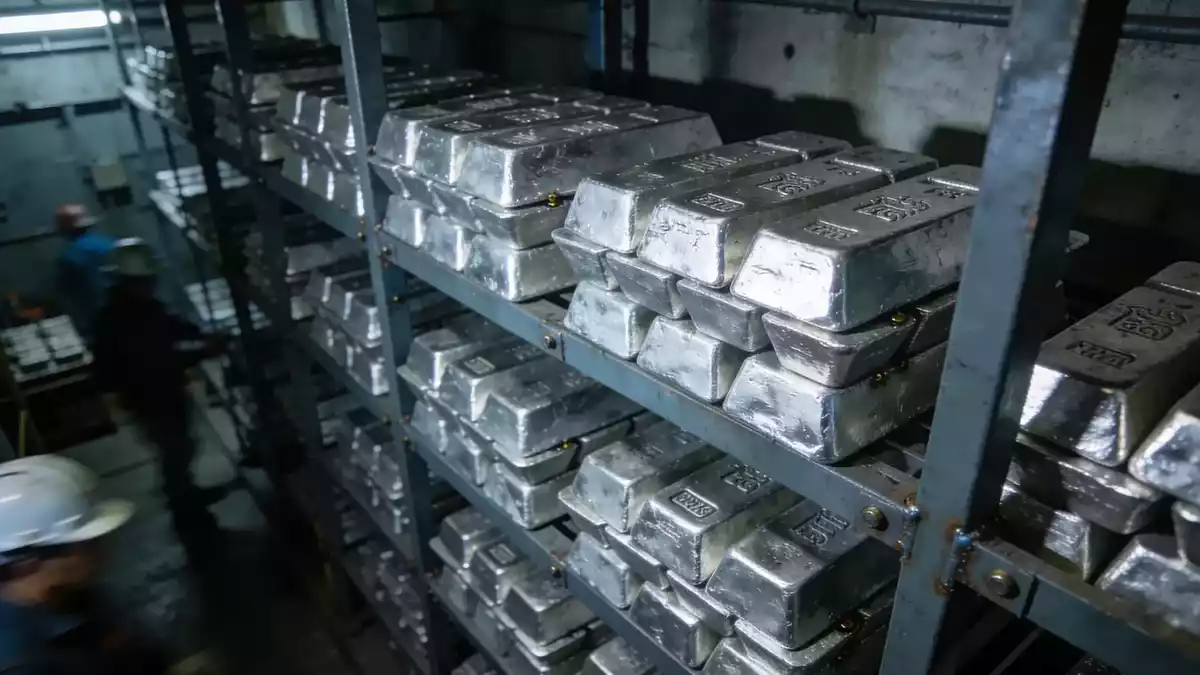
The white metal is currently trading at roughly $64 per troy ounce, a level that captures the tension rippling through global markets this week. Wednesday's session opened with silver hovering near that mark, down from Tuesday's close of $64.66 — a modest decline that belies the extraordinary forces pulling at the metal from opposite directions.
On one side sits a Federal Reserve signaling it may raise interest rates again next month. On the other, a physical market so tight that China has restricted exports and global supply has fallen short of demand for five consecutive years.
A Labor Market That Says One Thing, A Fed That Says Another
The latest catalyst arrived Wednesday morning with the ADP private payrolls report. August added just 38,000 jobs — well below the 48,000 economists had penciled in, and the weakest monthly gain since January. July's figure was revised upward to 46,000, offering modest consolation. Manufacturing and professional services shed workers, while education, healthcare, and construction continued hiring.
Weak jobs data typically fuels expectations for rate cuts, which would support non-yielding assets like silver. But this time, the narrative has inverted. Fed Chair Kevin Warsh signaled at his Jackson Hole address last Monday that a September hike remains on the table, and Governor Michael Barr has cautioned that further tightening could be necessary if inflation stays sticky. Futures markets now assign a 67 percent probability to a September increase, according to CME FedWatch.
The result has been an unusual market reaction: the 10-year Treasury yield has climbed to 4.81 percent, its highest level since November 2023. Higher bond yields raise the opportunity cost of holding silver, which pays no interest — a headwind that has overwhelmed what would normally be supportive economic data. Silver has shed 3.8 percent since Warsh's speech.
Should investors sell immediately? Or is it worth buying Silber Preis?
Geopolitics Adds Fuel to the Fire
Complicating the picture further, military tensions between the United States and Iran — including reported strikes near the Strait of Hormuz — have pushed oil prices higher, feeding into bond yields and stoking risk aversion across financial markets. Even silver's traditional safe-haven appeal hasn't shielded it from the broader sell-off.
The weekly loss stands at 5.0 percent, though the metal remains up 11 percent on a monthly basis. Its 30-day annualized volatility sits at 37 percent — elevated, but not unusual for silver during periods of conflicting macroeconomic signals.
The Structural Story Beneath the Surface
Strip away the daily noise, however, and a more consequential narrative emerges. The World Silver Survey 2026, compiled by Metals Focus and released by the Silver Institute in April, pegged the global supply deficit for 2025 at 40.3 million ounces. Analysts project the gap will widen to 46.3 million ounces this year, extending the streak of annual shortfalls to six.
What makes the deficit particularly striking is that it persists despite softening demand. Industrial consumption fell 3 percent in 2025 to 657.4 million ounces, while jewelry fabrication dropped 8 percent worldwide — and a sharp 20 percent in India. The shortfall, in other words, is increasingly a supply-side phenomenon, driven by constrained mine output and limited recycling volumes rather than insatiable demand.
China's export restrictions on silver, in effect since January, have further tightened the international flow of the metal.
The Investment Picture Tells a Different Story
Physical tightness hasn't translated into speculative enthusiasm. The iShares Silver Trust, the largest silver-backed ETF, has seen its holdings shrink by roughly 1,408 tonnes — or 8.56 percent — since the start of the year, with net outflows of $324 million in the first half. That counters the notion that investor speculation alone is propping up prices.
The metal's price action over the past year illustrates just how volatile the landscape has been. Silver reached an all-time high of $121.78 in January, but currently sits 45 percent below that peak. It remains 66 percent above its 52-week low of $40.55, set in early September of last year.
Silber Preis at a turning point? This analysis reveals what investors need to know now.
J.P. Morgan Global Research trimmed its average price forecast for the year on August 26, cutting it from $84 to $70 per ounce — a notable cooling from the more bullish projections floated in the spring.
What Comes Next
Thursday's weekly jobless claims and Friday's official nonfarm payrolls report — for which economists expect around 58,000 new positions — will likely determine whether the Fed follows through on its hawkish signals. A strong reading could cement expectations for a September hike, while a weak one might give the central bank pause.
The Treasury Department's announcement that it will double its buybacks of long-dated bonds in the coming months adds another layer of complexity, potentially reshaping liquidity conditions in ways that could influence silver's appeal as a hedge.
For now, silver finds itself caught between a macro environment that's working against it and a physical market that's never been tighter — a contradiction that has produced one of the more confusing trading environments in recent memory.
Ad
Silber Preis Stock: New Analysis - 2 September
Fresh Silber Preis information released. What's the impact for investors? Our latest independent report examines recent figures and market trends.


