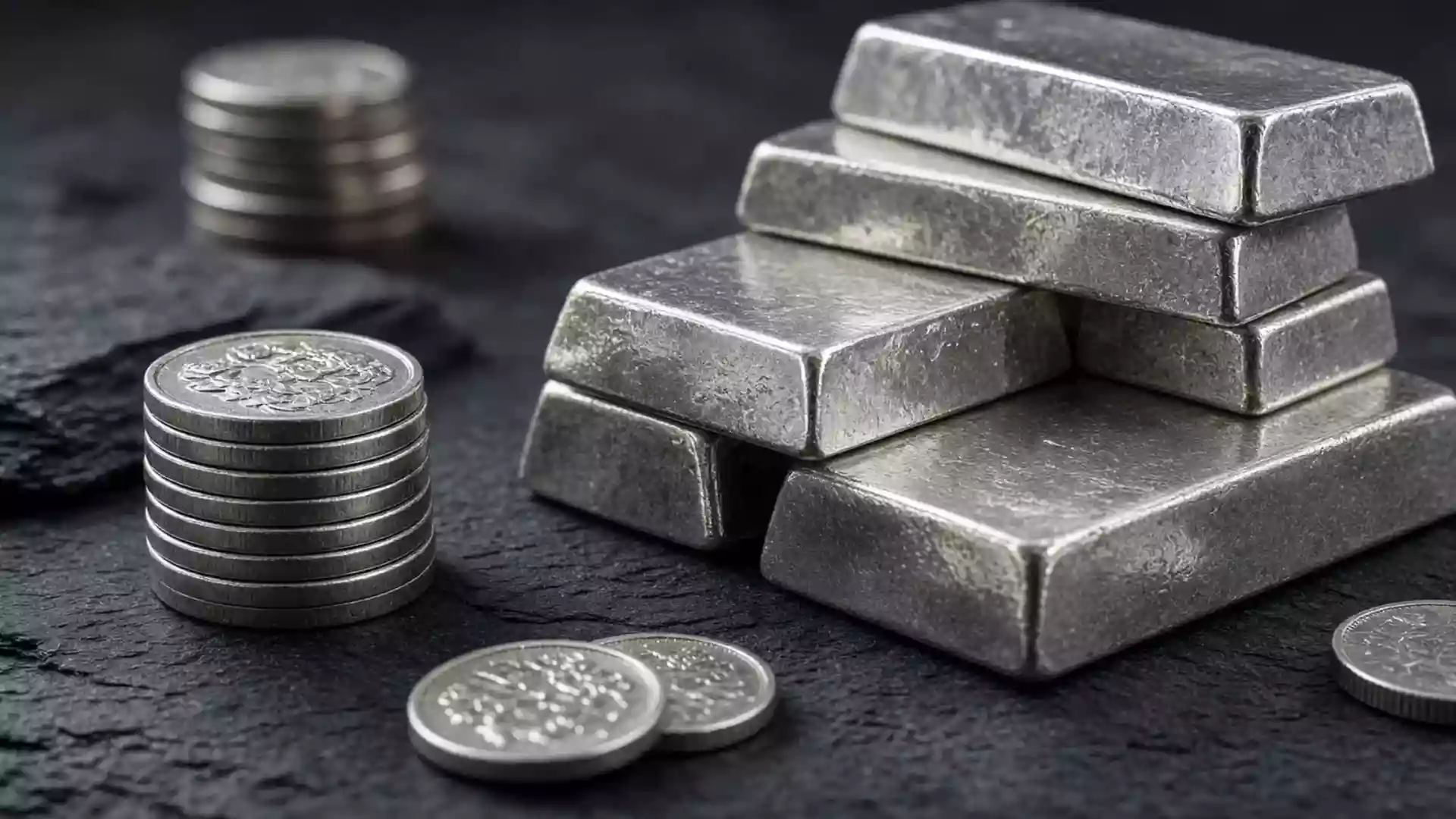
Silver's Industrial Achilles' Heel Exposed as Prices Sit 53% Below January Peak
Published on 10/19/2026 at 06:52 | Editorial boerse-global.de
Silver finished a bruising week near the $57 mark, with a late-session bid for safe havens offering only partial relief after hotter-than-expected US inflation data knocked the metal sharply lower in midweek trading.
The COMEX close came in at $57.13 an ounce on Friday, a marginal 0.8% daily decline, after reports of intraday moves above the $57 threshold. The muted Friday finish masks a far more violent stretch: on 14 October, silver tumbled 6.29% to $55.74 as rate-hike expectations reasserted themselves. Year-to-date, the metal has shed 19%.
Inflation Surprise Resets the Rates Calculus
The trigger came from the US Bureau of Labor Statistics, which reported a 0.6% month-on-month rise in September consumer prices. Annual inflation ran at 3.7%, a tick above the 3.6% consensus, while core inflation stood at 2.6% year on year. The prints revived bets on further tightening from the Federal Reserve, lifting yields on fixed-income securities and draining appeal from non-yielding assets.
Positioning data confirm the shift in mood. According to the CFTC's Commitments of Traders report published Friday, speculative net-long positions in COMEX silver contracts shrank by 1,874 lots to 5,735 in the week through 13 October.
Should investors sell immediately? Or is it worth buying Silber Preis?
A Warning Sign Beyond the Rates Story
Stefan Gleason, chief executive of Money Metals Exchange, reads the scale of the slump as a possible early indicator of broader economic trouble, though he stops short of calling it proof of recession. His argument rests on silver's dual identity: part store of value, part industrial workhorse in electronics manufacturing. That second role makes the metal far more sensitive to cooling growth expectations than gold, which has held up better through the macro turbulence.
The industrial headwind has compounded the rate-driven selling pressure, with participants cutting exposure across the commodities complex on fears of weakening demand from manufacturers. Measured against its 52-week high of $121.78 set at the end of January, silver now trades 53% lower — a decline of more than half that underlines how severe this year's correction has been.
Chart Levels Take Centre Stage
Attention now turns to where buyers might dig in. Analysts at FXEmpire see the $50–$55 band as the zone silver ideally needs to defend; reclaiming $60 on a sustained basis would be required to brighten the technical picture and open the door to a recovery. A failure to stabilise above $50 risks deeper losses, with Bloomberg Intelligence not ruling out a test of the $50 mark and framing the longer-term trading range at $50 to $84.
Physical Tightness Offers a Counterweight
Beneath the price action, the supply-demand backdrop remains supportive. The Silver Institute and research house Metals Focus project in the World Silver Survey 2026 a global supply deficit of 46.3 million ounces for the current year, up from 40.3 million ounces in 2025. That would mark a sixth consecutive year of undersupply, a structural floor that could offset rate uncertainty over the medium term. London vaults held 28,985 tonnes of silver as of 30 September, according to the London Bullion Market Association.
Whether dip buyers return at current levels will hinge largely on the economic and sentiment indicators due from the major economies in the sessions ahead.
Ad
Silber Preis Stock: New Analysis - 19 October
Fresh Silber Preis information released. What's the impact for investors? Our latest independent report examines recent figures and market trends.