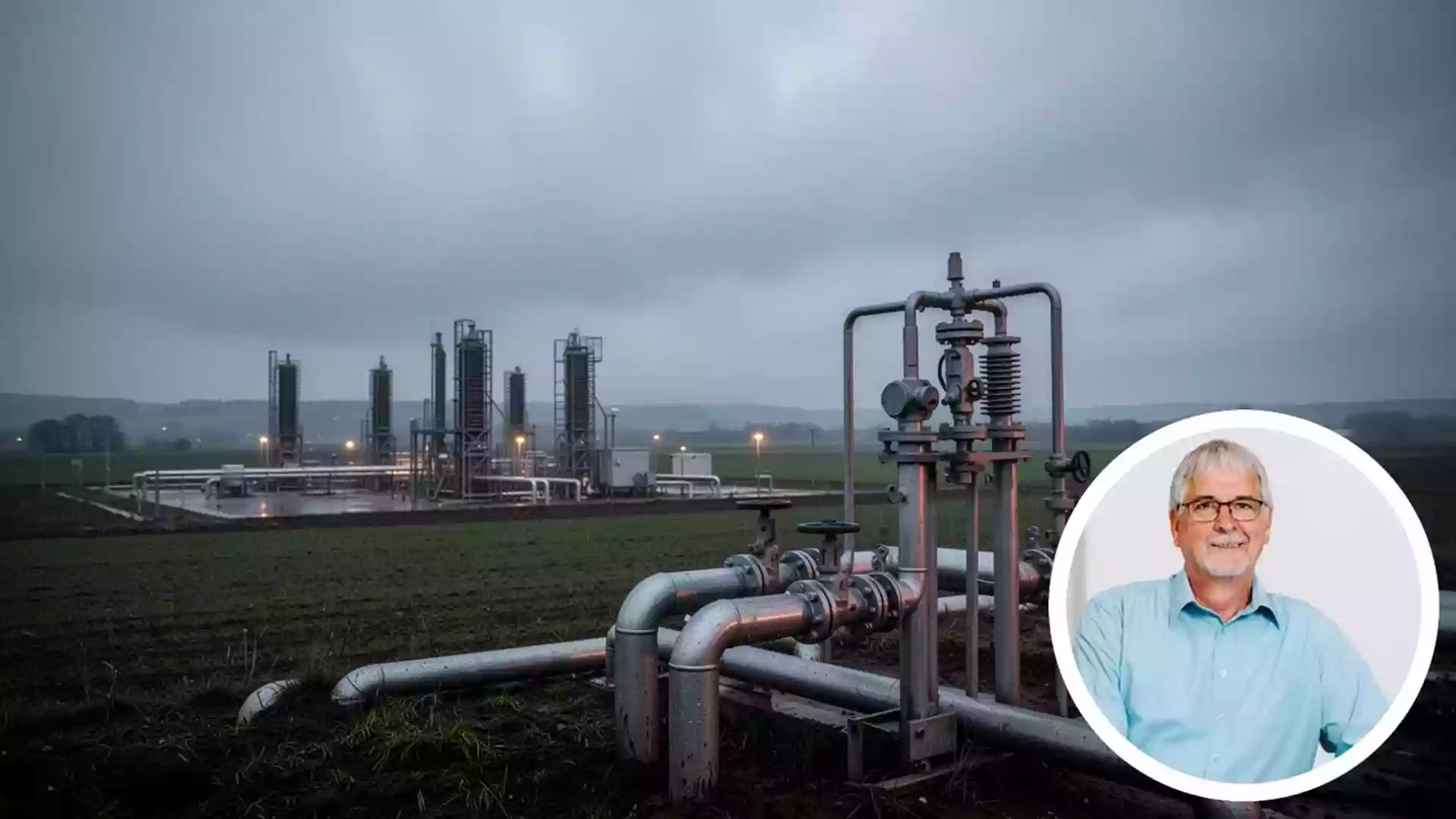
Vulcan Energy: A 5.38% Custody Stake, a 64-Litre Estimate and a Lithium Price That Answers a Different Question
Published on 10/23/2026 at 20:01 | Editorial boerse-global.de
Vulcan Energy's shareholders woke to two pieces of news on the same day, and neither of them was about the company's project. JPMorgan Chase & Co. disclosed a major holding for the first time, reporting a voting rights share of 5.38%, while the stock traded down 3.7% amid a sector-wide retreat in Australian lithium names. The temptation is to read one against the other — a big bank arriving, the market leaving. That reading gets both wrong.
The JPMorgan filing deserves attention, but of a narrow kind. Its 5.38% stake bundles lent securities, positions subject to return and proprietary trading book exposure. Citigroup's disclosure, for its part, points to securities lending and ordinary brokerage activity. These are mandatory notifications documenting relevant ownership relationships, not declarations of strategic conviction in Vulcan's brine project. Dismissing them as meaningless would be just as sloppy as treating a Wall Street name as a verdict on the economics of the Lionheart field.
What the lithium tape actually says
The sector pressure has a concrete marker. Chinese lithium carbonate futures shed 1.6% to 98,940 yuan per tonne, and Vulcan was named among the lithium complex caught in the downdraft. Media reports also flagged uncertainty over Chinese battery output and demand for storage batteries as weights on the broader industry.
Should investors sell immediately? Or is it worth buying Vulcan Energy?
That is useful context. It is not an explanation for every individual tick. A soft industry backdrop and a company-specific deterioration are separate matters, and collapsing the two turns a market observation into a claim about the business. The lithium price belongs in the analysis — it simply does not stand in for due diligence on project milestones or for a careful reading of ownership filings.
A well test that beat its own blueprint
Roughly a week ago, Vulcan reported a successful test at the Lionheart well LSC-3a. For the first time, the company returned brine into the sandstone reservoir matrix. The measured flow came in at approximately 35 standard litres per second. Under planned operating conditions, Vulcan estimated capacity at around 64 standard litres per second — against roughly 40 assumed in the field development plan.
The gap between measurement and interpretation matters here. The 64-litre figure is the company's estimate under intended operating conditions, not a direct reading from the test. Even so, the exercise bears on a specific technical assumption underpinning the project, and Vulcan said the result lowers risks and strengthens confidence in the Lionheart development plan. What it does not do is answer how lithium demand will evolve.
Three levels, three verdicts
Keeping the strands apart is the more defensible approach than a blanket bullish or bearish call. Bank filings describe ownership interests. The lithium complex supplies market context. Well tests speak to technical execution. A weak trading session does not invalidate a successful reinjection test, and a successful test does not settle every question of economic valuation — nor does a reduction in technical risk amount to its elimination. The picture only becomes reliable once none of these layers is forced to stand in for the others.
Ad
Vulcan Energy Stock: New Analysis - 23 October
Fresh Vulcan Energy information released. What's the impact for investors? Our latest independent report examines recent figures and market trends.