
Xiaomi's India Referral and Washington Opening Pull the Stock in Opposite Directions
Published on 09/22/2026 at 15:52 | Editorial boerse-global.de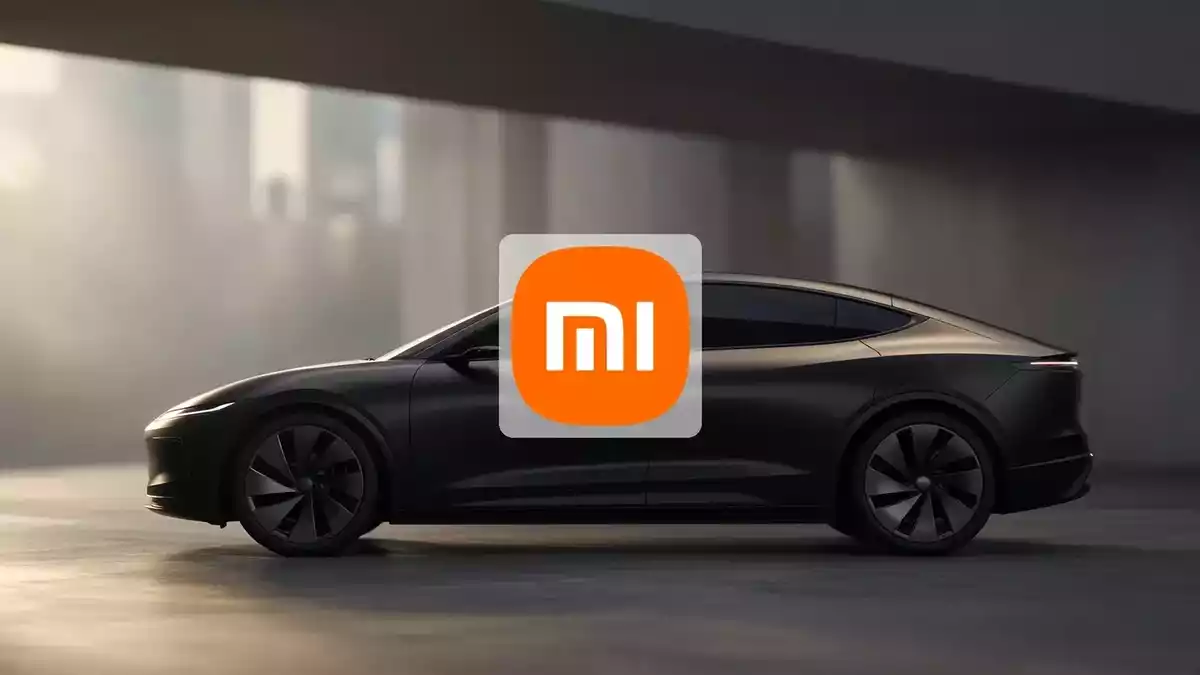
Xiaomi finds itself squeezed between two forces that rarely appear in the same sentence: a product pipeline running at full throttle and a regulatory cloud gathering over one of its most important overseas markets. The Chinese technology group is simultaneously pushing into premium hardware, laying groundwork for an eventual European car business, and absorbing the fallout from an Indian fraud referral that could complicate its expansion plans.
At the center of the current uncertainty is a recommendation from India's Serious Fraud Office, reported by Reuters on September 9, urging a detailed investigation into Xiaomi's local operations. The referral cites alleged irregularities in the company's business model as well as non-compliance with foreign investment regulations. Xiaomi responded defensively, stating it had not yet received any formal notice from the relevant authority. Even so, the development carries weight. India has served for years as the company's most significant growth engine for budget smartphones outside its home market, and any regulatory action there would strike at a core pillar of its international strategy.
A Product Offensive on Multiple Fronts
While legal questions simmer, Xiaomi's hardware machine keeps rolling. On September 11, the company unveiled the REDMI Note 17 Pro Max 5G, a device built around a 9,210 mAh battery with a promised runtime of up to three days — a clear statement in the volume segment. Media reports indicate that sales of the new REDMI Buds 8S wireless earbuds began on Tuesday, following pre-orders that opened earlier this month for both the earbuds and the Watch S5 smartwatch. The steady drumbeat of launches underscores the sheer innovation pressure in consumer electronics, though new gadgets alone no longer convince demanding investors. The classic smartphone business faces saturated markets worldwide and fierce margin competition.
Higher up the price ladder, Xiaomi has spent the past two weeks rolling out new foldable models. The Xiaomi 18 Fold carries an entry price of 10,999 Yuan, according to Reuters, with the most expensive configuration reaching 14,999 Yuan. That territory puts the company directly against established rivals Huawei and Apple. Whether the push succeeds hinges on whether customers will buy these devices in large volumes at those prices — only then can the revenue justify the heavy development and production costs. During this market-entry phase, the stock showed a modest gain of 1.9 percent.
The Vision of a Seamless Ecosystem
The optimistic case rests on Xiaomi's ability to interlock its product categories. Buyers of high-priced smartphones increasingly reach for matching companion devices, and wearables like the new Watch S5 and the REDMI Buds 8S play a central role in that strategy. A closed ecosystem of this kind raises customer loyalty noticeably — users switch to competitors less often when their hardware components mesh seamlessly, lifting repurchase rates for future device generations. The company frames this under the motto "Human x Car x Home," aiming to bind users firmly to the brand.
Should investors sell immediately? Or is it worth buying Xiaomi?
That same logic extends to the automotive gamble. Roughly two weeks ago, Xiaomi signed letters of intent with eight German dealership groups at a trade fair in Berlin, targeting a planned European launch of its own electric vehicles from 2027. Building a functioning dealer network demands long-term contracts, substantial investment and logistical precision. Cars cannot be scaled through the same digital channels as mobile devices, and while the partnerships with established dealer groups represent a pragmatic first step, they guarantee nothing in an already fiercely contested market.
Diplomatic Signals and Market Reaction
Geopolitical developments have added another layer of attention. According to Reuters, Xiaomi executives could be part of a prepared business delegation for a visit by Xi Jinping to Washington, though final confirmation of that participation is still pending. Should the inclusion be confirmed, it would bring added prestige and underscore the company's weight in the international economic order, potentially strengthening institutional investors' confidence in its global positioning.
Markets greeted the mix of news with approval. At the start of the trading week, the stock climbed 6.0 percent on Monday, closing at 3.09 Euro. That firmer positioning comes ahead of important strategic decisions. More recently, however, the shares have come under pressure again, trading at 3.04 Euro with a decline of 1.9 percent on the day. Since the beginning of the year, the loss amounts to 30 percent.
Risks Beyond the India Case
Regulatory headwinds are not the only concern. Competition in Xiaomi's home market of China is extraordinarily intense, with rivals such as Huawei bringing their own premium devices to market at the same time. If customers hold back, subsequent price cuts could follow — discounts that would immediately undermine the hoped-for profitability of the new model lines. In India, should penalties or conditions materialize, the business there could slow appreciably, and pending official reviews in such an important growth market weigh on the valuation like a lingering burden.
For market participants, the near-term picture now comes down to concrete conditions. As long as the stock defends its recent level of 3.09 Euro, the recovery move remains intact. A sustained slide back below the mark of recent weeks, however, would threaten a continuation of the medium-term downtrend. The next real catalyst is actual demand for the newly introduced product lines. Beyond Tuesday's earbuds launch, attention centers on sales of the foldable model. Initial solid sales figures from Chinese retail will show how potent the assault on the premium tier really is — and the markets are still waiting for clarity on who will fill out the business delegation bound for the United States.
Investors, in the meantime, will need patience. The vision of a seamlessly connected technology ecosystem is alluring but devours enormous resources, and the automotive harvest cannot be reaped for several years. Whether the leap from smartphone specialist to mobility group ultimately succeeds will shape how the company is valued for years to come.
Ad
Xiaomi Stock: New Analysis - 22 September
Fresh Xiaomi information released. What's the impact for investors? Our latest independent report examines recent figures and market trends.


