BYD’s Twin Bet: A 100,000 Pre-Order SUV and a Full-Liability Autonomy Safety Net, but Profits Are Tumbling
30.05.2026 - 11:01:25 | boerse-global.de
The disconnect between BYD’s operational momentum and its market valuation has rarely looked starker. Over 100,000 pre-orders for the company’s new Datang SUV were booked in just two weeks, yet the stock has shed 15.7% in the past 30 days, closing at HK$91.30 on 29 May — dangerously close to its 52-week low of HK$88.50.
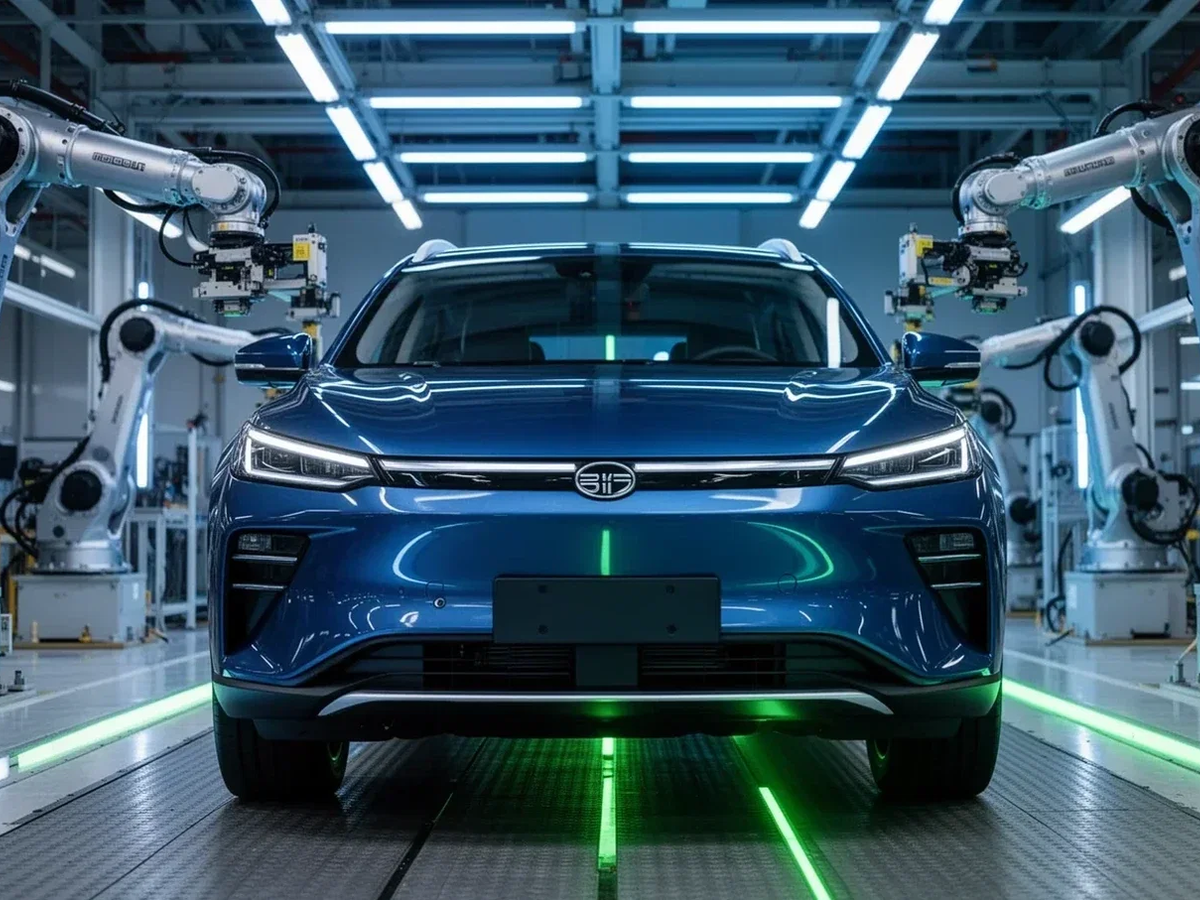
The Datang, BYD’s first D-segment SUV under the Dynasty series, is a technological statement. It packs a second-generation Blade battery, a 1,000-volt architecture, and a range of up to 950 kilometres in the pure-electric version — a best-in-class figure for a large electric SUV. The 10C charging capability supports a peak power of 1,000 kW. Priced between 250,000 and 320,000 yuan, the vehicle is slated for an official market launch in mid-June. That debut will be a critical test: can operational strength finally translate into a share price recovery, or will the downward spiral persist?
BYD is also pressing ahead with its European offensive. This week it confirmed the Ti7, the company’s first seven-seat SUV for the UK, while the Dolphin G DM?i — equipped with the latest super-hybrid technology — is headed for the broader European market. The export target is 1.3?million to 1.6?million vehicles by the end of 2026. Higher-priced markets and the premium segment are intended to cushion the price weakness that has been squeezing margins in China’s mass market.
Yet the financial results offer little comfort. In the first quarter of 2026, BYD posted a net profit of just 4.09?billion yuan on revenues of 150.2?billion yuan, yielding a wafer?thin net margin of 2.72%. Profit plunged 55.38% year?on?year. More recent figures put the net margin at 3.5%, down from 5.4% in the prior year — a reminder that the profitability squeeze has deepened over successive quarters.
Should investors sell immediately? Or is it worth buying BYD?
Against that backdrop, BYD has made a bold gambit in autonomous driving. The company announced it will assume full financial liability for accidents caused by its urban driver-assistance system — a policy no other automaker has matched. The “Full Damage Coverage” programme applies to vehicles equipped with the God’s Eye system (versions A or B) and provides one year of protection at no extra cost. Existing owners can retrofit the coverage via an over?the?air update to version 5.0. Chairman Wang Chuanfu said the move demonstrates absolute faith in the company’s technology: taking on Level 3 and Level 4 liability while the system technically still runs at Level 2 is meant to eliminate the hesitation many drivers feel over using assist systems in the event of a crash.
That confidence is backed by a significant hardware investment. BYD introduced the Xuanji?A3 chip, China’s first domestically developed automotive SoC built on a 4?nanometre process. The system processes roughly 200?million kilometres of driving data from the company’s fleet every day. Meanwhile, the company has committed over 100?billion yuan (about US$15?billion) to autonomous driving development over the next three years. The God’s Eye system, including optional LiDAR hardware, is expected to become available across the model range for around 12,000 yuan. The stated long?term goal: zero traffic accidents.
The liability pledge puts competitors such as NIO and Xpeng in a difficult position. Without a comparable guarantee, they risk appearing inferior in the eyes of consumers, no matter their sensor counts or computing power. For BYD itself, the service-oriented model carries its own risk: the already thin margins could face further pressure as the company shoulders potential accident costs and absorbs the expense of the autonomy investment.
BYD at a turning point? This analysis reveals what investors need to know now.
Technically, the stock is testing a crucial support level at 90 Hong Kong dollars. From its 52?week high of HK$143.60, the decline has been steep. The consensus analyst price target stands at HK$124.46, implying an upside of roughly 27% — but that assumes the company can convince investors that its twin bets on a premium SUV and full?liability autonomous driving will eventually pay off. The next milestone is the roll?out of the Xuanji?A3 system across a wider fleet, scheduled for late 2026. Until then, the Datang’s market reception and the trajectory of margins will dictate whether BYD can arrest the slide.
Ad
BYD Stock: New Analysis - 30 May
Fresh BYD information released. What's the impact for investors? Our latest independent report examines recent figures and market trends.
So schätzen die Börsenprofis BYD’s Aktien ein!

Für. Immer. Kostenlos.