Garth Brooks opens new tour era for US country fans
17.05.2026 - 01:30:05 | ad-hoc-news.de
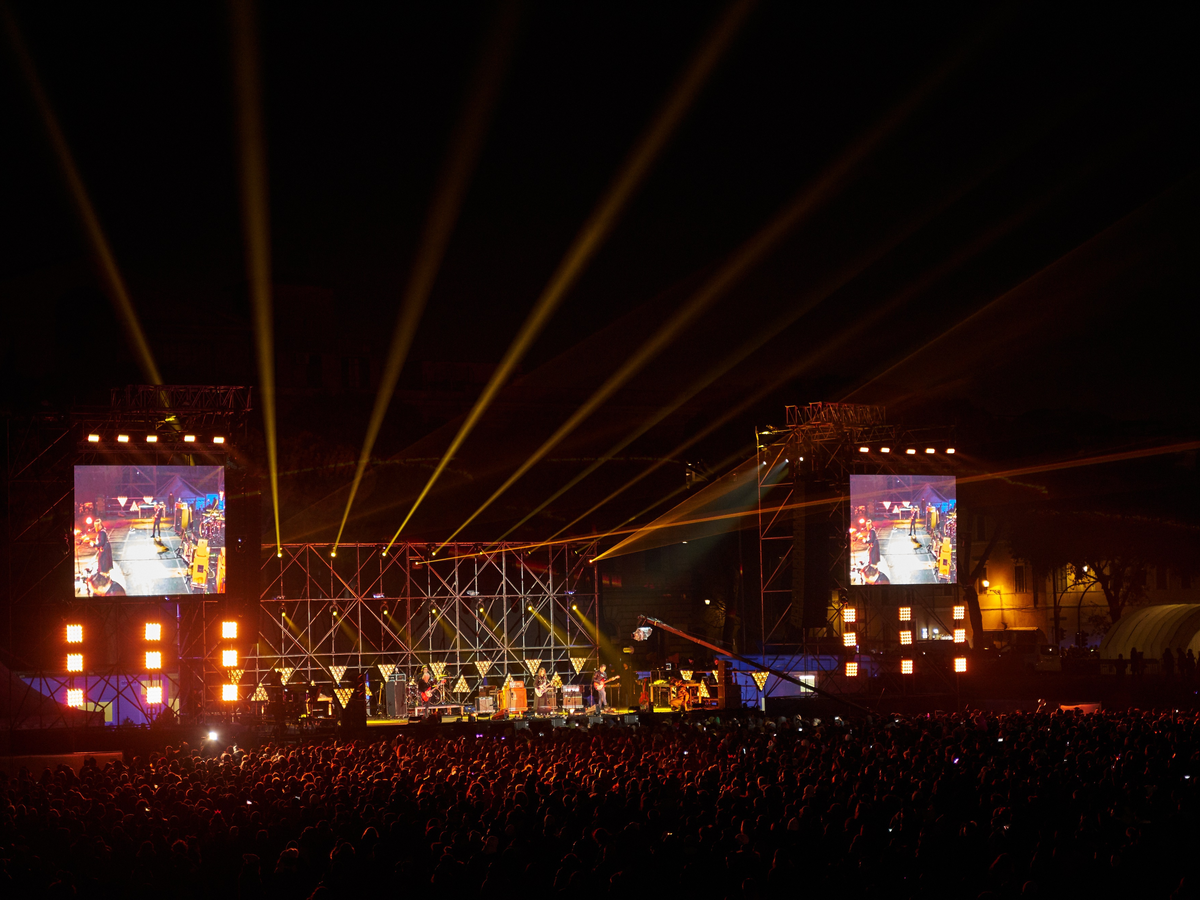
On a Saturday night in downtown Nashville, Garth Brooks steps onto a compact stage inside his Friends in Low Places Bar & Honky-Tonk and turns Lower Broadway into something closer to a stadium. Phones shoot upward, boots hit the floor in rhythm, and the most successful solo artist in RIAA history once again feels like an upstart honky-tonk player testing new songs in a crowded room.
Garth Brooks focuses on Nashville bar shows and a live-first era
While there has not been a brand-new album announcement within the last few days, the latest chapter of Garth Brooks revolves around his Friends in Low Places Bar & Honky-Tonk on Nashville's Lower Broadway and an ongoing live-first strategy. According to Billboard, the multi-level venue opened in late 2023 and has become a regular site for unannounced appearances by the country superstar, who uses the intimate stage to revisit classics and road-test material.
USA Today and other national outlets have noted that the singer has leaned into a hybrid of large-scale residencies and surprise bar sets rather than a traditional, coast-to-coast arena run. As of 17.05.2026, his official site highlights the Friends in Low Places bar, his ongoing SiriusXM channel The Garth Channel, and recent box sets, signaling that the artist is pacing his touring after years of record-breaking stadium numbers.
Brooks closed a high-profile Las Vegas residency at The Colosseum at Caesars Palace in 2024, a run that followed his previous one-man acoustic shows in the same city. Variety and Rolling Stone both emphasized how those residencies allowed him to reshape his catalog into fresh narratives for longtime fans, alternating between full-band roar and storyteller intimacy.
With the stadium era paused for the moment, Nashville has effectively become his home base stage. Fans traveling from across the United States routinely plan trips around the possibility of catching the icon at Friends in Low Places, even when no appearance is advertised. It is a quieter but no less obsessive form of tour culture, one that keeps Garth Brooks anchored in the heart of country music's capital.
For US listeners who discovered country through pop crossovers or streaming playlists, the current phase offers a chance to encounter the legend at human scale. Instead of helicopter flyovers into football venues, there are late-night covers, deep cuts, and the feeling that a Hall of Famer might walk past your table and ask for a request.
Who Garth Brooks is and why his music still matters
For more than three decades, Garth Brooks has defined what it means to be a modern country superstar in the United States. Born in Tulsa and raised in Yukon, Oklahoma, he blended traditional country storytelling with arena rock dynamics, essentially inventing the template that later artists from Kenny Chesney to Eric Church would follow.
According to the Recording Industry Association of America (RIAA), Brooks is the top-certified solo artist in US history, with total album awards surpassing 150 million units. Only The Beatles outrank him in overall RIAA-certified totals. That staggering number includes Diamond-certified releases such as No Fences, Ropin' the Wind, and Sevens, all of which helped define 1990s country for a mass pop audience.
Billboard reports that he was the first artist to have albums debut at number one on both the Billboard 200 and the Top Country Albums chart multiple times in the 1990s, putting Nashville at the center of mainstream American listening. Hits like Friends in Low Places, The Thunder Rolls, and The Dance crossed radio format lines, landing not just on country stations but in the broader cultural soundtrack of graduations, weddings, and Friday night bar crowds.
In the streaming era, the singer has moved cautiously, keeping tight control over his catalog while still reaching new generations. He struck an exclusive digital deal with Amazon Music in the late 2010s, a move that differentiated him from peers who opted for platform ubiquity. For US country fans, that decision turned streaming his music into a more deliberate action rather than a passive algorithmic discovery.
At the same time, his ongoing influence is hard to miss. Contemporary country acts who sell out NFL stadiums often cite the Oklahoma native as a direct inspiration for combining pyrotechnics, narrative staging, and heartfelt ballads. In an era where pop, hip-hop, and Latin music dominate many playlists, his catalog reminds listeners how powerful an arena-sized country song can be.
From Oklahoma kid to stadium-filling headliner
The origin story of this country icon is rooted in Oklahoma's small-town culture and the Texas-Oklahoma Red Dirt corridor. Brooks grew up in a household that loved both classic country and 1970s rock, absorbing George Jones and Merle Haggard alongside James Taylor and Billy Joel. That eclectic diet would later become the foundation of his crossover appeal.
After studying advertising at Oklahoma State University and performing in local bars, the aspiring singer moved to Nashville in the mid-1980s. His first trip was short-lived and discouraging, but he returned with renewed determination. According to American Songwriter, those early Music Row years were marked by early morning demo sessions, relentless writing, and the hustle of playing anywhere that would allow him a microphone.
His self-titled debut album, Garth Brooks, arrived in 1989 on Capitol Nashville. It reached number two on the Top Country Albums chart and introduced listeners to songs like If Tomorrow Never Comes and The Dance, both of which quickly became signature ballads. The record's runaway success set the stage for a remarkable run in the early 1990s.
No Fences, released in 1990, pushed him into superstardom. Powered by arena-ready anthems and emotionally direct ballads, it topped the Top Country Albums chart and crossed over to the Billboard 200. The Thunder Rolls and Friends in Low Places became cultural phenomena, turning country bars into de facto arenas and bringing a new crowd into the genre.
With 1991's Ropin' the Wind, Brooks broke even more ground. Billboard notes that the album debuted at number one on the Billboard 200, a rare feat at the time for a country artist. The project balanced honky-tonk energy with introspective moments, helping to define what would be known as the New Country movement of the decade.
Throughout the 1990s, he released a string of albums that kept him at or near the top of both country and pop charts, including The Chase, In Pieces, Fresh Horses, and Sevens. Simultaneously, his live show evolved into a full-scale spectacle, incorporating flying rigs, elaborate lighting, and the kind of stagecraft more common to rock acts like Bon Jovi or Bruce Springsteen.
By the late 1990s, the constant touring and recording cycle took its toll. In 2000, the artist announced a retirement from recording and performing to concentrate on his family, a decision widely covered by outlets like The New York Times and CNN. He largely stayed off the traditional touring circuit for more than a decade, playing occasional benefit shows and a Las Vegas acoustic residency but avoiding the full-scale road life that had defined his career.
The comeback began in the mid-2010s, when Brooks signed a new deal with Sony Music Nashville and launched a massive world tour. That run broke numerous attendance records across US arenas and stadiums, including multiple nights at venues such as AT&T Stadium in Arlington, Texas, and Notre Dame Stadium in South Bend, Indiana. The tour reintroduced him to a younger generation while reinforcing his status as a live powerhouse.
Signature sound, blockbuster albums, and key songs
Garth Brooks built his catalog on a blend of traditional country instrumentation, rock muscle, and pop-friendly hooks. Fiddle and steel guitar sit alongside power chords and big choruses, with his baritone voice shifting from conversational storytelling to full-throated belting in the space of a bridge.
Among his most important albums, several stand out both creatively and commercially:
- No Fences (1990) – Home to Friends in Low Places, The Thunder Rolls, and Unanswered Prayers, this album crystallized his mix of honky-tonk humor, domestic drama, and stadium-scale production.
- Ropin' the Wind (1991) – With tracks like Rodeo and What She's Doing Now, it showed a more mature storyteller while consolidating his crossover success.
- Sevens (1997) – A late-1990s high point that balanced radio-ready singles with reflective album cuts, further expanding his sonic palette.
- Scarecrow (2001) – Released amid his initial retirement, it served as both a farewell and a bridge to future work.
- Man Against Machine (2014) and Gunslinger (2016) – Post-comeback releases that reasserted his core sound while acknowledging modern country production.
One of the most talked-about chapters in his discography is the rock-influenced alter ego project Garth Brooks in... The Life of Chris Gaines, released in 1999. Though polarizing at the time, the experiment demonstrated his interest in pop and soft-rock stylings and has since become a cult curiosity among fans and critics. Rolling Stone has revisited the album as an early example of a country star risking brand confusion in pursuit of artistic play.
Singles like Friends in Low Places and The Dance remain core to his identity. The former has effectively become a modern barroom standard across the United States, with crowds routinely belting out its defiant final verse. The latter, a meditative ballad reflecting on love and regret, is frequently cited by fans as a life-event song, requested at funerals, anniversaries, and milestone birthdays.
Ballads such as If Tomorrow Never Comes and To Make You Feel My Love showcase his ability to inhabit tender, introspective material, while uptempo tracks like Ain't Goin' Down ('Til the Sun Comes Up) highlight his rapid-fire phrasing and high-energy delivery. The balance between rowdy and reflective has been key to his appeal; listeners can find both Saturday night soundtracks and Sunday morning reflections within the same record.
Production-wise, longtime collaborators such as producer Allen Reynolds and songwriter Pat Alger helped craft the muscular yet melodic sound associated with the artist's 1990s peak. Nashville studio players gave the records a polished sheen without losing the sense of a live band pushing air in a room.
Cultural impact, awards, and the live legacy
The cultural impact of Garth Brooks is difficult to overstate. In the early 1990s, his rise coincided with a booming US economy and a resurgence of interest in country music as a mainstream entertainment force. Arena shows that once belonged primarily to rock acts suddenly had room for cowboy hats and belt buckles, with pyrotechnics and circular stages designed for 360-degree stadium seating.
The Country Music Association (CMA) named him Entertainer of the Year multiple times during the decade, and he collected a similar haul at the Academy of Country Music (ACM) Awards. The Recording Academy added to the recognition with Grammy Awards, further cementing his status as not just a genre star but a major American entertainer. According to Grammy.com, his wins and nominations span categories from Best Country Vocal Performance to Album of the Year recognition.
RIAA data confirms that several of his albums reached Diamond status, meaning at least 10 million units certified in the United States. That achievement, shared with only a handful of other albums in any genre, places him in the same commercial echelon as artists like Michael Jackson and The Eagles.
On the touring front, Pollstar and Billboard Boxscore have chronicled his record-setting runs in arenas and stadiums. During his comeback tours in the 2010s, he sold out multiple nights at major venues including Chicago's Allstate Arena, Boston's TD Garden, and Nashville's Bridgestone Arena. A 2018 Notre Dame Stadium show, aired as a televised special, underscored how comfortable he remains in front of tens of thousands of fans and millions more watching at home.
His influence extends to how country artists structure their live sets. Multiple contemporary acts incorporate rock-style encores, stage thrusts, and in-the-round configurations that echo the blueprints he established in the 1990s. Industry observers often compare his showmanship to that of Bruce Springsteen, highlighting the emphasis on marathon performances, deep-cut requests, and a sense of community between performer and audience.
Offstage, he has been involved in numerous philanthropic efforts, including disaster relief concerts and support for children's charities. While the details of specific donations often remain low-key, benefit shows in response to natural disasters and national tragedies have been documented by outlets like NPR and ABC News, reinforcing his image as an artist who uses his platform for collective healing.
In the streaming and social-media age, his brand of earnest, big-hearted storytelling has remained surprisingly resilient. Younger listeners discover him through parents' playlists, wedding DJs, and viral clips of sing-alongs at college-town bars. The Friends in Low Places Bar & Honky-Tonk has only amplified that visibility, turning his signature song into a physical address where fans can gather under neon lights.
Frequently asked questions about Garth Brooks
How many albums has Garth Brooks sold in the United States?
Exact sales figures vary depending on the source and whether physical, digital, and streaming-equivalent units are all counted. However, the Recording Industry Association of America lists his total certified units above 150 million, making him the top-certified solo artist in US history. That tally includes multiple Diamond-certified albums.
What are Garth Brooks's most important albums for new listeners?
New listeners often start with No Fences and Ropin' the Wind, which capture his 1990s breakthrough and feature many of his most enduring hits. From there, albums like Sevens and the self-titled debut Garth Brooks offer a deeper look at his evolution, while later projects such as Man Against Machine show how he approached the comeback era.
Is Garth Brooks currently on tour?
As of 17.05.2026, Garth Brooks is not in the middle of a traditional, nationwide stadium or arena tour across the United States. Instead, his focus has been on special event shows, residencies like his recently completed Las Vegas run, and performances tied to his Friends in Low Places Bar & Honky-Tonk in Nashville. Fans should refer to his official channels for the most up-to-date show information.
Why do fans consider a Garth Brooks concert unique?
Fans frequently describe his concerts as high-energy experiences that combine the intimacy of a small club set with the spectacle of a rock stadium show. Setlists often run well past two hours, featuring deep cuts, fan requests, and extended sing-alongs on songs like Friends in Low Places. The emphasis on storytelling, audience connection, and physical performance sets his shows apart.
How can US fans legally stream or purchase Garth Brooks's music?
The artist has maintained a selective approach to streaming. In recent years, his catalog has been available digitally through specific partners, and he continues to release physical editions such as box sets and vinyl collections. Because licensing arrangements can change, fans in the United States are encouraged to check major services and his official store for current access options.
Garth Brooks on social media and streaming
Even though Garth Brooks rose to fame in an era before social feeds and algorithmic playlists, his presence on digital platforms now plays an important role in connecting with US fans. From official videos and archival concert clips to fan-shot bar performances, social media and streaming services give listeners new and old a way to dive into his decades of music.
Garth Brooks – moods, reactions, and trends across social media:
More coverage from AD HOC NEWS
More coverage of Garth Brooks at AD HOC NEWS:
Read more on Garth Brooks at AD HOC NEWS ->Browse all Garth Brooks coverage at AD HOC NEWS ->
So schätzen die Börsenprofis Aktien ein!

Für. Immer. Kostenlos.