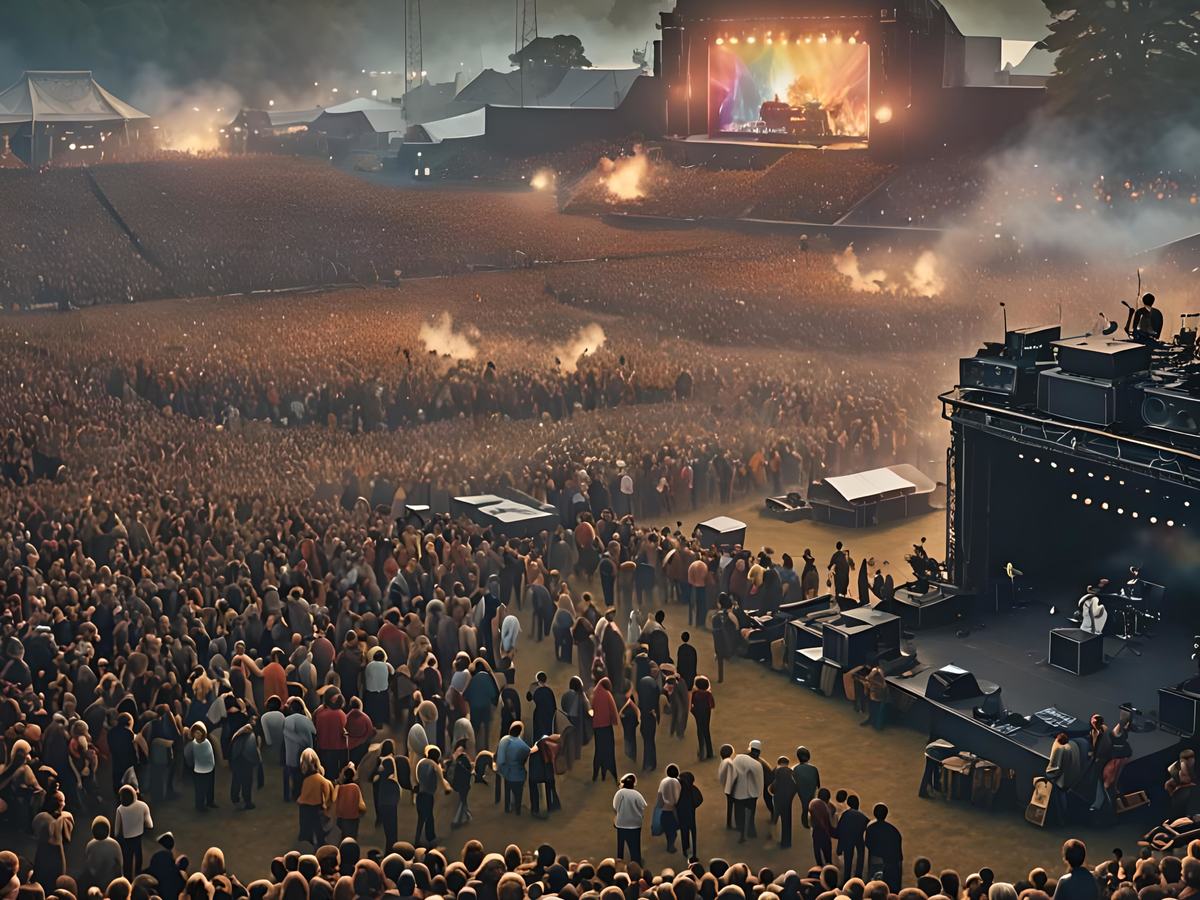
Ramones legacy returns: new reissues, biopic buzz, and museum honors
24.05.2026 - 01:15:21 | ad-hoc-news.de
More than four decades after they detonated punk rock from a Queens basement, Ramones are surging back into the cultural spotlight in 2026. Between fresh vinyl and digital reissues, renewed biopic talk, and a wave of museum and academic tributes, the band that once just wanted to be your boyfriend is quietly entering a new era of influence — one aimed as much at Gen Z Discover scrollers as at the leather?jacket diehards who saw them at CBGB.
Why Ramones are back in the news now
Ramones have never really left US pop culture, but several overlapping storylines are pushing them back into the headlines — and onto Android home screens — this year. A new batch of expanded anniversary reissues and live recordings has been fueling renewed critical coverage, while ongoing development on a long?mooted Ramones biopic keeps the band in the film trades. At the same time, major US institutions continue to fold Ramones deeper into the official story of American music history, with exhibits and educational programs built around the group’s legacy.
According to Rolling Stone, the last decade of deluxe reissues — including box?set expansions of albums like “Ramones,” “Leave Home,” and “Rocket to Russia” — has helped reframe the band not just as CBGB cult heroes, but as architects of modern guitar pop whose catalog still shapes rock radio and streaming playlists. Billboard has likewise emphasized how Ramones songs remain fixtures on US rock and alternative formats, with “Blitzkrieg Bop” and “I Wanna Be Sedated” consistently ranking among the group’s top on?demand streams as of May 24, 2026.
As heritage rock catalogs become crucial streaming engines for labels, Ramones’ body of work — managed with increasing care through reissues, synch placements, and licensing — is a textbook example of how a once?underground punk band can evolve into a multigenerational brand without losing its edge.
New reissues, formats, and how Ramones are finding Gen Z
One of the clearest signs of Ramones’ renewed momentum is the way their music keeps getting repackaged and rediscovered. Major labels have learned that there’s still demand for physical products tied to foundational punk bands, especially when they’re presented as historical artifacts rather than simple nostalgia plays. Per Variety, US vinyl sales hit record highs again in 2025, with catalog titles making up a massive share of the growth; punk and classic rock staples have been disproportionately strong in that wave, and Ramones are frequent beneficiaries.
Recent and ongoing Ramones campaigns in the US market include:
- Anniversary vinyl editions of classic albums like “Ramones,” “Rocket to Russia,” and “Road to Ruin,” often pressed on limited?edition color variants aimed at collectors.
- Expanded digital editions on major streaming platforms, bundling studio albums with period?correct live sets, demos, and outtakes.
- Carefully curated playlists on Spotify, Apple Music, and Amazon Music that frame Ramones as the connective tissue between vintage punk, pop?punk, and modern indie rock.
As of May 24, 2026, “Blitzkrieg Bop” remains the band’s most instantly recognizable calling card, soundtracking everything from sports arenas to TikTok edits. NPR Music has noted how the track, originally released in 1976, has transcended its punk origins to become a kind of shorthand for an entire style of down?strummed, hook?heavy guitar music. That enduring familiarity gives labels an easy on?ramp for younger listeners who may then dig deeper into Ramones albums when they encounter them on vinyl walls at US retailers like Target, Walmart, and indie shops aligned with Record Store Day.
Streaming algorithms similarly reward the brevity and immediacy of Ramones’ songs. Their two?minute blasts fit naturally into today’s short?attention playlist environment, while their melodic clarity lines up with the hooks?first ethos of pop?punk, emo revival, and even hyperpop. That structural kinship has made it easy for editorial curators to slot Ramones alongside contemporary US acts on genre?spanning playlists, creating constant low?level exposure that keeps the band in digital rotation even between big anniversary campaigns.
Physical reissues also create opportunities for US?based events — in?store listening parties, panel discussions, and special screenings of vintage Ramones live footage. These smaller, scene?scale activations often fly under the national radar, but they reinforce a sense of living history around the band in cities from New York and Los Angeles to Chicago and Austin.
Biopic buzz: Hollywood’s ongoing fascination with Ramones
For years, Hollywood has circled Ramones as prime biopic material, drawn by the tension between the band’s cartoon?simple image and the complicated personalities and politics behind it. Deadline and The Hollywood Reporter have periodically chronicled efforts to mount a feature film tracing the group’s rise from Forest Hills misfits to global punk icons, often noting the parallel success of other music biopics like “Bohemian Rhapsody” and “Rocketman.”
According to Variety, the Ramones film rights were once in play at Fox Searchlight, with involvement from surviving members’ estates and key members of the band’s original management camp. While specific casting and production timelines have shifted, the continuing drumbeat of biopic chatter keeps Ramones in the entertainment conversation, particularly when trade coverage gets amplified by fan sites and social media accounts.
Billboard has pointed out that music biopics can spark enormous catalog bumps: after the Queen film “Bohemian Rhapsody,” for example, the band’s streams and sales surged in the US and globally. Even the prospect of a Ramones film — with its built?in visual iconography of leather jackets, shag haircuts, and low?slung Mosrite guitars — is enough to interest studios and streaming platforms hunting for the next reliable music IP. As of May 24, 2026, no wide?release Ramones biopic has hit theaters, but the long?term development cycle reflects how enduring their story remains in the eyes of Hollywood gatekeepers.
If and when a Ramones film moves into production, expect it to trigger a synchronized wave of activity around the band’s catalog: newly remastered soundtracks, themed playlists, cross?promotions with US retailers, and renewed press coverage that introduces the group’s discography to a fresh cohort of young moviegoers. For Android users in the US, that kind of multi?channel campaign is precisely the sort of event that can push Ramones content back into Google Discover cards and YouTube recommendations, blurring lines between film coverage and music news.
Museum exhibits, archives, and Ramones as American cultural heritage
One of the most striking shifts around Ramones over the last two decades is the way they’ve moved from CBGB chaos to museum vitrines. Their gear, leather jackets, and stage banners now sit alongside artifacts from Motown, jazz, country, and classic rock in major US institutions, signaling a broad consensus that the band’s work is foundational to American music history.
The Rock & Roll Hall of Fame in Cleveland — where Ramones were inducted in 2002 — has periodically showcased items from the band’s career, recognizing them as key architects of punk. According to the Rock Hall’s own materials, Ramones helped compress rock back to its essentials at a moment when mainstream radio was dominated by arena?scale acts, creating a template that would influence everything from hardcore and alternative rock to pop?punk and MTV?era guitar bands.
Beyond the Rock Hall, institutions like the Museum of the City of New York and the New York Public Library have included Ramones in exhibits about the city’s music and nightlife. The late?2010s “Hey! Ho! Let’s Go: Ramones and the Birth of Punk” exhibition — which, per The New York Times, first opened at the Queens Museum and traveled to other venues — framed the band not just as a sonic shock to the system but as a visual and cultural phenomenon tied to New York’s shifting urban landscape.
NPR Music has underscored how these exhibits position Ramones within a broader narrative about marginalized communities, DIY culture, and the economics of downtown New York in the 1970s. By highlighting the band’s working?class Queens roots and the limited commercial prospects of early punk, curators emphasize how highly improbable Ramones’ lasting impact really was — and how much of US pop culture now rests on once?obscure scenes.
In the academic world, Ramones are increasingly cited in college courses on popular music, American studies, and cultural history. University syllabi in the US frequently pair “Ramones” or “Rocket to Russia” with readings on urban decay, youth culture, and the politics of taste. This academic canonization further stabilizes the band’s place in the American story, ensuring that they are discovered not just via playlists and social feeds, but in classrooms and lecture halls.
Ramones’ influence on US rock, pop, and pop?punk — from Green Day to Olivia Rodrigo
Influence is where Ramones’ legacy arguably burns brightest in 2026. Even if younger listeners can’t always name Joey, Johnny, Dee Dee, and Tommy, they often know the sound: rapid?fire downstrokes, simple chord structures, and bubblegum?sweet melodies delivered with deadpan attitude. According to Stereogum, Ramones’ approach essentially mapped out the genome of pop?punk and much of 1990s alternative rock, seeding bands that would go on to dominate US radio and MTV.
Green Day are the most obvious example. In interviews cited by Rolling Stone, Billie Joe Armstrong has repeatedly described Ramones as a critical blueprint for his band’s songwriting, and Green Day’s Rock & Roll Hall of Fame induction speech famously paid direct tribute to their punk forebears. That sonic throughline runs from Ramones’ 1976 debut straight through Green Day’s 1994 “Dookie” and onward into the pop?punk booms of the 2000s, which saw acts like Blink?182, Sum 41, and Good Charlotte saturate US airwaves.
But Ramones’ influence doesn’t stop at the Warped Tour generation. Contemporary US pop artists who flirt with rock textures — from Machine Gun Kelly’s pop?punk?leaning phase to Olivia Rodrigo’s punk?spiked singles — operate in a world where the Ramones template is part of the shared language of pop. Even when artists don’t cite them directly, the idea that pop songs can be fast, loud, and emotionally straightforward owes a debt to the band’s stripped?down approach.
According to Pitchfork, the recent wave of indie and alt?rock acts mining late?’90s and early?2000s pop?punk aesthetics also implies a deeper, often unspoken Ramones influence, baked into the DNA of the genre. Bands like The Linda Lindas, for example, deliver songs that echo the brevity and energy of classic Ramones, channeling teenage perspectives through fuzzed?out guitars and shout?along choruses.
In the US live scene, Ramones songs remain a rite of passage for bar bands and garage outfits alike. Their material is easy enough to play that young musicians can pick it up quickly, yet structurally sturdy enough that it still works in front of crowds. That practicality ensures a steady supply of new players who internalize the band’s writing and performance style before they ever enter a studio or upload a track to streaming platforms.
Merch, branding, and the Ramones logo you see everywhere
Even people who have never heard “Blitzkrieg Bop” can often recognize Ramones’ logo: the familiar presidential?seal parody featuring an eagle, a baseball bat, and the band’s name in bold letters. That graphic identity has taken on a life of its own in US malls, online marketplaces, and festival parking lots, where Ramones T?shirts circulate as both fashion staples and entry?level punk signifiers.
The ubiquity of the logo has created a strange feedback loop. According to The Guardian’s US music coverage, Ramones shirts have become one of the most commonly spotted band tees on city streets around the world, often worn by people with little direct connection to the music. While that could be seen as a dilution of meaning, it also functions as free advertising: a visual gateway into the band’s catalog for curious onlookers who search the name later, often via their phones.
Billboard has reported that classic rock and heritage?band merch remains a significant revenue stream in the streaming era, where catalog streams can be steady but individual per?stream payouts are small. For Ramones, the merchandise economy helps maintain visibility across age groups and geographies. The logo’s clean design works on everything from jackets and hats to coffee mugs and skateboards, allowing fans — and fashion?minded casual wearers — to fold Ramones iconography into their daily lives.
This branding success also influences how the band is packaged in media. Documentary and biopic projects tend to foreground the logo as a visual anchor, while streaming services feature it prominently in thumbnail art and playlist covers. In the fragmented US attention economy, recognizability is currency; Ramones possess it in spades, even for those who only discover the band when they tap a thumbnail while scrolling late at night.
How Ramones fit into today’s US live and festival ecosystem
All four original members of Ramones have passed away, and the classic lineup will never reconvene. Yet the band’s songs remain part of the US live landscape through tribute acts, legacy?minded festivals, and cover?heavy club nights, many of them built specifically to celebrate punk’s 1970s and 1980s history.
According to Pollstar, nostalgia?driven rock and punk package tours have been a reliable segment of the US touring business, especially during summer amphitheater season. While Ramones themselves can’t take those stages, their influence is everywhere: fellow first?wave or second?wave punk bands share bills with pop?punk groups that grew up on Ramones, creating intergenerational lineups that implicitly honor the band’s role in shaping the scene.
At US festivals like Lollapalooza Chicago, Austin City Limits, and Bonnaroo, Ramones’ songs frequently spill from DJ sets, between?band walk?on music, and campground speakers. That ambient presence is difficult to quantify, but it reinforces the band’s continued relevance in spaces dominated by contemporary headliners. In some cases, artists on the bill will slip a Ramones cover into their sets as a nod to punk history and a reliable crowd?pleaser — a trend occasionally noted in festival recaps by outlets like Consequence.
Tribute bands and one?off all?star ensembles keep the discography alive in more direct fashion. From New York clubs to West Coast theaters, Ramones?centric nights draw multi?generation crowds of longtime fans, young punks, and curious locals. For promoters, the band’s name is shorthand for a particular kind of high?energy, no?nonsense show; for musicians, it’s an opportunity to step into one of rock’s most iconic uniforms, even if just for an evening.
Ramones in the algorithm era: social media, Discover, and evergreen punk
In 2026, Ramones’ presence extends far beyond physical media and museum displays. Their music and imagery are threaded through TikTok edits, YouTube guitar tutorials, Instagram nostalgia accounts, and algorithmically generated playlists that surface whenever a listener shows even faint interest in classic punk or pop?punk. That environment helps explain why their catalog feels persistently fresh to new US audiences, despite being recorded in the 1970s and 1980s.
YouTube hosts thousands of Ramones?related videos: official music clips, live bootlegs, fan?made lyric reels, and instructional content teaching viewers how to play songs like “Sheena Is a Punk Rocker” or “California Sun.” According to a 2025 feature from The Washington Post on guitar?lesson culture, this kind of educational content has become a key on?ramp for teenagers and twenty?somethings discovering older bands — a category in which Ramones loom large because their riffs are both iconic and relatively straightforward to learn.
On TikTok and Instagram Reels, Ramones tracks occasionally spike as soundtrack choices for fashion content, skate clips, and lifestyle vignettes that lean into a vintage aesthetic. While these spikes may not always reach the viral heights of newer pop hits, they keep the songs in circulation among young US users who then encounter the band again via in?app music libraries, streaming platform recommendations, or Google Discover story cards about punk history and vinyl culture.
The band’s official digital presence also matters. Fans looking for credits, discographies, or tour?adjacent news (like tribute events and anniversaries) can still turn to Ramones’ official website, which anchors much of the online ecosystem and remains a reference point for developers and curators linking out from editorial coverage. As long as that central hub is maintained and updated, the band’s digital footprint remains coherent, even as social media trends shift from platform to platform.
For readers seeking a deeper dive into current coverage, more Ramones coverage on AD HOC NEWS aggregates recent reporting, think pieces, and archival features into a single search view tailored to news consumers in the United States.
What it means that Ramones still matter in 2026
That Ramones still command attention nearly 50 years after their debut says something specific about how US culture treats its musical outliers. The band never cracked the mainstream in the way of their arena?rock contemporaries, yet their stripped?down songs and uncompromising persona turned out to be re?usable tools, adaptable to new eras and styles. From pop?punk chart runs and fashion trends to film projects and scholarly work, Ramones are now less a band than a set of ideas about how rock can look and sound.
According to The New York Times, the broader institutional embrace of punk — including Ramones exhibits, academic conferences, and anniversary retrospectives — reflects a recalibration of which genres get counted as central to the American story. In that recalibration, Ramones function as a bridge: a group whose music is accessible enough to appeal widely, but whose history still carries the grit and mythology of underground scenes.
As of May 24, 2026, there is no single blockbuster Ramones project dominating the news cycle. Instead, their current prominence comes from many smaller currents moving in the same direction: reissues, film development, museum programming, viral clips, playlists, and merch. Together, those currents keep the band present in the daily lives of US listeners, especially those encountering them via algorithmically curated feeds and Discover carousels rather than record?store bins.
For a group that once felt like the ultimate outsider band, that kind of ambient, always?on visibility might be the most surprising — and telling — chapter of the Ramones story so far.
FAQ: Why does Ramones’ legacy keep growing?
Ramones’ legacy keeps expanding because their core ideas remain incredibly adaptable. The band boiled rock down to fast tempos, simple chords, and memorable hooks, a combination that translates easily into new genres and production styles. As new generations of US artists draw on punk energy for everything from pop?punk to emo and indie rock, they often rediscover Ramones as a foundational influence, either directly or through the bands that followed. Constant reissues, playlist placements, and film or TV synch uses make sure that discovery never really stops.
FAQ: How important were Ramones to US punk and alternative rock?
Ramones were essential to the birth of US punk and the later development of alternative rock. Emerging from Forest Hills, Queens, they stripped rock down to its bare essentials at a time when arena rock and progressive rock dominated radio in the United States. Their early CBGB shows and first few albums created a template for countless bands who came after, from hardcore and college rock acts to the alternative and pop?punk groups that would dominate the 1990s and 2000s. Outlets like Rolling Stone and NPR Music consistently rank their debut “Ramones” among the most influential rock albums of all time.
FAQ: Why do I see Ramones shirts everywhere, even among younger fans?
Ramones shirts are ubiquitous in the US because the band’s logo has become a standalone design symbol, used in fashion as a shorthand for punk style and rock heritage. Retailers from fast?fashion chains to specialty boutiques stock versions of the iconic seal, while online marketplaces are flooded with both official and bootleg variations. Younger fans may first encounter the logo as an aesthetic choice and only later dive into the band’s catalog, but that dynamic actually helps keep Ramones in circulation: curiosity about the name on the shirt often leads to streaming searches and deeper exploration.
From CBGB’s narrow stage to worldwide museum walls and algorithm?driven playlists, Ramones’ journey has taken them far from their original context without dulling the edges of their sound. In a digital landscape where most songs vanish quickly into the scroll, the enduring visibility of “Blitzkrieg Bop,” the instantly recognizable band logo, and the ongoing flow of reissues and cultural tributes suggest that Ramones will remain part of the US musical conversation for a long time to come.
By the AD HOC NEWS Music Desk » Rock and pop coverage — The AD HOC NEWS Music Desk, with AI-assisted research support, reports daily on albums, tours, charts, and scene developments across the United States and internationally.
Published: May 24, 2026 · Last reviewed: May 24, 2026
Share this story
Share on Facebook ·
Share on X ·
Share on WhatsApp
So schätzen die Börsenprofis Aktien ein!

Für. Immer. Kostenlos.