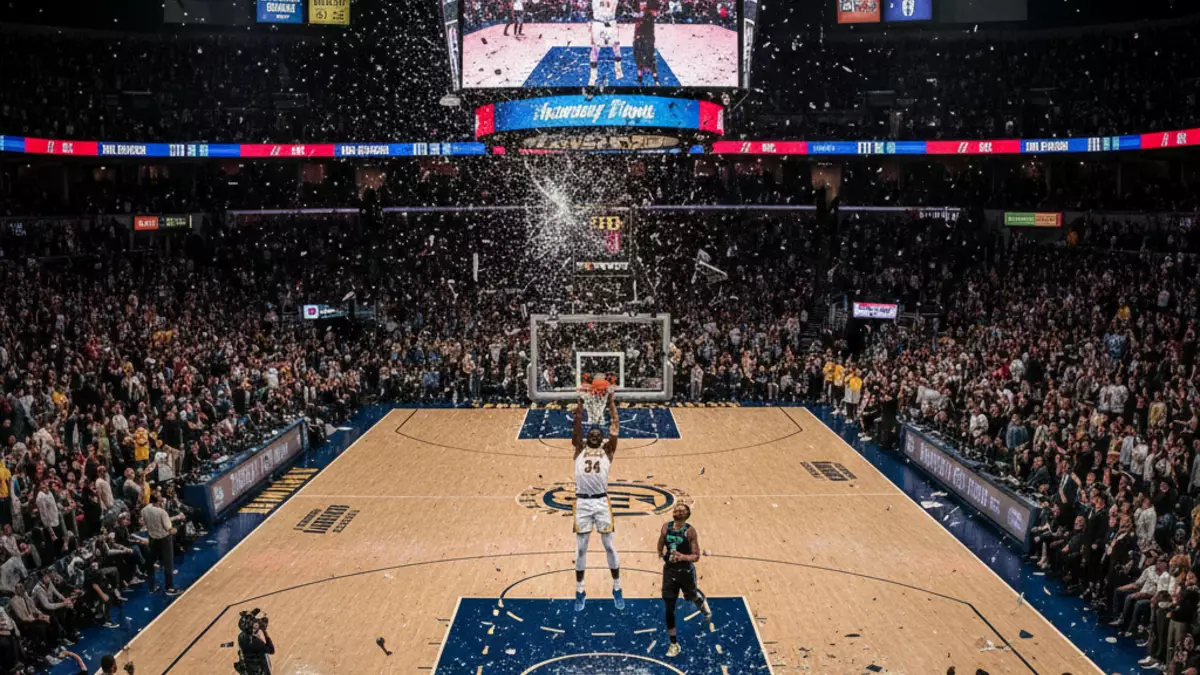
NBA Offseason Power Shift: Top Contenders, Blockbuster Trades and 2026-27 Storylines
Published on 07/19/2026 at 12:00 | Editorial responsibility: Rafael Müller, Editor-in-Chief AD HOC NEWS
With the NBA calendar quiet today, the league's real drama is happening off the court, as contenders reshape rosters, stars test free agency and front offices jostle for position in the 2026-27 title race.
By James Whitfield, Sports Editor | 2026-07-19
There are no NBA games tipping off today, which makes this a perfect moment to zoom out and look at how the offseason is reshaping the competitive landscape for the upcoming season. In a league where one blockbuster trade or a single free agency signing can instantly recalibrate title odds, the quiet days often hold the biggest implications. Instead of box scores, the headlines right now are about cap space, contract decisions, roster construction and the long-term chess match between the league's elite front offices.
From traditional powerhouses trying to extend their windows to rising franchises hoping to make the leap into true contention, almost every team is navigating some form of pivotal decision. Fans may not be refreshing live game trackers, but they are glued to transaction logs, insider reports and rumors about how their franchises will respond to last season's successes and failures. For international followers, this is also the period where future league narratives take shape: who looks like a genuine title threat, who is pivoting to a retool or rebuild, and which stars might be on the move.
Game Recap: A Season Still Fresh In The Rear-View
Even though there is no on-court action today, the impact of the recently completed NBA season still defines the context of every offseason decision. The playoffs highlighted once again how critical depth, versatility and high-level shot creation are in a league that increasingly punishes one-dimensional teams. Title contenders that fell short now scrutinize every possession that swung a series, knowing that the margins between lifting the trophy and exiting in the second round are razor-thin.
In many front offices, internal postseason reviews have shifted from film sessions to spreadsheets. Executives evaluate which lineups worked, where defensive schemes broke down and whether key players can be relied on for heavy postseason minutes going forward. These assessments influence contract priorities: is a key rotation player worth a long-term extension, can a team afford to keep its core together under a rising cap, or does it make more sense to explore trades while a player's market value is high?
For fans, the way last season ended still informs expectations. Squads that went on deep playoff runs are largely seen as more stable, with rosters needing tweaks, not overhauls. On the other side, franchises that flamed out early are under pressure to show a plan, whether that means aggressive trade talks or a more patient development-first approach. That contrast creates a league-wide tension where some teams chase immediate improvement while others focus on avoiding short-term moves that might block long-term upside.
Playoff Picture: How The Offseason Is Already Redrawing The Map
Even months before tip-off of the new campaign, the playoff picture is quietly being reshaped by offseason decisions. Every contract signed and every trade executed shifts the hierarchy of conferences, often in subtle ways that only become obvious once the season begins. Core stars anchoring contender identities, secondary creators stepping into larger roles and defensive specialists finding new homes can all alter a team's trajectory.
Established powers enter the offseason with a clear mandate: maintain contender status while managing age curves and cap constraints. They typically prioritize re-signing essential pieces, exploring marginal upgrades and avoiding moves that could compromise future flexibility. Their playoff positions may look secure on paper, but the league's competitive parity ensures that any stagnation can turn into slippage. Meanwhile, ambitious mid-tier teams push harder, knowing that a breakout season can hinge on nailing just one or two rotation additions.
In the standings conversation, another key dynamic is the rising floor of competitiveness across both conferences. More teams now invest in modern development, analytics and performance programs, which makes it harder to bank easy regular-season wins. The playoff bubble zone becomes more crowded, with multiple franchises realistically chasing the same limited number of spots. Those organizations must balance the urge to push all-in against the risk of sacrificing future draft capital or cap space.
Sentiment and reactions
For international fans tracking the big picture rather than daily game logs, this stage offers a more strategic view of how playoff races might evolve. The choices teams make now influence not only seeding but also stylistic matchups. A franchise doubling down on size and rim protection might match up differently in a seven-game series than one leaning into mobile, switch-heavy defenders and five-out spacing. That interplay of roster philosophy and future playoff pairings adds another layer of intrigue to offseason monitoring.
Player Spotlight: Stars, Extensions and Emerging Faces
With no games played today, the spotlight naturally shifts to the players navigating contract years, potential extensions and changing roles. Established superstars remain the central gravitational force of the league: their decisions about staying put, pushing for trades or structuring deals with team-friendly flexibility shape competitive dynamics. Every time a top-tier player commits long-term, a franchise can design multi-year strategies with greater confidence.
Just behind the top tier, rising talents create some of the most compelling offseason storylines. Young players on the verge of All-Star status often become focal points of front office planning. Teams must judge whether an impressive breakout season represents sustainable star power or a temporary spike. Those evaluations inform extension talks and can determine whether a franchise builds around that player as a future centerpiece or continues to seek a separate marquee name.
Role players also command growing attention, particularly in a league that has increasingly learned to value two-way contributors. Versatile wings who can defend multiple positions while providing reliable shooting have become some of the most sought-after pieces on the market. Their signings rarely generate the same headline volume as max deals, but they frequently determine whether a contender's rotation holds up under playoff pressure.
Front Office Strategy: Trades, Cap Space and Asset Management
One of the defining themes of this offseason, and the focal point on a game-free day like today, is the strategic battle being waged in front offices. Modern NBA executives juggle cap space, draft assets, contract structures and long-term projection models in ways that would have been unfamiliar even a decade ago. The aim is to build a roster capable of competing now without closing pathways to future improvement.
Trade negotiations often stretch across weeks or months, involving complex frameworks with multiple teams and layers of contingencies. A single proposed deal might hinge on draft pick protections, swap rights or guaranteed salary triggers in out-years. As franchises seek to gain incremental advantages, they increasingly adopt nuanced positions about asset valuation: what a future first-round pick is worth in relation to an established veteran, or how a young prospect's development curve could intersect with the trajectory of a current core.
Cap space, too, is no longer viewed simply as room for signings, but as a strategic tool to facilitate trades, absorb contracts or secure flexibility around future extensions. Some teams intentionally preserve space for upcoming classes of free agents, while others opt for creatively structured deals that front-load or back-load salary to accommodate projected roster changes. On quiet calendar dates, fans who follow the business side of the game scrutinize those decisions, knowing that financial architecture is often the hidden engine behind on-court success.
More NBA News on ad-hoc-news.de
From a European and global perspective, this evolving front office sophistication adds depth to how fans interpret headlines. When a franchise takes on a large contract, international observers often look beyond simple salary figures to understand the strategic reasoning: Is the team betting on future cap spikes, planning to attach that contract in later trades, or prioritizing an immediate competitive window? The offseason is where those subtleties are most visible, and days without games naturally spotlight the executives behind the curtain.
Coaching Carousel: Systems, Philosophy and Continuity
Another crucial element of the offseason storyline, especially prominent when no games are currently being contested, is the coaching landscape. Head coaches and their staffs function as the tactical architects of on-court identity, and their hiring or retention often signals broader organizational priorities. Some teams seek experienced leaders who can stabilize locker rooms and build reliable habits, while others gamble on fresh voices who represent the cutting edge of modern analytics-driven basketball.
Changes in coaching philosophy can dramatically alter how a roster is perceived. A team previously associated with slow, half-court sets might pivot toward a more dynamic, transition-heavy style under a new staff. That shift could elevate certain existing players whose strengths fit the new blueprint while diminishing the roles of others. Consequently, front offices and coaching staffs must remain aligned as they navigate roster decisions, ensuring that personnel acquisitions complement intended schemes.
Continuity also remains a prized asset in the modern NBA. Franchises that maintain stable coaching structures can build more sophisticated systems over multiple years, fine-tuning schemes rather than reinventing them each season. When fans consider their team's prospects on a day with no games on the slate, many naturally factor in how long a coaching staff has been in place, how clearly the team's identity has been defined, and whether players appear to buy into the collective approach.
International Impact: Global Fanbases and Growing Talent Pipeline
Beyond the US, the NBA's influence continues to surge, and that global dimension shapes how offseason storylines are experienced. With no games tipping off today, international viewers often rely on digital platforms, highlight packages and social media threads to follow developments in real time. Teams recognize this worldwide interest and increasingly tailor their communication to global audiences, ensuring that major roster moves and strategic pivots are clearly explained across multiple languages and markets.
From the talent perspective, the international pipeline remains one of the league's most transformative forces. While the specifics of this offseason's moves differ from year to year, the underlying trend is constant: more teams scout deeply in European, African, Asian and Latin American leagues, searching for skilled players who can adapt to NBA spacing and tempo. On days without live games, fans often revisit draft boards, international scouting reports and summer league performances to evaluate who might become the next breakout star from outside North America.
This global dynamic also influences how teams construct their rosters culturally. Organizations pay attention to how international players integrate into locker rooms, how they handle travel demands and the extent to which support systems are in place to help them adjust to life in the NBA. The league's rapid globalization means that roster decisions now converge around both on-court metrics and off-court infrastructure, especially in quieter periods when strategic planning takes center stage.
Injury Updates and Recovery Timelines: Quiet Days, Big Questions
Although no new injuries occur in NBA games today, the status of recovering players remains one of the most vital ongoing storylines of the offseason. Across the league, stars and key role players rehabilitate from surgeries, manage chronic issues or refine conditioning after playoff workloads. Their progress often determines how aggressively teams approach other roster moves. A franchise confident that a cornerstone player will return fully healthy might be more conservative on the market, while uncertainty about a recovery can prompt additional insurance signings.
Medical and performance departments work closely with coaching staffs during this period, mapping out timelines, workload plans and preseason ramp-up strategies. On a day without games, those internal evaluations can still ripple outward through media reports and fan discussions. Followers want to know whether their team will open the season with a full-strength rotation or whether early schedules might be complicated by minute restrictions and staggered returns.
Injury management now intersects heavily with analytics and sports science. Teams track performance metrics over time to determine how players respond to different recovery approaches, and those insights influence decisions about practice intensity, back-to-back scheduling and lineup combinations. Even when no one is suiting up today, that behind-the-scenes work is vital preparation for the high-velocity demands of the regular season.
What’s Next: Key Offseason Milestones Before Tip-Off
With the calendar currently empty of games, attention turns toward the remaining offseason milestones that will shape the league before opening night. Training camps, preseason schedules, and the tail end of the free agency and trade windows provide structured opportunities for teams to finalize rosters and experiment with lineups. These stages often reveal early hints of tactical adjustments, such as new offensive sets, defensive schemes or personnel groupings that coaches believe can unlock more efficient play.
For fans, the stretch between now and the start of the season can feel long, but it is also rich with signals. Media days reveal the mood in locker rooms, with players and coaches articulating expectations, accountability frameworks and goals. Preseason contests allow observers to gauge how new additions blend with existing cores and whether young players have made substantial developmental leaps. Even when those games do not count in the standings, they provide meaningful glimpses into how teams intend to operate.
From a strategic standpoint, some front offices view this window as a final opportunity to exploit market inefficiencies. If a player looks miscast in a new situation or if a roster appears unbalanced during preseason, trade conversations can accelerate. Teams that retained flexibility throughout the summer may be better positioned to act decisively, acquiring complementary pieces when other organizations seek to rebalance depth charts.
On the content side, days like today underscore how NBA coverage has evolved. With no live box scores, digital media instead draws attention to in-depth analysis, longform features and data-driven explorations of roster construction and league trends. For international readers, including those accessing coverage via mobile-friendly platforms, this shift makes it easier to stay engaged with the NBA year-round, even in the absence of live games.
Ultimately, a quiet day on the schedule does not mean a quiet day for the league. The contours of the next season are being sketched in every contract negotiation, recovery report and strategic meeting. While fans may miss the rush of buzzer-beaters and overtime thrillers today, the moves happening off the floor are setting the stage for the next wave of unforgettable moments once the ball is tossed up again.
Official NBA ScoresNote: Scores and facts were verified live before publication; for ongoing games, only the clearly confirmed score at time of writing is used.
Disclaimer regarding our articles: No investment advice, no buy or sell recommendation. Information on prices, companies, and markets is provided without guarantee; changes are possible at any time. Stock market transactions can lead to substantial losses. Our articles are created and reviewed in whole or in part automatically with the support of AI.